

 Miss Kanishka
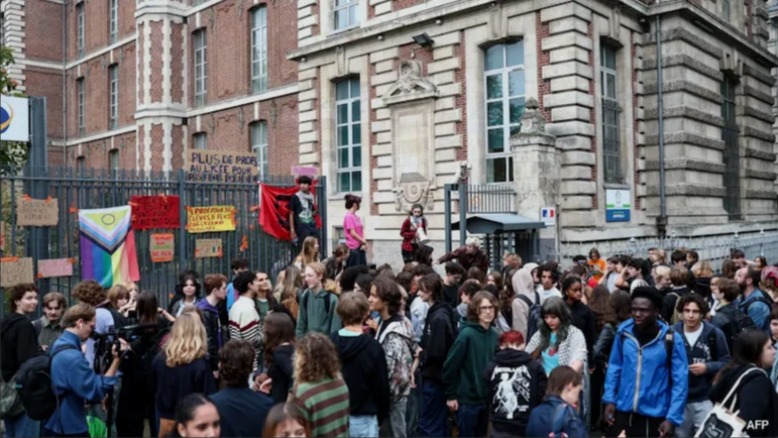
Thousands of high-school students across France are staging protests over crowded classrooms, teacher shortages, dilapidated school buildings and the burdens of higher-education exams. The unrest, which began in the Parisian suburbs, has spread across the country, causing class cancellations, arrests and even school building damage.
The student protests began in late September and quickly spread beyond the Paris region. Students have been seen massing at school entrances and outside of classrooms, vowing to continue their protests until their grievances are heard. Teachers’ unions have also backed the protests, calling on the government to intervene.
Why Are The French Students Protesting?
Students are complaining of over-crowded classrooms, staff shortages, poor school infrastructure and a burdensome educational system. In addition, students are also complaining of the highly competitive system required to gain entry into French Universities.
The protests have been particularly visible in disadvantaged areas, where students say shortages of teachers and basic facilities are affecting their education. Their complaints have turned a school-level issue into a national debate over educational inequality.
The French student protests have further turned violent as they spread throughout France. School buildings have been set on fire with police resorting to tear gas, as thousands of students have been arrested for their part in the unrest.
India is Facing Same Unrest
The unrest which has gripped France has been compared to a similar campaign being undertaken in India, with the exception that the Indian equivalent has not resulted in the same level of violence. The Cockroach Janta Party’s (CJP) School Thik Karo campaign has drawn attention to the state of government run institutions throughout India. Members of the CJP have been touring the country and documenting the sub-standard conditions within government schools.
While the CJP has been cataloguing hundreds of infrastructural inadequacies in terms of sanitation, drinking water supply and staff shortages in their reports, the French students have been protesting on the streets, demanding action from the government. While there are differences between the two campaigns, both have focused on drawing much needed attention to a perennial problem, which has been ignored due to the larger emphasis on the Indian education system and it’s exam oriented methodology.
What Does It Say About Education?
The French student protests have since evolved into a space where political debate has been taking place, with the original demands being overshadowed by the larger narrative. The original demands however, continue to be valid and applicable, with most students simply wanting adequate staff and resources within their educational institutions.
Education in most countries is highly competitive and the metrics of success are mostly based on performance and examination results. The student protests in France, as well as the continued activism in India, show that students are beginning to demand a re-evaluation of the current system. The question for governments across the world will be whether the issues raised by the French students are addressed or whether similar protests will begin to emerge in other countries.



 Nibeditaa Speaks


Add comment