

 Miss Kanishka
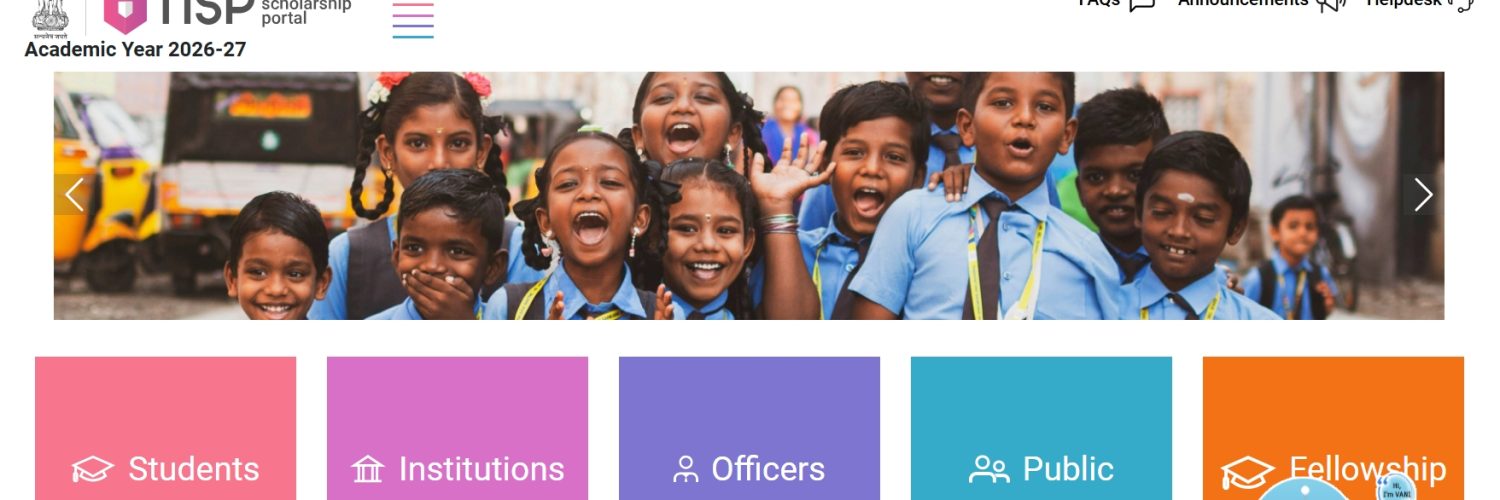
Students applying for scholarships through the National Scholarship Portal (NSP) for the 2026-27 academic year can now apply for one merit-based scholarship scheme and one or more welfare-based scholarship schemes, subject to the eligibility conditions of the respective schemes. The revised framework was listed by the Central Board of Secondary Education (CBSE) on 22 September 2026, while the NSP opened applications for the new academic year from 1 June 2026.
The change is important, but it needs to be understood correctly. It does not imply that each student will be eligible for several scholarships. Rather, it enables students who are eligible to investigate support within both categories, yet still adhere to the individual rules of each scholarship scheme.
What Has Changed on the National Scholarship Portal?
For many students, the process of applying for a scholarship is not just about filling out a form. Different scholarships have different eligibility conditions, documents, deadlines and verification procedures, which can make the process confusing, particularly for students applying for financial support for the first time. The primary difference for 2026-27 is that there is a more clearly defined separation between merit and welfare-based scholarship schemes. A student may apply for one scholarship in the merit category and one or more in the welfare category, as long as he/she qualifies for the scholarship in the welfare category.
The NSP currently offers a list of scholarship schemes run by various government departments and organisations. These are schemes for students with disabilities, students from specific social groups, students studying higher education, students in technical education and students under specific welfare schemes.
The take-home message for students is straightforward: don’t let one form of scholarship eligibility deter them from asking about another type of financial aid. All students will, however, need to read the conditions of the individual scheme before applying.
Merit and Financial Need Can Co-Exist
Academic achievement and financial situations do not always go hand in hand. It is possible for a student to achieve good grades and have a family that requires financial support for further education.
The revised framework is relevant because it acknowledges the distinction between merit-based and welfare-based scholarships. If a student is eligible for a merit based scholarship, he or she may also be eligible for an eligible welfare based scholarship, depending on the rules of the respective programmes.
Not all students will be eligible for all scholarships. There are individual schemes which may impose academic, income, social, course, institution, state, disability or other requirements. So students should not consider the revised framework as an assurance of multiple scholarships, but rather as a chance to explore more options.
One Time Registration Is Mandatory
Another important part of the NSP process is One Time Registration (OTR). Students must have an OTR number for scholarship applications on the portal. According to the NSP, OTR is a unique 14-digit number that is issued based on Aadhaar or Aadhaar Enrolment ID. It is valid for the entire academic life of the student in the National Scholarship Portal.
Students can apply for and check on fresh and renewal scholarship applications with their OTR credentials. This is to ensure that the process is easier so that students don’t need to register again every time they apply. Students should maintain their OTR information securely and make sure that the personal information related to their registration is correct.
Which Scholarships Are Available for 2026-27?
The NSP has many scholarship schemes this year for the academic year 2026-27. These include merit-based and welfare-based schemes, run by various ministries, departments and organisations.
The schemes include the PM-USP Central Sector Scheme of Scholarship for College and University Students, the National Scholarship for Post Graduate Studies, the Ishan Uday Special Scholarship Scheme for the North Eastern Region, the National Means Cum Merit Scholarship and a number of AICTE scholarships for students pursuing technical degree and diploma programmes.
The portal also provides information on welfare based schemes like scholarships for students with disabilities and financial assistance for eligible students under certain welfare schemes.
Not all students can apply for a scheme because it is not available to everyone. The eligibility requirements for each scholarship vary and students must review these requirements before applying.
Students Should Not Assume That Every Scholarship Can Be Combined
This is one of the most critical things for students to know. The new framework does not imply that students can easily apply for multiple scholarships without limits. The NSP says that students can apply for one merit based scholarship scheme and one or more welfare based schemes depending on the eligibility of the respective schemes.
Students are advised to verify the conditions of the individual scholarships regarding income, academic achievement, course, institution, category and scholarship support in the past (where applicable).
The best way to interpret the new structure is as an opportunity to investigate what financial support is available, not as a green light to apply for all the scholarships on the portal.
Why Students Should Apply Early
Scholarship applications are more than just an online form. Applications may pass through institutional, district, state and/or other levels of verification as per the scheme. Students may also be required to fix data or answer a faulty application.
The student application deadline for a number of scholarships currently posted on the NSP for 2026-27 is 31 October 2026 with verification deadlines in November. Students should, however, refer to the time-table of the specific scheme they are applying to as dates may vary.
This is why early application is important. If the student waits until the last couple of days, he/she may not have enough time to correct an application, get a missing document or fix a verification problem. The NSP has also introduced its services in Common Service Centres for students to avail of support services related to scholarships.
What Students Should Do Before Applying
The student intending to apply for NSP should identify the scholarships for which he/she may be eligible. They should then go and study the individual eligibility conditions instead of just the name of the scholarship.
Academic certificates, income documents and other documents required for the application process should be prepared in advance. Pupils must complete their information with care and make sure that the information they enter, including their name, academic information and other records, are consistent with their supporting documents.
Once students have applied, they should follow up on the application. An application submitted is not an approved application. It might require going through one or more stages of verification in the scheme.
Students should also make sure to watch for deadlines. Application and verification dates may differ from scheme to scheme, please refer to the current schedule for the particular scheme you are applying for.
What Schools and Parents Need to Know
The new NSP changes also allow schools to play a key role in informing students about the changes. The revised framework was listed by CBSE on 22nd September 2026 and sent out through its official communication system.
Schools can assist students in providing information about schemes available, explaining the difference between merit and welfare based support, and send students official information about scholarships.
This can be helpful for students who are not familiar with government scholarship portals or online verification process. Sometimes, a student is not eligible to receive a scholarship, but the student may not be aware of the opportunity or may not fill out the application properly.
Parents should also view scholarship planning as part of the education planning. The expenses of higher education may involve tuition fees, accommodation, transport, books, equipment and other costs. Families should therefore take into account the academic needs of a course, as well as any financial assistance which may be available.
What Must Indian Students Know?
The updated NSP framework for 2026-27 provides students with a greater clarity on merit and welfare based financial support. The change provides a reason for the eligible student to consider something more than one scholarship.
The most critical lesson for the upcoming school year of 2026-27 is to never assume that only one scholarship is available for financial assistance. Review categories, read the rules carefully and only apply to the schemes that you qualify for.



 Edinbox Team


Add comment