

 Nibeditaa Speaks
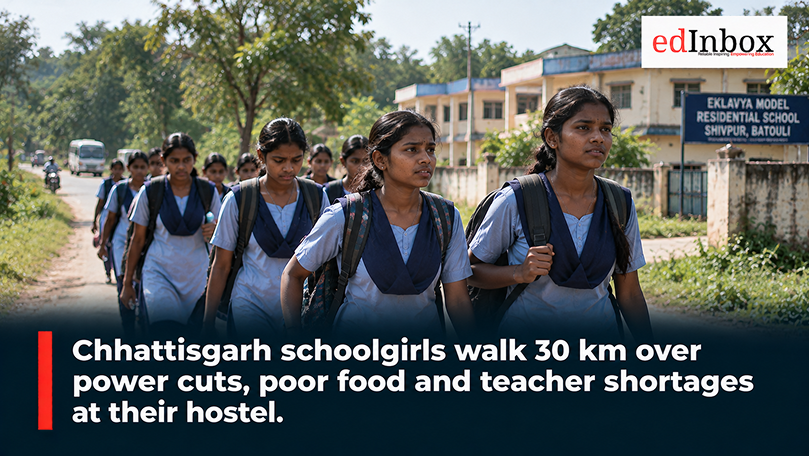
More than 45 girls from an Eklavya Model Residential School in Chhattisgarh’s Surguja district walked several kilometres towards the district headquarters after repeated complaints about lack of electricity, poor food, unhygienic hostel conditions and shortage of teachers allegedly went unanswered.
The students of Eklavya Model Residential School in Shivpur, Batouli decided to march nearly 30 km to the district headquarters in Ambikapur after they said their concerns had not received an adequate response from the school administration and the Tribal Welfare Department.
According to the students, their hostel had remained without electricity for around three months, leaving them to live and study in darkness. They also complained about the quality of food served at the hostel and unhygienic conditions in the mess.
The students further raised concerns over an acute shortage of teachers. Regular Physics and Chemistry classes were reportedly being affected because of vacant teaching positions.
Students refuse to turn back
The girls had walked nearly six km when Assistant Commissioner of the Tribal Welfare Department Lalit Shukla intercepted them at Bailkota.
Shukla reportedly attempted to persuade the students to return by assuring them that their complaints would be addressed. However, the students refused to negotiate and insisted on meeting Surguja Collector Ajit Vasant himself.
Authorities then arranged buses to take the students to the collectorate where they met the district collector and placed their grievances before him.
Vasant assured the students that corrective measures would be initiated immediately. He directed officials to restore electricity at the hostel, improve cleanliness in the mess and to arrange guest teachers to address the shortage of regular teaching staff.
Three-member panel to investigate lapses
The collector also ordered an inquiry into the complaints. A three-member panel comprising Joint Collector Sharda Agrawal, Sitapur SDM Fagesh Sinha and Assistant Director Kiran Rajput has been constituted to investigate the alleged lapses and submit a detailed report.
In addition, nodal officers responsible for ashram hostels across the district have been instructed to conduct physical inspections of the facilities within a week.
The incident has also raised concerns about the monitoring of residential schools, where students depend on the institution not only for education but also for accommodation, food, electricity, sanitation and other basic necessities.
Third protest over hostel concerns this academic year
This was reportedly the third instance during the current academic session in which tribal students walked to the collector’s office to raise concerns related to hostel facilities.
After receiving assurances from the district administration, the students were taken back to their hostel by bus.
The protest, however, highlighted the extent to which students felt obliged to travel to the district headquarters to have basic educational and residential concerns heard.
The episode also underlines the importance of regular inspections and responsive grievance mechanisms in residential schools. For students living away from their families, access to electricity, safe and hygienic food, adequate teachers and functional hostel facilities is fundamental to their education.
The administration’s inquiry and promised corrective measures will now determine whether the students’ complaints translate into sustained improvements on the ground.





Add comment