

 Miss Kanishka
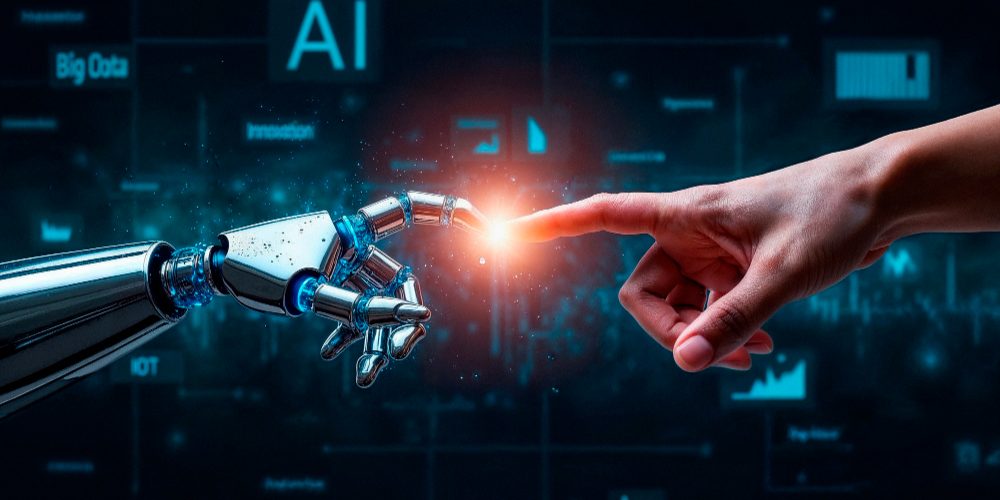
‘Human’ the Cambridge Dictionary word of the year in 2026. Despite the huge developments in AI, this word highlights questions around whether we are losing the ‘human’ aspects of ourselves.
Previously, if you wanted to gain a skill, you had to learn it yourself. However, now, a student can write essays instantly, professionals can automate large amounts of work, and creators can create images with little to no effort. However, with these benefits comes the question of what we should continue to learn for ourselves.
Why is ‘human’ the Cambridge Dictionary word of the year in 2026?
According to Cambridge Dictionary, ‘human’ has been named word of the year in 2026 due to international discussions around what it means to be human, following increasing intersections between humans and AI.
It is interesting to see this word as word of the year, as it is certainly not a new word. However, in 2026, this word has taken on new importance. We are beginning to differentiate between work created by humans and by AI, creative work done by humans and work done by machines, and decision making from humans and decisions made by machines.
Perhaps this word is important to us at this point in time because we are beginning to question what makes us different to AI.
Losing critical thinking
AI can be extremely helpful in learning in many ways. It can help people understand complex concepts, organise information, and provide inspiration. If used appropriately, AI can assist in making learning accessible. However, there is a distinction to be made between assistance with learning and not learning at all.
If students use AI to understand a mathematical problem, and then attempt it themselves, they are benefiting from AI as an aid in learning. However, if students copy over the answer without truly understanding how to get there, they may complete the task, but may not have actually learned anything.
Similarly, if every difficult conversation is replaced with suggestions, every creative decision is inspired by prompts, and every unknown problem is solved by a chatbot, we risk losing the ability to think through uncertainty.
It is not necessarily the fact that AI has critical thinking capabilities that causes problems, it is that people may slowly begin to lose their own critical thinking.
Skills needed in education
Educating learners in schools and universities in the AI era poses a difficult but crucial challenge. Whilst students must be taught how to use new technologies, they must also be given other key skills.
Students should be encouraged to develop critical thinking, curiosity, communication, creativity, and scepticism. They must be able to determine when to trust AI, when to be sceptical of it, and when a problem should be solved using human insight, rather than automation.
Whilst AI can provide a well put together solution, students must be able to identify if it is correct, fair and suitable. Students must be confident in arguing against information, patient in investigation and be intellectually honest enough to accept that they don’t know something.
In an era where AI can fake these skills, it is even more important that these skills are developed. Even though AI can perform some tasks that demonstrate these skills, we should not consider that they are obsolete. In fact, in an era where incorrect but persuasive information can be so easily made, we must place greater emphasis on these skills.
Therefore, although AI is an important skill to teach at university, encouraging human development should not be overlooked. Both skills should be included in modern education to ensure that graduates can utilise AI, without becoming too reliant on it.
Changing values in professional and creative skills
With many tasks able to be completed by AI with minimal effort (for example basic designs, articles, summaries), we must consider why a human professional would still be valuable. Although speed may no longer be the most important value in a role, experience, knowledge of culture, ethical consideration, original observations, and understanding of someone else’s needs will still be important in meaningful work.
However, this doesn’t mean that work done by humans is always of higher quality than work done by AI. Nor does it mean that we should avoid using AI to preserve previous working methods. However, we shouldn’t just be placing value on productivity.
A teacher is valuable not just for explaining information in a chapter, but for recognising when a student is struggling, understanding why, and being patient. Similarly, authors don’t just string words together. Instead, they gain knowledge of people, challenge assumptions, and apply personal understanding. To appreciate these attributes in workers, education systems and employers must recognise them in light of AI.
Humans and machines should not be considered opposing forces.
Although it is important to consider how humans and machines relate, we should not consider them as opposing forces. AI will not be leaving us, and refusing to engage with it will not prepare students appropriately for their future. Instead, we should consider the extent to which human control is present in AI.
Can students use AI without losing their curiosity? Can teachers use AI without losing the personal touch in education? Can businesses increase productivity without devaluing all human contributions as costly elements of the business?
These questions can not be answered by AI alone. They require decisions to be made by educators, policymakers, businesses, and individuals.
Why ‘human’?
By naming ‘human’ word of the year in 2026, Cambridge Dictionary is reminding us that in developing technology, we must have human intention behind it. Perhaps rather than focussing on how intelligent our machines are in this generation, we should be focussing on whether we can use machines without losing independent thinking, meaningful creation, passion and responsible decision making.
While we have spent many years considering the capabilities of AI, perhaps we should be considering what we want human intelligence to be capable of in the future.





Add comment