

 Miss Kanishka
Researchers at the Institute of Advanced Study in Science and Technology (IASST), Guwahati, have developed a new antivenom targeting two venomous pit viper species found in Northeast India. The development could help address a major gap in India’s snakebite treatment system, as existing antivenoms have limited effectiveness against several venomous snake species found in the region.
The research team was led by Professor Ashis K. Mukherjee, Director of IASST, an autonomous institute under the Department of Science and Technology (DST). The project involved researchers from IASST, Premium Serums and Vaccines Pvt. Ltd., Pune, Amrita Research Centre, Delhi-NCR, Mizoram University and Aaranyak, Guwahati.
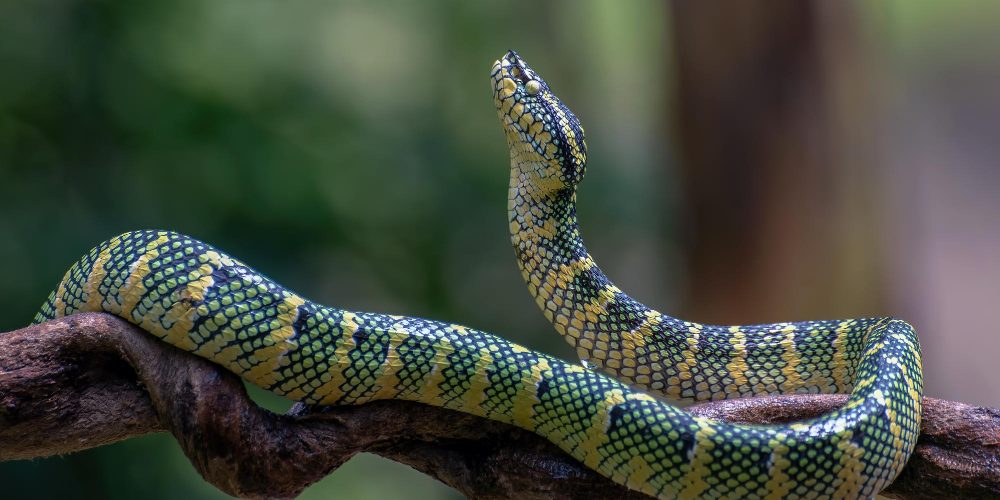
The newly developed antivenom targets two pit viper species: Pope’s pit viper (Trimeresurus popeiorum) and the red-tailed bamboo pit viper (Trimeresurus erythrurus). Both species are found in Northeast India. The researchers collected venom samples from Mizoram and Meghalaya to develop an antivenom specifically suited to these regional snake species.
Why Does Northeast India Need a New Antivenom?
India’s commonly available polyvalent antivenom is primarily designed to treat bites from four major venomous snakes, collectively known as the ‘Big Four’. These include Russell’s viper, spectacled cobra, common krait and saw-scaled viper. However, this antivenom has limited effectiveness against several other medically significant snake species, including pit vipers found in Northeast India.
This creates a challenge for snakebite treatment in the region, where bites from different venomous species can cause serious health complications. Pit viper venom, in particular, can interfere with blood clotting and cause damage to local tissues and organs. The new research aims to address this gap by developing an antivenom specifically designed to neutralise the venom of two pit viper species.
New Antivenom Shows Better Protection in Initial Tests
Laboratory and preclinical tests showed that the newly developed bivalent antivenom offered better protection against the two targeted pit viper venoms than the existing Indian polyvalent antivenom.
The researchers also found that the new formulation significantly reduced the effects of venom on blood coagulation and local tissue damage. The findings suggest that developing antivenoms based on the venom characteristics of regionally prevalent snake species could improve snakebite treatment.
However, the results are currently limited to laboratory and preclinical investigations. The antivenom has not yet been approved for use in patients.
Clinical Trials Needed Before Human Use
Despite the promising findings, the new antivenom will require further clinical testing and regulatory approval before it can be used for routine treatment. Professor Ashis K. Mukherjee also highlighted the need for these additional evaluations before the formulation can be administered to patients.
The research, published in the International Journal of Biological Macromolecules, highlights the importance of developing region-specific antivenoms in India. It also shows how collaboration between research institutions and the pharmaceutical industry can help address gaps in healthcare.
If further testing establishes its safety and effectiveness in humans, the new antivenom could offer an additional treatment option for people bitten by these two pit viper species. The findings mark an important development in snakebite research, particularly for Northeast India, where existing antivenoms do not adequately cover all medically significant snake species.



 Nibeditaa Speaks



Add comment