

 Nibeditaa Speaks
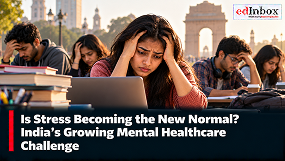
From academic competition and financial uncertainty to workplace pressure and family responsibilities, chronic stress is becoming a significant public-health concern. India’s mental-health statistics highlight the urgent need for accessible psychological care.
Stress is a natural response to challenging situations. It can help individuals remain alert, respond to immediate threats and meet important deadlines. But what happens when the body and mind remain under pressure for weeks or months?
For many people, stress is no longer an occasional response to difficult circumstances. It has become part of everyday life.
Students worry about examinations and employment. Working professionals struggle with deadlines and financial responsibilities. Parents balance family commitments with professional expectations. Meanwhile, constant digital connectivity leaves little room for psychological rest.
The growing concern is whether society is beginning to treat chronic stress as an unavoidable part of modern living.
What do India’s mental-health statistics reveal?
The National Mental Health Survey of India, conducted by NIMHANS during 2015–16, remains an important national reference point.
It estimated that:
- 10.56% of Indian adults were experiencing a mental disorder.
- Lifetime prevalence of mental disorders stood at 13.67%.
- Approximately 15% of the adult population experienced mental-health problems requiring intervention.
- Mental disorders were more prevalent in urban areas than rural areas in the survey.
These figures are not a direct measure of stress prevalence. However, they demonstrate the wider mental-health burden that healthcare services must address.
A 2024 study involving 8,542 college students across 30 universities in nine Indian states found that 33.6% reported moderate-to-severe depressive symptoms, while 23.2% reported moderate-to-severe anxiety symptoms.
The findings raise concerns about the psychological pressures experienced by India’s student population.
Why does stress become chronic?
Stress becomes particularly concerning when individuals repeatedly experience pressure without sufficient opportunities for recovery.
The body activates physiological stress responses involving hormones such as cortisol and adrenaline. While these responses are useful in emergencies, prolonged activation can interfere with sleep, concentration, mood and physical health.
Common contributors include:
- Academic pressure and fear of failure.
- Workplace competition and financial uncertainty.
- Family responsibilities and caregiving demands.
- Social comparison and unrealistic expectations.
- Sleep deprivation and excessive digital engagement.
Is India prepared to address the problem?
India’s mental-health challenge extends beyond the prevalence of psychological difficulties. Access to affordable counselling, trained professionals and community-based support remains important.
The National Mental Health Survey also identified substantial treatment gaps across mental-health conditions.
The government has expanded initiatives such as Tele-MANAS, which provides round-the-clock tele-mental-health support.
However, awareness, early identification and the availability of trained professionals need to improve further.
Stress should not become a measure of success
Society often celebrates people who appear constantly busy, regardless of the psychological cost.
But being permanently exhausted is not evidence of ambition, and struggling emotionally is not a sign of weakness.
Schools, workplaces and healthcare institutions must recognise psychological well-being as an essential part of overall health.
The real challenge is not eliminating every stressful situation. It is ensuring that individuals have the resources, support and recovery time necessary to cope with life’s demands.


 Miss Kanishka




Add comment