


 Nibeditaa Speaks
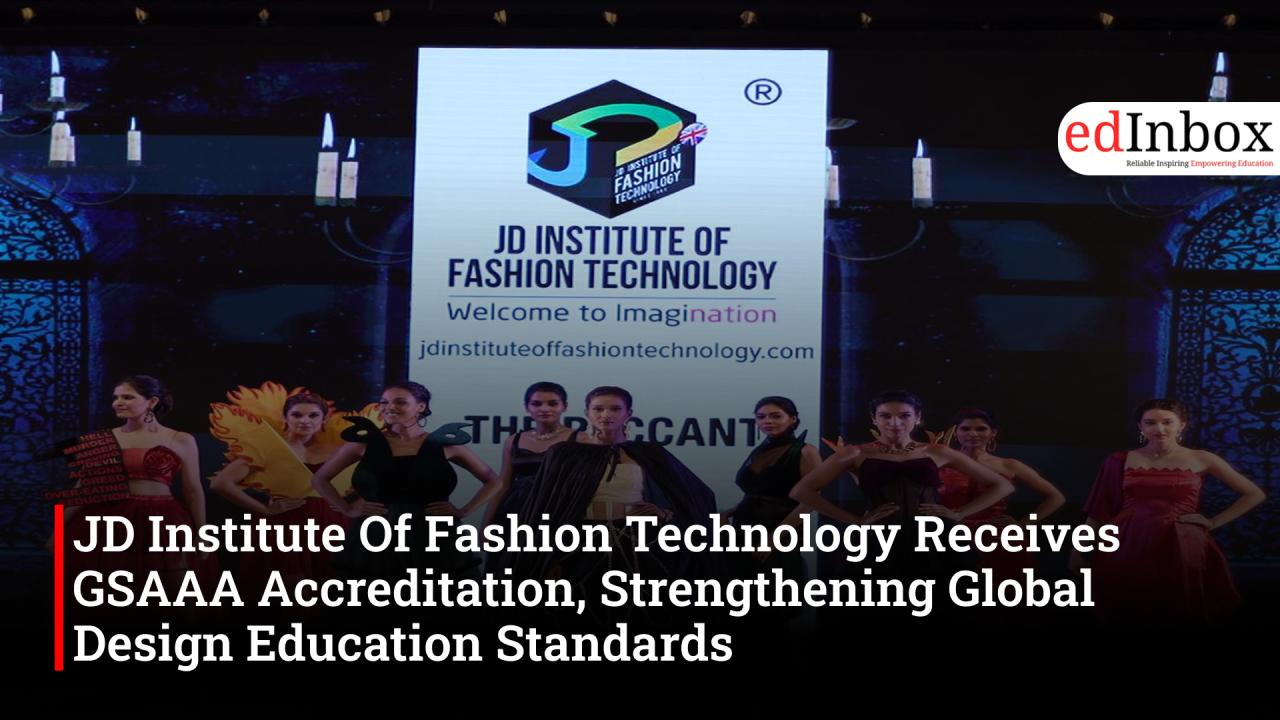
JD Institute of Fashion Technology has received accreditation from the Global Standardization and Accreditation Agency (GSAAA), marking a significant development in India’s evolving design and fashion education landscape.
The accreditation recognises the institute’s academic framework, curriculum structure, teaching methodologies, and institutional standards, reflecting a growing push toward global benchmarking and quality assurance within creative education.
Growing Focus On Quality Standards In Design Education
The recognition comes at a time when fashion and design education is expanding rapidly across India and other emerging markets, increasing the need for structured accreditation systems and internationally recognised academic standards.
Education experts say external accreditation is becoming increasingly important as students seek programmes that offer stronger industry relevance, global recognition, and career-oriented learning.
Through the GSAAA accreditation, JD Institute of Fashion Technology joins a broader movement among creative institutions aiming to align academic delivery with internationally accepted educational practices.
The accreditation process evaluates multiple aspects of institutional performance, including:
- Curriculum quality
- Faculty expertise
- Infrastructure standards
- Academic delivery systems
- Student learning outcomes
For students, such recognition can improve confidence in programme quality while also strengthening the credibility of qualifications in domestic and international professional environments.
Bridging Creative Learning With Industry Expectations
A major focus of the accreditation framework is the alignment between classroom education and real-world industry demands.
Fashion and design institutions today are increasingly expected to equip students not only with creative capabilities but also with practical skills, technical proficiency, and professional readiness.
Industry observers note that the fashion sector is undergoing rapid transformation driven by:
- Digital design technologies
- Sustainability-focused practices
- E-commerce integration
- Artificial intelligence in fashion workflows
- Evolving global consumer trends
As a result, design education institutions are under growing pressure to continuously update teaching models and ensure students remain adaptable to industry changes.
The GSAAA accreditation reflects this shift toward outcome-oriented creative education where employability, innovation, and interdisciplinary learning are becoming central priorities.
Strengthening Global Opportunities For Design Students
By securing international accreditation, JD Institute of Fashion Technology is also expected to strengthen its global academic positioning and expand opportunities for international collaboration.
Experts say globally recognised accreditation frameworks can help institutions:
- Build stronger academic partnerships
- Enhance student mobility opportunities
- Improve international recognition of qualifications
- Increase industry collaboration and exposure
For students pursuing careers in fashion, interior design, communication design, and related creative industries, such recognition may provide greater access to international learning ecosystems and evolving global design networks.
Design Education Becoming Increasingly Structured
The development also highlights a larger transformation occurring within design education itself.
Traditionally viewed as highly creative and less standardised compared to technical disciplines, fashion and design education is now increasingly adopting structured quality frameworks similar to those seen in engineering, management, and professional studies.
Institutions are placing greater emphasis on:
- Academic accountability
- Industry integration
- Skill-based learning
- Professional training
- International benchmarking
Education analysts believe this evolution is essential as creative industries become more technology-driven, commercially competitive, and globally interconnected.
Preparing Future Designers For A Changing Industry
As the global fashion and design ecosystem continues evolving, institutions are increasingly being evaluated on their ability to prepare students for rapidly changing professional environments.
Accreditations such as GSAAA are seen as part of this broader transition toward future-ready design education models that combine creativity with innovation, technology, and industry relevance.
For aspiring designers, developments like these signal growing opportunities within structured, internationally aligned creative education systems designed to support both artistic growth and long-term career readiness.




Add comment