

 Nibeditaa Speaks
Teachers’ association questions Executive Council approval and raises concerns over the alleged leak of confidential inquiry findings.
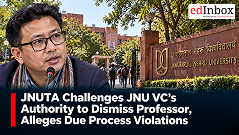
The Jawaharlal Nehru University Teachers’ Association (JNUTA) has questioned the procedure followed by the university administration in dismissing Professor Angomcha Bimol Akoijam, alleging that Vice-Chancellor Santishree D Pandit acted without the approval of the Executive Council and that confidential inquiry findings were leaked to the media.
Akoijam, a former faculty member at the Centre for the Study of Social Systems (CSSS) under JNU’s School of Social Sciences and Congress MP from Inner Manipur, was dismissed from university service with immediate effect on October 9, 2026, following an inquiry into allegations of sexual harassment.
In a statement issued on October 11, JNUTA said it was “deeply shocked” by media reports and the circulation of the dismissal order on social media. The association questioned the Vice-Chancellor’s authority to issue the order, citing Statute 30 of the Jawaharlal Nehru University Act and arguing that the power to dismiss a faculty member rests with the university’s Executive Council.
JNUTA alleged that the decision had been taken unilaterally, claiming that no Executive Council meeting had been convened and that relevant documents had not been shared with its members.
The association also expressed concern over the reported circulation of the Internal Complaints Committee’s (ICC) recommendations. It argued that disclosing confidential findings could violate the rules governing sexual harassment inquiries and compromise the confidentiality of the proceedings.
JNUTA Flags Differences in Sexual Harassment Complaint Procedures
The teachers’ association also highlighted differences between the former Gender Sensitisation Committee Against Sexual Harassment (GSCASH) framework and the current Internal Committee system, particularly concerning the classification of minor and major penalties.
According to JNUTA, adherence to established procedures is essential in disciplinary matters, including cases involving allegations of sexual harassment. It argued that procedural irregularities could undermine the pursuit of justice and called for accountability in the administration of university regulations.
The association criticised what it described as the administration’s disregard for established procedures and alleged that the dismissal order had been leaked for political purposes.
The claims concerning the Vice-Chancellor’s authority, Executive Council approval and the alleged disclosure of confidential inquiry findings were raised by JNUTA in its statement.
The controversy has brought institutional disciplinary procedures and confidentiality requirements at JNU into focus. The allegations of procedural violations, however, should be distinguished from the underlying sexual harassment allegations that prompted the inquiry.
The university’s response to JNUTA’s objections and any official clarification regarding the decision-making process would be necessary to establish the circumstances surrounding the dismissal.






Add comment