

 Miss Kanishka
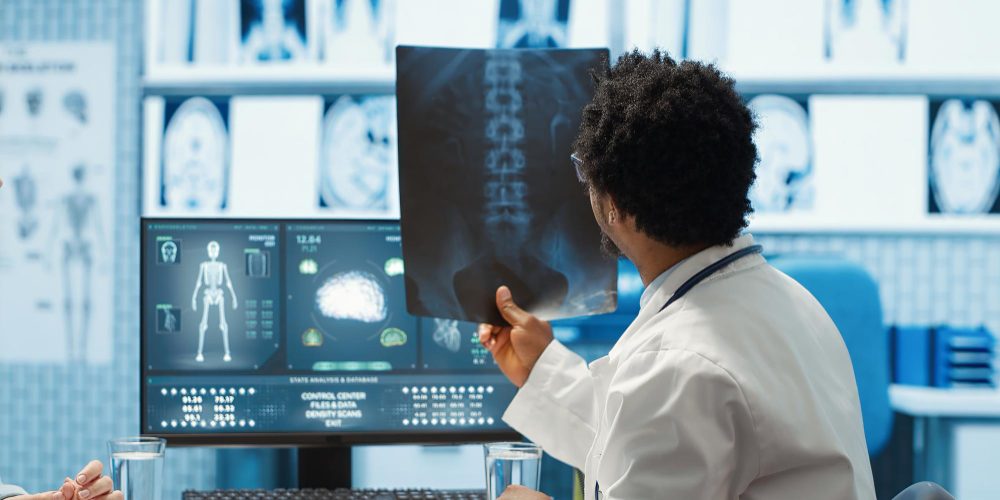
A radiologist is a doctor who reads X-rays, CT scans, MRI scans and ultrasound images to find out what is happening inside a patient’s body. They create reports that assist other doctors in determining the proper treatment.
The first step to becoming a radiologist in India is to obtain an MBBS degree. Following MBBS, a post-graduation course in Radiodiagnosis or Radiology is required.
Steps to Become a Radiologist
- Qualify NEET-UG.
- Get an MBBS seat.
- Complete MBBS and the compulsory internship.
- Qualify NEET-PG.
- Go for MD Radiodiagnosis or DNB Radiology.
MD Radiodiagnosis is generally a 3-year post-graduation program. It teaches you how to read medical images, how to know about diseases from medical images and how to write correct reports for treating doctors. Once you have finished your MD/DNB and registered, you can work as a radiologist in hospitals, diagnostic centres and imaging centres.
Which entrance exam do you need?
| Career goal | Course | Entrance exam |
| Radiologist doctor | MBBS, then MD/DNB Radiodiagnosis | NEET-UG, then NEET-PG |
| Radiology technologist | B.Sc. X-Ray / Radiography Technology | GAHET entrance test |
| Diploma-level imaging career | Diploma in Radiology & Imaging Technology | GAHET entrance test |
If your goal is to become a radiologist, NEET is necessary. There is no direct shortcut from Class 12 to MD Radiodiagnosis. But if you want to study B.Sc X-Ray/Radiology to build a career in radiology, taking GAHET is recommended.
What if NEET Does Not Work Out?
Although many students prepare for NEET, not all are allocated an MBBS seat. Some students fail to meet the cut-off mark and others are not placed in their favoured state college. Furthermore, some students find that the MBBS degree is both longer and/or costlier than they had thought. However, your healthcare career can still become a reality.
Students can train to become medical imaging professionals through undertaking a B.Sc. in X-Ray / Radiography Technology. Students are taught how to utilize various medical imaging tools within hospitals and diagnostic units. In addition, students study anatomy, physiology, and physics of radiation. Students also receive training in medical imaging and radiation protection.
The Global Allied Healthcare Entrance Test (GAHET) facilitates entry into this area. It is a national entrance examination for allied healthcare courses. Students can take this exam following Class 12 in order to then undertake a B.Sc. in X-Ray / Radiography Technology and so embark on a medical imaging career.
Why GAHET is a smart backup plan
GAHET is not a substitute for NEET if you want to become a radiologist doctor. But it is a strong alternative if NEET or MBBS does not go as planned.
| If you want to… | Best route |
| Become a radiologist doctor | NEET-UG → MBBS → NEET-PG → MD Radiodiagnosis |
| Work with X-ray and imaging machines | GAHET → B.Sc. X-Ray / Radiography Technology |
| Enter healthcare after Class 12 | GAHET allied healthcare route |
| Avoid a long MBBS journey | B.Sc. X-Ray / Radiography Technology |
A B.Sc. in X-Ray Technology is a three-year undergraduate programme. It combines classroom learning with practical training in hospitals, diagnostic labs and research organisations.
Radiologist vs radiology technologist
| Radiologist | Radiology technologist |
| A qualified MBBS doctor | A trained imaging professional |
| Reads and reports scans | Operates X-ray, CT, MRI and ultrasound machines |
| Needs MBBS + MD/DNB | Needs B.Sc. X-Ray Technology, BMRIT or diploma |
| Enters through NEET | Can enter through GAHET or college admission |
| Can diagnose diseases | Supports diagnosis by producing quality scans |
Career Scope after Radiology
There is always a requirement for radiographers as hospitals require radiological services for accident assessments, cancer diagnosis, antenatal services and much more.
Following MD Radiodiagnosis, you can pursue a variety of careers including consultant, hospital, diagnostic centre and teleradiology consultant and/or academic faculty.
Following B.Sc. X-Ray / Radiography Technology, you could be an x-ray/technician, radiographer, imaging assistant or diagnostic centre technician. Technologists can then advance in their careers and/or specialise in such areas as CT and MRI scanners.
Alternative courses after B.Sc. Radiology
If you want to grow beyond a radiographer or imaging technician role, you can pursue these courses:
| Course | Best for | Career direction |
|---|---|---|
| M.Sc. Radiology & Imaging Technology | Students who want deeper technical knowledge | Senior technologist, imaging supervisor, academic roles |
| M.Sc. Medical Radiology & Imaging Technology | Students interested in advanced imaging | CT/MRI specialist, imaging department roles |
| MBA in Hospital Administration | Students interested in management | Hospital operations, diagnostics management, healthcare administration |
| M.Sc. Hospital Administration | Students who want healthcare management careers | Hospital administration, quality management, operations |
| PG Diploma in CT / MRI Technology | Students who want a specialised imaging skill | CT technologist, MRI technologist |
| PG Diploma in Medical Imaging Technology | Students who want broader imaging knowledge | Imaging technician, diagnostic centre roles |
| M.Sc. Medical Laboratory Technology | Students open to diagnostics beyond imaging | Lab technologist, diagnostics roles |
| M.Sc. Public Health / MPH | Students interested in community health | Health programmes, NGOs, public health projects |
| M.Sc. Healthcare Management | Students who want business + healthcare | Healthcare operations, hospital management, health-tech |
| Certification in PACS / Radiology Information Systems | Students comfortable with computers | PACS administrator, imaging software support |
For students who want to stay close to radiology, M.Sc. Radiology & Imaging Technology is the most direct next step. For those who want to move away from technical work, MBA in Hospital Administration or M.Sc. Healthcare Management can open doors to management and operations roles.
What to Choose?
Choose MBBS if you wish to assess and treat patients (i.e., become a doctor). Alternatively, if you are passionate about healthcare, technology and radiology and desire a faster entry into the sector, then opt for B.Sc. X-Ray / Radiography Technology.
Research about the college’s clinical experience, laboratory equipment, teaching and placement provision prior to applying. Ideally, the radiology programme will also offer hands-on hospital experience in addition to academic tuition.
Thing to Note
To qualify as a radiologist, you must prepare for and sit the NEET – this is the sole route to studying for MD Radiodiagnosis. However, if NEET turns out to be a difficult path for you, you can still gain entry into healthcare by studying for a B.Sc. in X-Ray / Radiography Technology through GAHET entrance test. This provides a genuine career within the medical imaging sector and equips you with highly-valued skills for both hospitals and diagnostic centres.
Still confused? Connect with expert counsellors for free of cost career consultation @08035018453 .





Add comment