

 Miss Kanishka
AI today is solving math problems in a couple of weeks that mathematicians spent their lives solving. Mathematicians were an irreplaceable part of society from the very beginning, but today, AI is making them rethink and reevaluate their potential, as we enter the era of Alien Mathematics.
One AI system that has gained much fame is Claude, which was created by Anthropic. Recent studies by Claude on complex mathematical problems puts forward an absolutely amazing question: will machines find truths about math that people failed to discover for hundreds of years?
What is Alien Mathematics?
Alien Mathematics can refer to a recently emerging trend according to which AI systems solve mathematical problems using unconventional methods. They are not limited to the process of using a textbook formula. Instead, such systems generate ideas, try various methods, write programmes and conduct complex mathematical proofs.
Additionally, the concept of alien mathematics does not represent any scientific field yet. However, students and researchers who start mastering it or utilising it in ways that bring the revolution, alien mathematics can then become a field of advanced research rooting some significant future projects and missions.
How Claude AI Is Changing Mathematical Research
Interest in Claude’s mathematical capabilities is not based on its success in solving complicated school-level equations. Claude makes significant contributions to research-level mathematics.
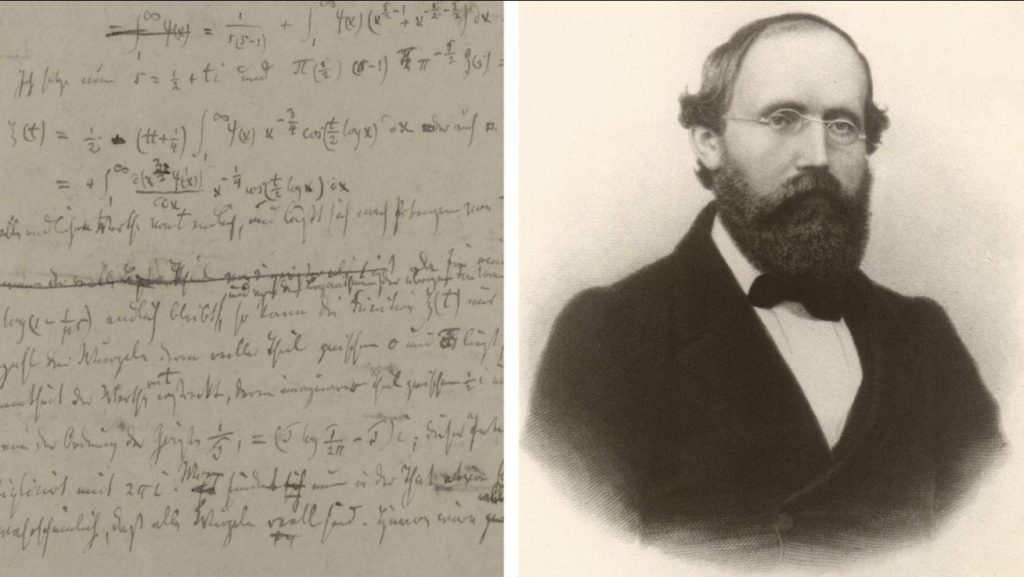
One impressive example is the Riemann Hypothesis, which was offered by the German mathematician Bernhard Riemann in 1859. It is a famous mathematical problem connected with the distribution of prime numbers, which are those natural numbers that are divisible only by themselves and one. Despite over 160 years of attempts to solve it, the problem still remains one of the most complicated in mathematics.
In August 2026, Anthropic disclosed that an advanced research version of Claude had refined an old mathematical lower bound from 41.6% to 67.2%. This concerned the ratio of zeros of the Riemann zeta function on a certain line. Despite Claude not having solved the original hypothesis at that time, it was an advance in solving a mathematically similar problem.
But guess what, the story turned out to be even more surprising in November 2026. Levent Alpöge, who worked as a mathematician at Anthropic, announced that he had devised a solution to the Riemann Hypothesis, assisted by Claude. The proof is delivered as about 17 million lines of code in Lean, which is a framework for verification of mathematical deductions.
On November 21, the Lean Focused Research Organization and Mathlib Initiative announced that they had independently checked the formal proof and expressed confidence in its correctness. However, human mathematical understanding and broader academic scrutiny remain important .
Claude AI Has Also Worked on Fermat’s Last Theorem
Another significant development involves Fermat’s Last Theorem, a mathematical statement that remained unproved for more than 350 years. It states that no three positive integers can satisfy the equation xn+yn=zn when n is greater than 2.
British mathematician Andrew Wiles finally proved the theorem in 1995. However, verifying such a complicated proof was itself a major challenge. In September 2026, Anthropic announced that Claude had independently worked on formalising Wiles’s existing proof using Lean. The system worked largely autonomously for 11 days, producing around 13 million lines of Lean code and approximately 29,500 intermediate theorems. This was not a new discovery of Fermat’s theorem; it was the first complete computer-checked formalisation of its proof.
What Is Lean, and How Does It Verify AI-Generated Mathematics?
Lean is a programming language and mathematical proof assistant that checks whether the logical steps in a mathematical argument are correct. Basically, it is a strict examiner who does not accept an answer simply because it looks convincing. To satisfy such an examiner, every step must follow the rules of mathematics and stay coherent.
What makes this technology so relevant is the possibility for AI to occasionally make an error that will provide completely sensible explanations. The ability to translate math reasoning into code means that people will be able to check whether the logic of these statements is correct using the computer.
However, a computer checking a proof does not automatically mean that humans understand how or why the mathematical discovery works. Thus, leaving the solution as “claim” instead of a verified solution.
Is AI Replacing Mathematicians?
Apparently, no. But it is changing what mathematical research will look like in the nearing future. AI can explore multiple approaches, perform calculations, identify patterns and assist with proofs at a speed that would be difficult for an individual researcher to match. Yet mathematics involves much more than reaching the correct answer. Researchers must identify meaningful questions, interpret results and understand how new discoveries connect with existing knowledge. So, mathematicians are/ shall be still needed.
What does the era of alien mathematics mean for students?
For students, these developments offer an important lesson about the future of education. Mathematics is no longer limited to learning formulas, memorising methods and finding the correct answer in an examination. It is increasingly connected to programming, artificial intelligence, data analysis and scientific research.
Students who understand mathematical concepts can use AI tools to explore difficult questions, test their own solutions and learn how mathematical ideas are applied in real-world situations.
This is particularly relevant for students interested in:
- Mathematics and Statistics
- Computer Science and Artificial Intelligence
- Data Science and Machine Learning
- Physics and Scientific Research
- Computational Mathematics
- Cryptography and Cybersecurity
However, using AI should not replace understanding mathematics. A student who can spot an incorrect AI-generated solution, explain its flaw, and create a better approach has a key advantage over someone who merely copies the answer.
As AI becomes more common in mathematical research, conceptual understanding, logical reasoning, and problem-solving skills become even more valuable which, in fact, make humans more vulnerable to research opportunities.
What Does the Future of Alien Mathematics Look Like?
The most interesting part of this development is that AI is beginning to contribute to the discovery process itself. It is no longer limited to answering questions that humans have already solved. Claude’s work on the Riemann Hypothesis and Fermat’s Last Theorem demonstrates how artificial intelligence can participate in complex mathematical research.
Perhaps the biggest question is no longer whether AI can solve difficult equations. It is whether humans will be able to understand all the mathematical discoveries that increasingly capable machines produce.
For centuries, mathematics has been driven by human curiosity but now machines are becoming a part of that curious journey, and the next great mathematical breakthrough may come from a collaboration between human imagination and artificial intelligence, or maybe only Claude.
Frequently Asked Questions
1. Has Claude solved the Riemann Hypothesis?
Anthropic mathematician Levent Alpöge announced a proof developed with Claude in November 2026. The Lean and Mathlib communities independently checked the formal proof and expressed confidence in its correctness. Wider mathematical scrutiny is still important.
2. What is the Riemann Hypothesis?
Proposed by German mathematician Bernhard Riemann in 1859, the Riemann Hypothesis is a famous mathematical conjecture about the distribution of prime numbers. It is one of the seven Millennium Prize Problems.
3. Who proved the Riemann Hypothesis using Claude AI?
Levent Alpöge, a mathematician at Anthropic, announced the Claude-assisted proof. Claude helped him develop the mathematical argument, which was released as approximately 17 million lines of Lean code.
4. What is Lean, and how does it verify mathematical proofs?
Lean is a programming language and proof assistant that checks mathematical arguments step by step. It helps researchers verify whether a proof follows the rules of formal logic.
5. What is the connection between Claude AI and Fermat’s Last Theorem?
Claude also helped formalise Andrew Wiles’s existing proof of Fermat’s Last Theorem in Lean. This made the proof computer-checkable; it was not a new discovery of the theorem.
6. Does AI have the ability to replace mathematicians?
No. AI can assist with calculations, explore mathematical approaches and formalise proofs, but mathematicians remain essential for developing research questions, interpreting results and understanding mathematical discoveries.
7. What does alien mathematics mean?
Alien mathematics is an informal term for mathematical approaches or discoveries generated with AI that may differ from conventional human methods. It is not yet an established branch of mathematics.
8. How can students prepare for the future of AI-driven mathematics?
Students can build a strong foundation in mathematics, programming, logical reasoning and data science. Learning to evaluate AI-generated solutions critically will also become increasingly important.





Add comment