

 Nibeditaa Speaks
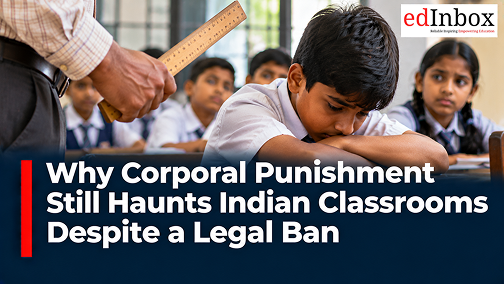
A school is meant to be a safe place where children learn, make mistakes and grow. Yet, for some students in India, entering a classroom still comes with the fear of being slapped, beaten or publicly humiliated for not meeting a teacher’s expectations.
Despite a legal ban, corporal punishment continues in Indian schools, exposing the gap between child protection laws and what happens inside classrooms.
A recent report by The Hindu highlighted the case of a Class 9 student at a government girls’ school in Chennai who reportedly began avoiding school after being repeatedly beaten by her mathematics teacher for missing classes and failing to complete an assignment. The experience reportedly affected the student’s mental health. The alleged punishment stopped only after her parents threatened to approach the police.
The incident raises an uncomfortable question: if the law prohibits physical punishment, why are children still afraid of their teachers?
What Does the Law Say?
Section 17 of the Right of Children to Free and Compulsory Education (RTE) Act, 2009, prohibits physical punishment and mental harassment of children in schools. The provision also allows disciplinary action against teachers who violate it.
The Juvenile Justice (Care and Protection of Children) Act, 2015, provides additional protection against cruelty towards children.
However, having laws in place has not necessarily changed classroom behaviour everywhere.
Why Does Corporal Punishment Continue?
One reason is the long-standing belief that fear produces discipline. In some classrooms, students are expected to remain silent, follow instructions and perform well academically. Those who struggle, question authority or fail to complete assignments may face punishment.
Inadequate teacher training, overcrowded classrooms and limited access to counselling can make the situation worse. Children, meanwhile, often remain silent because they fear further punishment or embarrassment.
The consequences can extend beyond physical injuries. Repeated humiliation and intimidation can affect a child’s confidence, emotional well-being, classroom participation and willingness to attend school.
Discipline Without Fear
Ending corporal punishment requires more than reminding teachers about the law. Schools need effective complaint mechanisms, teacher training, counselling facilities and accountability when children are harmed.
Teachers must also be encouraged to use positive discipline, patience and constructive feedback rather than physical force.
Academic performance should never come at the cost of a child’s dignity. A student who struggles with mathematics, misses homework or makes mistakes needs guidance, not punishment.
The real measure of a good school is not how quietly its students sit in class, but how safely and confidently they learn.




 Miss Kanishka


Add comment