

 Miss Kanishka
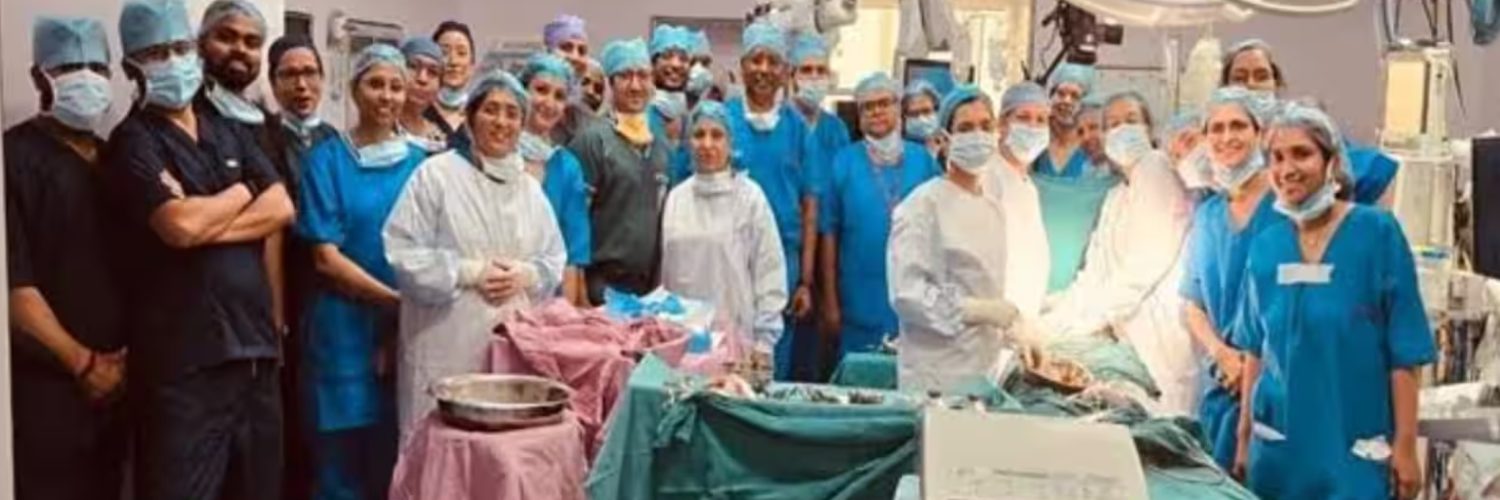
Doctors at the All India Institute of Medical Sciences (AIIMS) in New Delhi have successfully completed an open fetal surgery to correct a severe spinal deformity in an unborn child. The surgery, which lasted for 6 hours, took place on the 12th November 2026 and involved over thirty doctors and nurses from various medical specialties.
This surgery, identified as India’s first, involved correcting a condition known as ‘lumbosacral myelomeningocele’ (the most severe form of spina bifida). The surgery was performed at AIIMS Neurosciences Centre and was free of charge through the Government of India’s Janani Shishu Suraksha Karyakram (JSSK).
What Condition Did the AIIMS Doctors Correct?
The unborn child had been diagnosed with a severe birth defect known as ‘lumbosacral myelomeningocele’. This occurs when the spinal cord and its covering push through an opening in the spine.
This is a type of spina bifida caused by the improper closure of the neural tube in the early stages of pregnancy. If left untreated, this can cause paralysis, bladder and bowel issues, hydrocephalus and other neurological issues for life.
Traditionally this condition is corrected with surgery once the child is born. However, correcting the issue in utero can help to reduce further damage to the spinal cord.
How Was the Surgery Performed?
The surgery lasted for a total of 6 hours after careful planning and preparation from over 5 weeks. This included detailed fetal imaging, parental counseling, anaesthetic planning and practice surgeries.
Over thirty doctors and nurses were involved in the procedure, coming from various departments including Obstetrics and Gynaecology, Maternal Fetal Medicine, Neurosurgery, Plastic Surgery, Radiodiagnosis, Neonatology and specialist Anaesthesia. The surgery involved the use of high powered microscopes and continuous ultrasound guidance.
The neurosurgery was lead by Professor Deepak Gupta, whilst the Maternal Fetal Medicine and Obstetrics teams were led by Dr Neena Malhotra and Dr K Aparna Sharma.
Both the mother and fetus are currently stable after the surgery, however AIIMS have stated that they will be closely monitored throughout the remainder of the pregnancy, labour and birth.
Why is Fetal Surgery Important?
Fetal surgery enables doctors to treat certain conditions in unborn babies. By correcting spina bifida in certain cases in utero, this can help to reduce further damage to the exposed spinal tissue.
Benefits of this correction have been looked into internationally. A landmark study known as the Management of Myelomeningocele Study (MOMS), found that 40% of children required a cerebrospinal fluid shunt to treat hydrocephalus within 12 months, compared to 82% of those who had their surgery after birth.
Fetal surgery isn’t a cure for spina bifida and can cause risks such as premature birth and complications from the surgical scar on the womb. Due to this it is only offered to highly selective pregnancies in specialist centres.
Free Surgery Through Government Scheme
An important part of this achievement was that the surgery was free of charge through the Governments of India Janani Shishu Suraksha Karyakram (JSSK). This scheme aims to provide free healthcare to pregnant women and ill newborns in public health facilities. Having access to such an advanced treatment through a government healthcare facility is an important development in specialist maternal and fetal care within India.
AIIMS have pointed out the importance of providing a safe and accessible service for fetal surgery to eligible families across the country.
A Milestone in Medical Science in India
The successful fetal surgery at AIIMS Delhi shows the advancement in medical capabilities in India, specifically within Maternal Fetal Medicine and Pediatric Neurosurgery.
Doctors have also stressed the importance of prevention alongside surgery. As the Neural Tube closes around 28 days after conception and often before the woman knows they are pregnant, pre-conception counselling on folic acid and adequate folate supplementation is still an important way of reducing the risk of neural tube defects.
This shows how medical science can advance to provide new options for treating certain conditions pre-birth. It also highlights the importance of specialist teams, early diagnosis and accessible healthcare.

 Nibeditaa Speaks



Add comment