Seeking the most appropriate management courses in India 2026? Thousands of students in Delhi, Mumbai, Bangalore and tier 2 cities and 3 cities strive to get the best BBA and MBA courses with GMCAT 2026. The article discusses management courses in India 2026 stepwise: eligibility, fees, colleges, and how GMCAT will help to secure admission with scholarship (only eligibles).

What is GMCAT? Management Courses Easy Entrance.

Global Management Common Aptitude Test (GMCAT) is one of the leading entrance tests developed to become a successful management professional who aspires to be the best in the global business environment. GMCAT is the key to your dreams whether you wish to take up undergraduate management programs or postgraduate studies.

The test is carefully designed to test candidates on the skills that are vital to success in the dynamic profession of management such as Verbal Ability, Quantitative Aptitude, Logical Reasoning and General Knowledge. This makes filtering the right talent for universities easy while helping students find the best university that aligns with their aspirations. 

Why management courses in India via GMCAT 2026? 

  1. One test scores for 100+ universities 
  2. Merit student scholarships.
  3. Also covers BBA at the end of 12 th standard and MBA at the end of graduation.
  4. Assess practical competencies: marketing, finance, human resource, operations.
  5. No stress like CAT which makes it perfect for Class 12 passouts or working pros. 
  6. Search for "GMCAT management courses India" rising fast, making it a preferred online entrance test. 

Best BBA Management Courses after 12th via GMCAT

After 12th, management courses in BBA build business basics. GMCAT scores are required for entry into good colleges.

Top BBA Specializations 2026:

  • BBA General: Marketing, finance, operations 3 years
  • BBA Marketing: Digital ads, consumer study.
  • BBA Finance: Banking, investments.
  • BBA HR: Team leading and hiring.
  • BBA International Business: Global Trade

Eligibility:

50% in Class 12 (any stream) GMCAT score + interview.

Top BBA Colleges Accepting GMCAT: Fees per year

  1. NMIMS Mumbai: ₹3-5 lakhs, jobs ₹6-10 LPA.
  2. Christ University Bangalore: ₹ 2 lakhs.
  3. Symbiosis, Pune: ₹3 lakhs.
  4. Amity Noida (Delhi NCR): ₹2 lakhs.

GMCAT Process for BBA: Register on gmcat.org, give online test, get counseling for seats + scholarships.

MBA Management Courses in India 2026 via GMCAT

For graduates, an MBA management course guarantees high salaries from ₹15-40 LPA. GMCAT opens doors for executive MBAs too.

Top MBA Specializations:

  • MBA Marketing: Brand building, sales
  • MBA Finance: Stock market, loans.
  • MBA HR: Company culture, training.
  • MBA Entrepreneurship: Start your business.
  • Executive MBA: For job holders, 1-2 years.

Management Course Fees in India 2026

  • BBA: ₹1-5 lakhs total in UP colleges like Lucknow University affiliates.
  • MBA: ₹5-40 lakhs, scholarships via GMCAT cut costs.
  • Online MBA: ₹1-3 lakhs, NMIMS online.

Even if you are looking for "low fee BBA colleges" or "MBA scholarships Delhi" – GMCAT helps you find the perfect match.

How to Prepare & Admit via GMCAT for 2026?

Here are simple 5 Steps to prepare for Global Management Common Aptitude Test: 

  • Register on GMCAT portal.
  • Take a 60-min online test anywhere.
  • See score on portal.
  • Join counseling for colleges.
  • Pay fees, start classes.

GMCAT Exam Tips

  • Practice Marketing topics
  • Practice Finance Questions
  • Take Free Mocks 
  • Attempt all questions

Jobs After Management Courses via GMCAT BBA 

  • Graduates: Marketing Executive (₹4-8 LPA), Bank Officer. 
  • MBA Graduates: Manager ₹15-30 LPA at TCS, HDFC, startups. 
  • Global Jobs: Get jobs outside India via university placement or support. 

Note: India needs 2 million managers by 2030 - this is your chance! 

Why choose Management courses via GMCAT 2026?

GMCAT makes the pursuing management courses in India 2026 easy. Candidates only need to take one test for BBA/MBA, scholarships, career help. For Indian students in metro cities, small towns or even remote areas, it is the perfect start. 

Visit https://gmcat.org/ now, and register yourself for GMCAT 2026 and pursue your desired  management course from the top university in India!

Pursuing an MBA helps a lot in upgrading your skillset and boosting your CTC. However, if you're hustling through college finals or stuck in a 9-to-5 loop, dreaming of that MBA degree that'll flip your career upside-down might be draining. Exam halls, traffic jams, and sky-high fees are not worthy of your time especially in an era where gaining info & knowledge is just a prompt away. That's where the GMCAT entrance exam comes in. It is your ultimate online entrance test for MBA  helping you pursue the degree online, offline, in north, in south or anywhere in India you want. Forget the old-school hassle; this online MBA entrance test is built for real life. Here are five reasons why MBA aspirants should prefer online entrance tests for management .

Reason 1: Take Test When You Are Ready

Who has time for fixed dates that clash with everything? With the GMCAT entrance exam, you choose your spot, whether your couch, a cafe in Bangalore, your Delhi dorm or your hostel  room. No rushing to centers, no "what if I miss the bus?" panic. Be it working pros or last-bencher grads, this online  MBA entrance exam helps focus on giving the exam stress-free.

Reason 2: Budget-friendly and Convenient 

Big-name exams gobble up cash on fees, travel, and stays. The GMCAT for MBA flips that convention with super-low costs and zero commute expense making it  a convenient option for securing a seat in the top universities offering MBA.  Also, students don’t need to re-register for the exam if they miss it; they can simply contact their counsellor and request them to reschedule the exam. Pro tip: call on the number mentioned before making the payment yourself. 

Reason 3: Tests Skills That Matters 

MBAs aren't about rote learning anymore because it's digital hustlers who rule. GMCAT entrance exam throws adaptive questions and AI proctoring your way, sharpening skills you'll use in Zoom meetings or fintech gigs. 

Reason 4: Faster Result and Assured Seat

Contrary to other entrance tests, the GMCAT results are announced within 2-3 days of the examination. This allows students to settle their mind on what to do next without much pressure and which college or institute to join and thereupon, book a seat. 

Reason 5: Accepted in top B-schools 

One exam, 100 doors! GMCAT gives entry to 100 plus best B- schools in India. It recognises your real managerial skill and places you in an institution that aligns with you, giving you meaningful placement prospects after the completion of your degree.  If you are searching for the most trusted online MBA entrance test for 2026, GMCAT really stands out as the smarter choice.

So, stop planning, avoiding or delaying. Take GMCAT by registering from its official website and start your MBA journey. GMCAT syllabus, eligibility criteria and fee are all mentioned on its official website, check and register. 

For free consultation or expert guidance, call 8071296497.

In the world of today, making the right career choice is more about a combination of passion, practicality, and readiness of the future amongst many Indian students. Considering the trend, and demand for digital marketers, a Bachelor of Business Administration (BBA) in Marketing often comes up as a preferred choice. But is it worth your time and money to build a career in this field? The solution is to first know about the opportunities and challenges that BBA Marketing provides.

Marketing specialists are demanded in India, and their number is increasing at an impressive pace, particularly due to the influx of online platforms and e-commerce. BBA Marketing provides students with the skills necessary to succeed in the field, such as strategic thinking, analysis of consumer behaviour, digital marketing, and brand management. Rewarding positions to graduates include Digital Marketing Specialist, Brand Manager, Market Research Analyst, and Social Media Manager. Salary offered to freshers is approximately between 3.5 lakh and 7 lakh annually, and the growth is good upon attaining experience.

Secondly, the curriculum integrates theory and hands-on experience to equip the students to cope with changing marketing trends. Nevertheless, Indian students need to take the initiative - simply a degree might not be enough. The acquisition of technical skills in SEO, Google Ads, data analytics, and attaining internships will make employability far more positive. 

Besides, marketing career competitions are high. Additional courses such as MBA or certifications should also be considered by the students in order to continue ascending in this competitive world. Marketing requires innovativeness, endurance and ongoing education, which should be cultivated to go hand in hand with academics.

In short, BBA Marketing is a good investment provided that students are determined to exploit the various opportunities presented. It fits the individuals who have the talent of communicating, planning, and innovating. BBA Marketing can be a lucrative catapult to a brilliant business career in case Indian students are willing to move out of their comfort zone and acquire practical knowledge. 

Master of Business Administration (MBA) remains a popular higher education programme among the Indian students in 2025-26. This is a trend that is motivated by the convergence of changing business environments, the proliferation of career opportunities and the growth in the value of an MBA degree in India.

Increasing value of MBA in the dynamic economy of India

The economy of India is growing at a blistering pace and is slowly becoming integrated into the global market thus creating a high demand of skilled managers and business leaders. MBA enables the students to possess the knowledge and ability to manoeuvre through complicated business conditions, be it in startups, corporates, or with the entrepreneurial venture. MBA programmes have been updated to address future needs with topics such as AI, data analytics, fintech, and sustainability being included, as the industry is going digital and becoming more innovative.​

Top Reasons why Indian Students choose MBA in 2025-26

  1. Greater career opportunities and high pay potential: MBA graduates in India will enjoy high pay increments and the possibility of mid-senior and senior positions in their chosen industry, such as finance, marketing, consulting, and technology. Such specialisations as Business Analytics, Finance, and AI, in particular, pay off well.​
  2. Skill Development and Leadership: MBA also develops critical soft skills like leadership, communication, problem-solving and teamwork, which are essential in career development beyond technical knowledge.​
  3.  Developing a Professional Network: MBA provides exposure to an extensive pool of alumni, industry professionals and colleagues to enable students to create professional networks that are very important in career development.
  4. Versatility and Entrepreneurship: The diversified curriculum enables graduates to venture in many areas and even start ups with improved business skills.​
  5. Job Security and Recognition around the world: MBA holders are more employable and have better job security in a volatile job market. The international recognition of the degree is another factor that contributes to its attractiveness among Indian students.​

Emerging Trends in MBA Education in India

MBA specializations in India are evolving, focusing on future-ready skills. Popular fields now include:

  • Business Analytics & Data Science: Driven by AI and big data adoption, these MBAs offer careers as data analysts, consultants, and digital transformation leaders.
  • FinTech and Finance: With the rise of digital finance and blockchain, Finance MBAs are in high demand.
  • Sustainability and Social Impact: Reflecting global priorities, these MBAs gear students towards responsible business practices.
  • Management and Digital Marketing: The ongoing digital revolution creates opportunities in brand management and online marketing.

What is the best way to select the MBA Programme?

Some of the aspects that Indian students need to take into account are relevance of the curriculum, faculty specialisation, industry relations, placement opportunities, and specialisation. The engagement in programmes that combine experiential learning, internships, and live projects will lead to increased employability. It is essential to test whether the programme is in accordance with the career goals and the emerging market needs.

What are some of  the recommended institutes for pursuing an MBA?

There are many institutes one can choose for pursuing an MBA. However, as per our research, following are the top 10 universities that offer credible and well-rated MBA programs, based on institutional reputation and rankings for 2025-26:

  1. Lovely Professional University
  2. Amity University (various campuses)
  3. Bennett University, Greater Noida
  4. Dayananda Sagar University, Bangalore
  5. Chandigarh University, Mohali
  6. Jaipur National University
  7. Vivekananda Global University, Jaipur
  8. IILM Institute for Higher Education (Delhi, Jaipur, Greater Noida)
  9. Jagdish Sheth School of Management (JAGSoM), Bangalore
  10. Maya Devi University

The MBA will continue to be one of the preferred and strategic degree programmes by Indian students in 2025-26, providing them with opportunities of career development, leadership and entrepreneurship work in a dynamic economy. The flexibility of the degree, the increasing number of specialisations, the emphasis on digital and sustainable business practices all contribute to the high relevance of the degree in the future. Those students who want to have a dynamic career and a more powerful network of professionals consider MBA as a new step to achieving their aim.

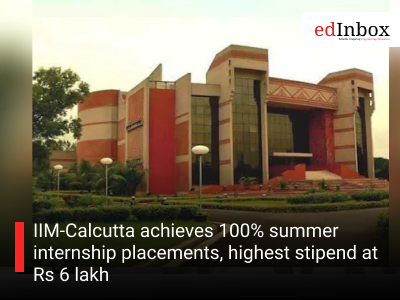
IIM Calcutta reported an average monthly stipend at Rs 1.85 lakh, while the median stipend stood at Rs 2 lakh a month for the summer placement season.

IIM Calcutta has achieved 100 per cent placement for summer internships in 2026 for its 62nd MBA batch. A total of more than 520 offers were received for 465 students by 154 firms within seven days of placement activities.

The institute said the entire placement process was completed in hybrid mode. In all, 183 recruiters participated in the placement drive, including many first-time participants alongside regular recruitment partners. The structured cluster-cohort model, along with policies such as the ‘dream offer’, ensured an optimal fit between students and recruiters”, making it, as the institute described, “a win-win for both sides.”

Average monthly stipend of Rs 1.85 lakh

IIM-Calcutta reported that the average monthly stipend during summer placement season stood at Rs 1.85 lakh, while the median stipend was Rs 2 lakh per month. This year, the highest domestic stipend was Rs 4.5 lakh a month, while the highest international stipend reached Rs 6 lakh a month.

That the top 5% of students at IIM Calcutta received an average of Rs 3.4 lakh per month reflects strong market demand for its MBA talent. Sectoral trends IIM Calcutta said the summer placement season at the institute saw offers from sectors like consulting, finance, FMCG, manufacturing, pharmaceuticals, software, and technology. Besides the legacy recruiters tapping into the pool of students at the institute, multiple new domestic and international firms participated in the process for the first time. The institute said that a large and strong network of alumni helped in making the recruiters' interaction much stronger for the smooth placements of all. The sustained relationship between the alumni, faculty and corporate partners further added momentum to the process of achieving a single objective of 100% placement across all cohorts. Commenting on the feat, Professor Ritu Mehta, Chairperson of Placement Activities at IIM Calcutta said, "The performance of the 62nd batch MBA students resulted in yet another year of excellent summer placements. We are grateful to the recruiters for continuing to believe in our students and trust our academic processes." Previous session also recorded 100 per cent placement In the previous session, for the 61st MBA batch, IIM Calcutta had achieved full summer internship placements, wherein all 475 students got placed with a total of 564 offers from 175 companies across sectors. According to the institute, the median stipend stood at Rs 2 lakh per month, while the average stipend was Rs 1.89 lakh per month, both record highs for IIM Calcutta then. The highest domestic stipend reached Rs 3.67 lakh per month, whereas international recruiters offered stipends as high as Rs 6.75 lakh per month.

The waitlist movement of IIM continues to be one of the most eagerly awaited stages for MBA hopefuls following the Common Admission Process (CAP) and final results of admissions. Thousands of applicants every year eagerly wait as the Indian Institutes of Management publish waitlist movement reports, typically extending between May to July.

Waitlist movement takes place when the initially shortlisted candidates reject admission invitations, and this drives IIMs to invite the next available candidates from the waitlist. This movement is quite different across different IIMs, categories, and years of admissions.

Upper IIMs (A, B, C, L, K, I) tend to observe minimum movement due to greater acceptance by higher-ranked candidates. For the year 2025 admissions, candidates should look forward to several rounds of waitlist movements in May-July 2025.

Younger IIMs and baby IIMs, however, tend to have substantial waitlist movement as plenty of aspirants upgrade to older IIMs or more prestigious non-IIM institutes.

Category-wise variations are observed — SC, ST, and OBC categories, being more heterogeneous in nature, witness greater waitlist movements owing to different patterns of acceptances and seats available.

Factors that Impact Waitlist Movement

There are various factors that determine the extent of movement at the waitlist at every IIM:

Acceptance Rate – When a majority of high-calibre candidates accept offers at top IIMs, movement is reduced.

Seat Intake – B-schools with bigger batch sizes (such as IIM Rohtak or IIM Indore) exhibit wider movement.

Alternative Offers – Offers to ISB, XLRI, FMS, SPJIMR, or abroad international B-schools tend to create openings at IIMs.

Reservation Policies – Category-wise allotments may lead to disproportionate movement across General, EWS, OBC, SC, and ST lists.

As competition becomes fiercer year on year, knowing the IIM waitlist movement 2025 trend can assist applicants in estimating their prospects better and making effective backup plans.

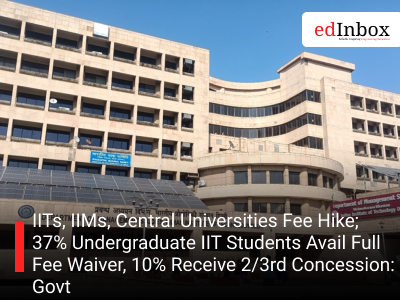
The government has stepped into actions in response to inquiries about fee hikes in top institutions like Indian Institutes of Technology (IITs), Indian Institutes of Management (IIMs), and central universities as part of a Parliament inquiry. Even as they assured that some of the colleges have revised their fee structure, the government asserted there are different schemes of waivers and grants of financial aid provided to students from marginalized communities. According to official figures, fees for undergraduate courses in IITs were doubled in 2016 from ₹90,000 to ₹2 lakh a year, while fees for MBA courses at top IIMs have crossed more than ₹20 lakh.

For IIMs, the schemes of financial assistance vary in institutions. Most of the IIMs offer need-based tuition fee scholarship to students of the lower-income group and extra scholarships to meritorious students by the Ministry of Education and external funding agencies. Central universities offer meric-cum-means scholarships, SC/ST scholarships, and fee waivers to meritorious students. 

IIT Fee Hike Details

The Parliament response did admit that a few IITs have raised their fees in the last few years. The course fee of the undergraduate course was raised in 2016 from ₹90,000 to ₹2 lakh per year for general category students. SC, ST, and PwD students remain exempt from full fee concessions, while partial concessions are given to EWS students. Even M.Tech and PhD courses have witnessed time-to-time fee hikes amongst IITs.

In the same vein, IIMs have innovatively restructured their fees from time to time, and fees for flagship MBA programs in leading IIMs are now touching ₹20 lakh. Yet economically weaker sections of society get considerable financial assistance so that deserving students are not deprived of opportunities because of fiscal limitations.

Govt's Stand on Accessibility

The Ministry of Education reaffirmed that affordability and accessibility are issues of prime importance. It claimed that the top institutions are still providing different types of scholarships, interest-free loan facilities, and need-based finance to ensure that students from all socio-economic backgrounds can access quality higher education with no economic burden. The response of government is to balance fiscal sustainability of institutions with inclusivity to ensure that meritorious students can still get access to education in India's best institutions irrespective of occasional fee adjustments.

More Articles ...