GMCAT
Fostering excellence in management education, research, training, and professional development
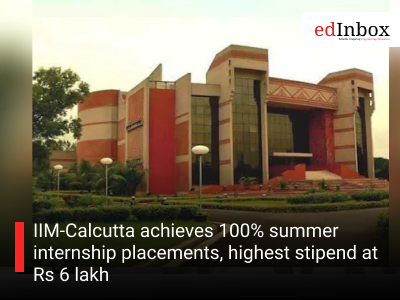
The Institute of Cost Accountants of India (ICMAI) and the Indian Institute of Management (IIM) Jammu signed a Memorandum of Understanding (MoU) recently. The agreement is a major accomplishment to enhance excellence in management studies, research, training, and professional development, according to a statement given to the media. "The MoU signing ceremony was witnessed by Prof. B.S. Sahay, Director, IIM Jammu; CMA Navneet Kumar Jain, Council Member, ICMAI; and CMA Dr. Debaprosanna Nandy, Secretary (Officiating), ICMAI, Rajesh Talwar, Director Finance, Department of Law, Justice and Parliamentary Affairs, Govt. of Jammu and Kashmir."
"Cmdr. Kesavan Baskkaran (R), Chief Administrative Officer (CAO) IIM Jammu, and CMA Dr. Debaprosanna Nandy, Officiating Secretary, ICMAI, signed the MoU in a formal ceremony today in the presence of high-level IIM Jammu and ICMAI officials," it added. Members of senior faculty of IIM Jammu were also present. "The MoU creates a framework of collaboration between the two flagships to enable them to work together to develop and deliver Management Development Programmes (MDPs), Specialized Training Programmes, Executive Education, and Faculty Development Programmes."
"It also provides opportunities for sharing knowledge in the form of collaborative research, co-sponsored seminars, conferences, workshops, curriculum development, and sharing of facilities for academic purposes," the release added further. Prof. B.S. Sahay, Director, IIM Jammu, reiterated that the MoU with Institute of Cost Accountants of India marks IIM Jammu's bigger vision of building an ecosystem of academic excellence, research-based innovation, and effective executive education.
He said that the collaboration would not only strengthen the research and study relationship between the two institutions but also give the space to train professionals and leaders with the right knowledge, values, and abilities to meet the new requirements of an evolving economy. "He also stated that operations under this MoU will bear long-term fruits for students, industry professionals, and society in general.". CMA Navneet Kumar Jain, ICMAI Council Member, said that the MoU is a strategic step towards professional education and future-proof talent development in cost and management accounting," the release added.
He also mentioned that through sharing of educational material, research outcomes, and specialized training processes, the tie-up would facilitate bridging crucial skill gaps in the profession. He also emphasized that the alliance would make professionals competitive in the face of a dynamic business environment, improve productivity and innovation in industrial practice, and confirm a culture of learning and growth across industries. Prof. Jabir Ali, Dean, Faculty and Research, IIM Jammu, noted that the alliance would improve the research culture of the Institute, improve curriculum designing, and explore new areas of innovation.
He emphasized that they play a significant role in ensuring academic learning is congruent with practice in industry and thereby graduating students well prepared to function effectively in society and organizations. The MoU shall facilitate collaborative efforts in areas of mutual interest, including research initiatives, faculty exchange, and sharing of common academic infrastructure. "This partnership is an expression of the vision of IIM Jammu as an international-level management school and ICMAI as the statutory organization tasked with developing and governing the cost accountancy profession in India," the release added.
PMK Leader Anbumani Ramadoss Demands Action on Water and Education in Tamil Nadu
While record water scarcity and education infrastructure remained at the back of Tamil Nadu's mind, PMK leader Anbumani Ramadoss demanded change on Friday in his 'Urimai Meetka, Thalaimurai Kaaka' campaign.
Farmers in Thanjavur's central agricultural region must skip cultivation seasons as water levels dip and reservoirs stay at historically low levels. Experts have cautioned that if there is no urgent and comprehensive overhaul of water management, the state can have a critical "Day Zero" in 2030 by which the water supplies would be scareingly close to depletion.
Education: Safety and Quality in Focus
Ramadoss also made a reference to a tragic recent case in which one of the Tirupattur school student was discovered dead in the hostel, prompting public outrage against government aided school safety and security. This, Ramadoss said, highlights the need to regain confidence in public education through better infrastructure, well-trained teachers, and strict safety screening.
A Call to Government and Citizens
With his tour, Ramadoss is challenging the people and the government to implement these interconnected issues. He is calling for stricter water saving laws, recharging natural water bodies, rainwater harvesting resources, and more emphasis on quality education.
He said, "Our future rests on how effectively we manage water today and how safely we nurture our children. It's time to act with urgency and compassion."
Since Tamil Nadu is at a crossroads, such cautionary notes as Ramadoss' remind us that self-determined water management and easing of learning are policy issues but paramount to the daily lives of millions.
This evaluation integrates the severity of the water crisis with the human side of school difficulties, which reflected Anbumani Ramadoss and his constituents' own concerns. It is founded upon the general situation of Tamil Nadu's water difficulties and the effects upon farmers, city-dwellers, and students
Master's in Organizational Leadership and Management Online
Whether it's a class project at school or a multimillion-dollar corporation, strong leadership can make or destroy a team. Leadership can be learned, and numerous individuals who seriously look at careers in management start by learning organizational leadership at the graduate school level.
Master's degrees in organizational leadership and management tend to be practical, fast-paced, and career-focused, designed to set students who want to work in management upon graduation up for the rigors of the job. Most management careers demand profound specialized expertise in a specific area, for example, financial portfolios, information technology or health care services, and some online organizational leadership degrees do respond to this necessity by having electives or specialized tracks to prepare managers for specific fields.
In contrast to master's of business administration degrees, master's in organizational leadership degrees are concentrated on particular areas and managerial skills and do not delve as deeply into other general business administration subjects. A few MBAs demand considerable work experience. However, a master's in organizational leadership could be more appropriate for recent graduates who want to make themselves more noticeable in the job market. A few students with MBAs might opt to pursue organizational leadership studies in order to gain more specialized training.
MBA vs PGDM: Which Course Is Better to Build a Career in 2026?
Did you know a common question to many management aspirants today is: is MBA better than PGDM? What should I pursue? Both programs share the same demand, however, they vary in terms of teaching style, accreditation, and the way the industry perceives them.
What is an MBA?
MBA (Master of Business Administration) is a degree of university characterized by UGC (University Grants Commission). Its syllabus is predominantly theoretical and less frequently changed. Government work, academic work and the usual business-related career are well known MBA courses.
What is a PGDM?
Autonomous institutes that are AICTE approved provide a PGDM (Post-Graduate Diploma in management). Despite being a diploma, its curriculum is loose and is usually influenced by industry experts. The central focus of this program is practical learning- case studies and internships.
MBA Vs PGDM: What’s the Difference
|
Feature |
MBA |
PGDM |
|
Type |
Degree from university (UGC approved) |
Diploma from autonomous institute (AICTE) |
|
Curriculum |
Theoretical Less frequent updates |
Updated to industry needs Practical focus |
|
Cost |
Usually more affordable |
Can be higher, especially in top schools |
|
Value for Jobs |
Preferred for government, academics |
Preferred by private industry, startups, etc |
|
Teaching Style |
Lecture, exam-oriente |
Projects, case studies, internships |
|
Specialization Scope |
Broad, general management, electives |
Niche, trending fields like fintech, AI |
|
Flexibility |
Less flexible, fixed curriculum |
More dynamic, frequent updates |
|
Placement/Salary |
INR 6–12 LPA (average) |
INR 8–20 LPA (premium colleges) |
How to Choose Between MBA and PGDM?
- Choose an MBA if you aim for government service, research, academics, or if you need long‑term credential recognition both in India and abroad.
- Opt for a PGDM when you target private‑sector roles, startups, tech firms, or emerging areas such as analytics, fintech, marketing, and operations.
- Recruiters typically favor PGDM graduates for placements and salary growth because they value hands-on training and up‑to‑date curricula.
Cost and Exposure
MBA programs are generally more affordable at public universities, while PGDM programs can have higher tuition but offer greater exposure and specialization opportunities at top institutes.
Should You Choose MBA or PGDM?
- MBA fits individuals who desire the stability of career, academic jobs or governmental employment.
- PGDM is ideal for active learners, people aimed at corporate working experience, or those who are concentrated on rapidly changing industries.
Lastly, the institution reputation, alumni network, and placement record, or international or council accreditations are factors that make a better decision than the course title alone. In short, both MBA and PGDM are good career options. PGDM excels in private‑sector relevance, industry ties, and salary prospects; MBA shines for government roles and traditional career recognition. So, select which course to pursue according to your career objective and learning style preference.
Top MBA Entrance Exams in India for 2026: Your Complete Guide
Each year, there are lakhs of ambitious students in India with a dream of pursuing an MBA to build a lucrative career in management, consulting, finance, marketing, and technology. For 2026 aspirants, cracking the right entrance exams is the key first step. Most business schools with high ranking admit individuals who qualify through national and state-level MBA entrance exams. The most significant entrance exams are presented in this article, and the dates, trends, and colleges that accept scores provided, to assist you in organizing your MBA experience around the best time.
The importance of MBA Entrance Exams
MBA entrance tests are the barrier to the desirable management institutes like the Indian institutes of management (IIMs), XLRI, Jamshedpur, NMIMS, Mumbai, Symbiosis, Pune and so on. These tests help evaluate the applicants on such important areas as quantitative ability, verbal skills, logical reasoning, and general awareness. Competition is intense, and seats are few, with 4lakh+ candidates seeking to pass every year it is important to grasp the intricacies of these exams to succeed.
Top MBA Entrance Exams in India for 2026
1.Common Admission Test (CAT) 2025
Exam Date: November 30, 2025
Purpose: Gateway to 21 IIMs and over 1,000 prestigious B-schools
Pattern: 3 sections – Verbal Ability & Reading Comprehension (VARC), Data Interpretation & Logical Reasoning (DILR), Quantitative Ability (QA)
Duration: 120 minutes
Significance: The toughest and most sought-after MBA exam, registering over 3.5 lakh candidates every year
2.Global Management Common Aptitude Test (GMCAT) 2026
Powered by: edinbox
Accepted by: 70+ top management universities in India (private)
Duration: 1 hours
Exam type: 100% online with 100 MCQ questions
Significance: The easiest, convenient MBA entrance exam for admission, registering over 500 candidates from the first year of being introduced in 2024.
3.Xavier Aptitude Test (XAT) 2026
Exam Date: January 4, 2026
Accepted By: XLRI Jamshedpur, XIMB, IMT Ghaziabad, over 1,000 institutes
Pattern: 4 sections including Quantitative Ability, Decision Making, and General Knowledge
Duration: 180 minutes
4.NMIMS Management Aptitude Test (NMAT) 2025
Exam Window: November-December 2025 (flexible scheduling)
Institutes: NMIMS Mumbai, KJ Somaiya, IFMR, and other institutes
Key Feature: Conducted multiple times with best scores considered; online remote proctoring
5.Symbiosis National Aptitude Test (SNAP) 2025
Exam Month: December 2025
Scope: For admission to 17 Symbiosis institutes including SIBM Pune, SCMHRD
Pattern: Sectional, computer-based test
6.Common Management Admission Test (CMAT) 2026
Conducted By: National Testing Agency (NTA)
Exam Date: February-March 2026
Acceptance: AICTE approved institutes across India, including JBIMS Mumbai, BIMTECH
Sections: Quantitative Techniques, Logical Reasoning, Language Comprehension, General Awareness, Innovation and Entrepreneurship
7.Maharashtra CET (MAH MBA CET) 2026
Exam Date: March-April 2026
Scope: State-level exam for admission to MBA colleges in Maharashtra
Pattern: 200 questions across four sections in 150 minutes
Additional Notable MBA Entrance Exams in India.
- Tamil Nadu TANCET (MBA in Tamil Nadu)
- MICAT (strategic marketing and communications PGDM exam of MICA Ahmedabad)
- SRCC GBO (Specialized global business operations test of Shri Ram College of Commerce)
Preparing for 2026: Key Tips
- Begin on time and find 4-5 exams that conform to your target institutes.
- Get familiar with the syllabus and pattern of the various exams; many of them overlap.
- Test yourself using mock tests and past year papers to identify your strengths and weaknesses.
- Time management and conceptual clarity is important as well.
- Keep track of registration deadlines
- For latest updates and info, check the official website of the entrance exam you are preparing for.
In India, MBA admission tests are the portals to some of the most reputable management schools that make future leaders. Several exams are available to serve colleges at both national and state levels, therefore, aspirants need to strategize their preparation and discipline to ensure a landing into leading business schools such as IIMs, XLRI, NMIMS or Symbiosis among other exams to take place in the year 2026.
5 Steps To Become a CEO
Becoming a CEO is a dream of many students, professionals as well as entrepreneurs. But reaching the top job role requires more than dreaming. In the 21st century, CEOs face complex challenges that seek creative skills and expert-level knowledge. Here are 5 steps that will help you become a successful CEO without much hassle:
Gain Cross Function Experience
You might have observed, top CEOs have expertise across multiple business areas; this is what is needed to become exclusive in the market. According to the studies by PwC and Harvard Business Reviews, people who have exceptional skills in finance, operations, and marketing become top CEOs by leading successful companies. In India, those leaders who understand diverse departments including product, sales, supply chain tend to become CEOs.
Have Strong Strategic And creative thinking skills
Any CEO who doesn’t have a creative mindset and strategic thinking can never lead a brand. Building these two essential skills require more than potential. Taking up different roles that require analytic thinking and future planning can help build the required skills. Invest yourself in business case studies, attend strategy workshops, or pursue certifications like a mini-MBA or executive education programs offered by top Indian institutes (IIMs, ISB)
Build a Strong Network
It is important to establish networks with seasoned executives and mentors. In a study conducted by LinkedIn, 85 percent of jobs are filled by networking. Attend conferences in the industry (such as NASSCOM TechSummit or TiE Global Summit), participate in professional associations, and find mentors willing to offer guidance, sponsorship, and knowledge about the executive positions.
Develop Emotional Intelligence
CEOs are supposed to be team leaders dealing with various stakeholders, and emotional intelligence is the one skill that explains almost 90% of high-performance leadership impact. In the regional and cultural context of India, EQ is a necessity to overcome intricate interpersonal processes and develop motivating cultures. In order to be successful, it is important to focus on empathy, active listening, and conflict resolution.
Gain Financial Acumen and Risk Management Skills
CEOs manage risk, investments and budgets. A study of finance literacy by a top company indicates that new CEOs commonly have a gap in financial literacy. Deepen your knowledge in financial statements, capital market and risk examination. Being a CFA or taking a course in corporate finance may guide you on the choices to make in the boardroom.
Thus, to become a CEO, one needs to have a measured blend of general experience, strategic thinking, people ability, strong connections, and financial acumen. As a goal-oriented professional in India or elsewhere, these five steps could establish a tangible direction on how to be successful enough to become the head of any major business in the modern competitive business environment.