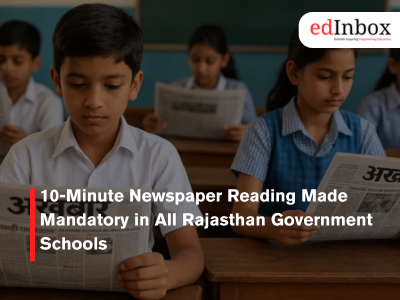
In its effort to produce students that are sensitive to the society and possess the skills of communication and are well informed, the Rajasthan Government has ordered all the government schools to include in their daily programme a 10 minute newspaper reading session. This new regulation targets at helping the students understand the happenings in the world around them, thus, improving their language skills and inculcating the habit of reading from an early age.

According to guidelines issued by the School Education Department, newspaper reading will be integrated into the daily school routine and conducted during the morning prayer assembly. The directive specifies that higher secondary government schools must subscribe to at least two newspapers—one in Hindi and one in English. Government higher primary schools are required to order two Hindi newspapers, while English-medium government schools must ensure the availability of both Hindi and English dailies.

School Education Department Secretary Krishna Kunal, in the official order, stated that students will read major editorials, important national and international news, and sports reports. To enhance vocabulary and comprehension, five new words along with their meanings will be introduced daily. Students from Classes 6 to 12 will actively participate by reading selected news items and editorials aloud, encouraging confidence, articulation, and public speaking skills. Students assigned the reading duty will be required to arrive at school 30 minutes earlier to prepare for the session. On designated ‘No Bag Days’, schools will organize mass discussions on current government initiatives and key issues, turning news consumption into interactive learning.

Education officials pointed out that the program is aimed at enticing students to take an interest in the news and public affairs, extend their general knowledge and improve their language skills. "It will definitely have a positive influence on students' social awareness, prepare them for competitive exams and help them acquire the skill of critical thinking, " a spokesperson of the Department said.

Secretary Krishna Kunal also pointed out that the new academic initiative is one of many that are designed to nurture a lifelong reading habit, which in turn, will develop students into aware, thoughtful, and self, confident citizens. With newspapers being a regular feature in classrooms across the state, Rajasthan is not only upgrading the educational system but also emphasizing schools' indispensable role in the intellectual and social development of the young, who consequently become more in sync with the world surrounding them.
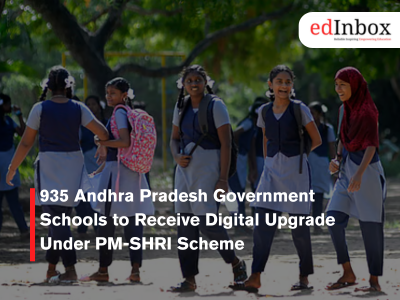
Andhra Pradesh is preparing to drastically upscale the public school education system with 335 government schools chosen for a total facelift under the PM, SHRI (Pradhan Mantri Schools for Rising India) scheme. The programme is designed to make these schools exemplary ones, provided with modern infrastructure, digital learning tools, and student- friendly facilities. This was conveyed by the Chief Secretary K. Vijayanand after a nationwide video conference reviewed by the PM Narendra Modi.

The meeting was about looking at the progress of the key development programmes in different states. With the implementation of the PM, SHRI scheme, the selected schools in Andhra Pradesh are being upgraded to ensure improved learning outcomes and a future, ready education environment. Vijayanand stated in a press release that these schools are being developed holistically to provide quality education supported by digital infrastructure. There will be many major infrastructural changes such as building permanent school buildings, providing an uninterruptible power supply, and separate toilets for boys and girls. Apart from these, the institutions will be provided with safe drinking water, handwashing facilities, libraries, and suitable sports equipment.

Under this program, schools will also be digitally transformed through internet connectivity, computer laboratories, and playgrounds, and digital identity cards will be given to students and teachers. The initiative also targets the digital transformation of schools by offering internet connectivity, computer laboratories, playgrounds, and digital identity cards to students and teachers.

Attendance tracking will be enhanced through child tracking software, thus enabling closer monitoring of student participation and engagement. Such initiatives are in line with the National Education Policy (NEP) 2020, which advocates holistic, inclusive, and technology driven learning. The progress of the PM, SHRI programme was reviewed in a meeting that included chief secretaries from all states. The discussions centred on implementation challenges, inter, state coordination, and best practices. Officials observed that the modernised infrastructure would be a source of both students' and teachers' empowerment, as the latter will get comfortable, healthy, and resourceful learning environments. By continuously investing in school infrastructure and digital education, Andhra Pradesh is determined to create new standards of quality for government schooling. The PM, SHRI programme is anticipated to become instrumental in closing learning gaps, facilitating access to technology, and securing the quality of education in the state over the long term.

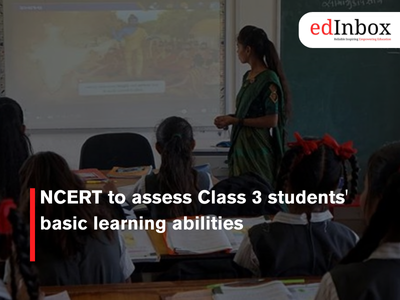
The National Council of Educational Research and Training will conduct the Foundational Learning Study to assess and strengthen the basic learning competencies of Delhi students at the Grade 3 level of the current academic year, a statement said.

The Delhi State Council of Educational Research and Training (SCERT) informed that the study is tentatively scheduled to be held during February, March 2026 in selected, sampled schools. The list of participating schools will be shared in advance.

The Foundational Learning Study (FLS) is aimed at gaining a clear picture of how students have acquired basic reading, writing and numeracy skills by the end of the foundational stage, the statement said.

It is a joint effort of SCERT and NCERT, the statement said.

In view of the preparations, NCERT has provided sample assessment tasks in Hindi and English to help teachers and students get acquainted with the assessment format and process.

Principals and heads of schools have been instructed to ensure that Class 3 teachers familiarise students with these sample activities to enhance their understanding and preparedness, as per the SCERT.

It indicated that schools were also instructed to expose students to numerous practice questions consistent with the shared sample tasks in order to help students become familiar and consolidate their basic skills.

It deeply felt that the co, operation of schools would be indispensable for the smooth and efficient implementation of the study as well as for the initiation of strong foundational learning outcomes among students.

While explaining the nature of the activity, NCERT clarified that the FLS is not an examination or test. It is a diagnostic survey and does not involve grading or giving certificates to individual students, nor does it function as a rating or giving certificates to schools.

The results are used to guide policy changes, make teachers' work better, and develop foundational education in line with the National Education Policy 2020.

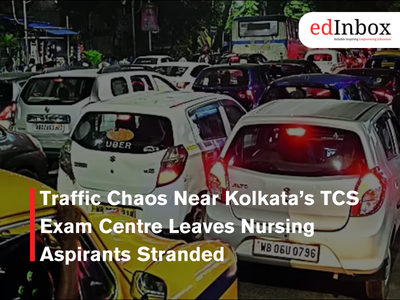
What should have been a decisive exam day turned into an anxious race against time for hundreds of nursing aspirants in Kolkata, as massive traffic snarls paralysed roads around the TCS Gitobitan exam centre in Salt Lake Sector V. From early morning, key stretches near JK Shah Crossing and adjoining IT corridors resembled parking lots, with vehicles barely moving for over an hour.

The centre, a regular venue for high-stakes competitive exams such as AIIMS NORCET, JEMScN M.Sc. Nursing entrance, and other recruitment tests, witnessed an overwhelming influx of candidates. Despite traffic advisories asking students to arrive well in advance, congestion persisted, aggravated by diversions on VIP Road and peak office-hour rush in Sector V.

For many aspirants, the delay proved costly. Social media platforms were flooded with posts from distressed candidates, some of whom missed entry deadlines by minutes. “We left home hours early, but the jam near TCS ruined everything,” one nursing aspirant wrote, echoing the frustration of many others who watched their career-defining opportunity slip away while stuck in traffic.

This happens at a time when West Bengal’s Health Department, together with TCS, is working hard to recruit more than 5,000 nurses due to the shortage of healthcare staff. But incidents such as the large-scale logistics failure at Gitobitan, which was meant to handle large exam centers, continue to raise serious concerns about how such incidents keep happening, especially since it has happened before, as evidenced by the past incidents related to UGC-NET.

Further complicating this scenario is the ever-increasing focus on nursing education in the state. Not long ago, the Calcutta High Court asked for an audit of all nursing colleges under the West Bengal Nursing Council within a six-month deadline and filed FIRs against all colleges operating illegally. There is yet another case in which students from a shut-down nursing college in Amtala were compensated after they were duped of huge fees.

“While the authorities have promised better advisories for the next set of exams, there are demands for corrective measures to be put in place to ensure that ‘ambition is not wrecked by unnecessary chaos on the roadside,’” according to a report.

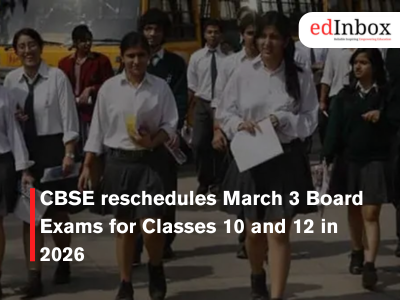
The Central Board of Secondary Education just switched up the 2026 board exam schedule. They’ve pushed back the papers that were meant for March 3. CBSE says they had to make this change for a few reasons. They’ve told all schools to spread the word fast, so students and parents aren’t left confused.

Here’s what’s new: Class 10 exams set for March 3 will now be held on March 11. This shift covers a bunch of subjects—languages like Tibetan, German, Bhoti, Bodo, Tangkhul, Japanese, Bhutia, Spanish, Kashmiri, Mizo, Bahasa Melayu, plus NCC, Elements of Business, and Elements of Book Keeping and Accountancy. All these Class 10 papers move to March 11.

For Class 12, only the Legal Studies exam is changing. It moves from March 3 to April 10. So, Class 12 exams will wrap up a day later than planned.

Otherwise, nothing else is different. Class 10 board exams still run from February 17 to March 18. Class 12 exams now finish on April 10. Both sets of exams start in the morning at 10:30 am, just like they always have.

CBSE laid out its exam plan back in September, then tweaked it a bit in November. This year, about 4.5 million students will take these exams in 204 different subjects across Classes 10 and 12.

There’s also a big change for Class 10: two exam sessions. The first is mandatory, from February 17 to March 6. The second, which is optional, runs from May 15 to June 1. If you sit both, they’ll count your best score. That takes some pressure off—you don’t have to get everything perfect the first time. It’s a big shift from the old “one shot” exam routine.

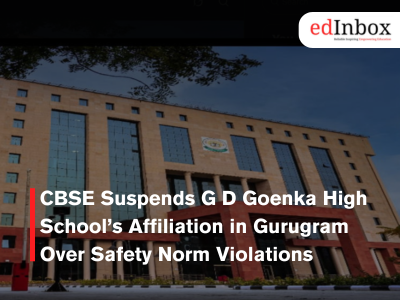
In a strong message on student safety and campus integrity, the Central Board of Secondary Education (CBSE) has suspended the affiliation of G D Goenka High School, Sohna, Gurugram, for one academic year (2026–27), citing serious violations of affiliation norms related to infrastructure sharing and campus security.

According to the CBSE’s inspection report, the school was operating from a campus shared with two other institutions, with no proper physical segregation or pucca boundary wall. Inspectors found that multiple institutions were running from the same building across all floors, while a university programme was functioning on the top floor of the same structure—an arrangement the Board said poses clear risks to school students.

In its official order, CBSE underlined that a school campus must be fully secured and inaccessible to outsiders. Sharing infrastructure without clear demarcation, the Board warned, can expose children to unwarranted interactions, bullying, harassment and safety threats, especially when higher education institutions operate from the same premises.

The Board also noted that while the school made efforts to respond to issues flagged during inspection, it was not in a position to segregate the institutions within a short timeframe. Taking what it described as a “sympathetic view in the interest of students’ future”, CBSE opted for a time-bound suspension rather than permanent disaffiliation.

Under the order:

  • The school’s affiliation stands suspended for the 2026–27 session
  • No admissions will be allowed in Classes 9 and 11 during this period
  • Existing students in Classes 9 to 12 can continue their education

The school must disengage all other institutions, ensure exclusive use of the building and playground, and create separate entry and exit points

The CBSE's order to the institution gives the clear indication to other CBSE affiliated institutions that it has no tolerance for violations of safety related to the care of children who attend an CBSE affiliated institution.

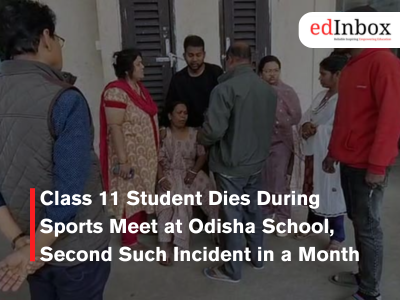
On Wednesday, at the school's annual sports meet held at the Eklavya Model Residential School (EMRS) in Sundargarh district, a class eleven student named Jaydeep Sagar Beka collapsed and died in a relay race. The death has raised further suspicions regarding health and emergency preparedness issues surrounding most of the residential schools in the country.

As per information gathered by staff members of EMRS from the incident site, since Jaydeep was running in the relay race and was feeling ill while running his first 100 m, he carried on with it and completed it; however, he withdrew from it as he was feeling dizzy and nauseated after completing it. When he was seated on a chair nearby, he suddenly collapsed.

As soon as the collapse happened, the staff members started attempts to bring him back through cardio-pulmonary resuscitation and took him to a nearby government medical college. The death of the student was verified by the medical team that provided care. This was the second incident in which a school-age athlete died in circumstances related to taking part in an athletic event in Odisha.

The school staff attempted to resuscitate the student using CPR but transported him to the closest government medical college, where he was pronounced dead upon arrival by physicians; this confirmation of Jaydeep's death was made by a teacher.

The death of this student during an athletic competition in Odisha is the second occurrence within one month, and has caused alarm among both parents and education officials. In December 2021, a 10th-grade boy attending Jawahar Navodaya Vidyalaya (JNV) collapsed during participation in a football game and subsequently died; this event has brought to light an alarming trend that has developed at many residential schools in Odisha.

Jaydeep was described by his educators as being an exceptionally disciplined and intelligent young man who enrolled at EMRS only six months ago. The suddenness of his passing has created a sense of disbelief among both his colleagues and educators.

The local administration has launched an investigation in pursuit of a complete overview of events surrounding this instance; specifically whether sufficient medical provisions, health examination processes and emergency response procedures existed during the Annual Sports Meeting. Officials will also be investigating whether standardised protocols for safety compliance were followed.

More Articles ...