Zobaida Nasreen, a Dhaka University professor who was one of the strongest voices during last year's student-led protest movement she has now expressed grave concerns over the worsening condition of women in Bangladesh in an interview with News18.

She is on a scholarship in Germany now and said the situation was "pathetic," pointing to how women are increasingly threatened and socially intimidated for voicing opinions in favor of their rights.

While discussing the present condition of the women in the nation she stated, "Women are frightened. Many have begun modifying their dressing sense not due to any legal necessity, but due to increasing social pressure. The psychological and social pressure is immense. They are living in perpetual fear and under huge stress."

Nasreen emphasized the role of women in last year's demonstration and how the attitude changed suddenly towards them.

"This is one of several moves being made to roll back the gains made by the women's movement in Bangladesh. Last year during the protests, there were a lot of women on the streets—even at midnight, in whatever they had worn. Nobody protested then. But now, the very same women are being subjected to abusive language and harassment."

"I also think that the NCP (National Citizen Party) is guilty of this. Their silence is deafening—they have not criticized this backlash, which indirectly condones the targeting of women" she went on to say.

Since the resignation of former Prime Minister Sheikh Hasina and the establishment of the present Muhammad Yunus-led administration, a women's affairs commission had made draft recommendations.

Commenting on the status of those proposals at the moment, activist Nasreen stated, "The proposals made by the women's commission, aimed at enhancing the status of women in the nation, have been rejected outright by fundamentalist forces. Worse, members of the committee are now openly threatened and maligned, with many being branded as 'sex workers' for silencing and discrediting them."

In a historic ruling that entwines education policy with national administration, the Government of India has rescheduled the Population Census to 2027, with the Union Home Ministry stating that it will do so to prevent disruption in elementary school education after the COVID-19 pandemic. The move followed a day after the Centre announced that both the Census and a national caste enumeration will be conducted in 2027.

It was felt by the Ministry of Home Affairs (MHA) that carrying out the Census immediately after the pandemic would have caused massively to interfere with learning for school children by millions. The reasoning is straightforward but compelling—two-thirds of the 30 lakh enumerators for the Census are government primary school teachers, an already strained workforce as schools reverted to physical classrooms following COVID.

“COVID disrupted all sectors, including education,” the MHA posted on X (formerly Twitter). The government emphasized that resuming regular schooling was essential for stabilizing foundational learning, especially after two years of learning loss among children in the critical 6–14 age group.

The data collection for both the Census and caste counting is now to commence at the start of next year, with March 1, 2027 being the reference date. The previous headcount was conducted in 2011, and the 2021 exercise was delayed because of the pandemic. This delay is the longest between two Censuses in India after independence.

The move has been politically questioned. Tamil Nadu CM M.K. Stalin accused the delay in Census as a strategic exercise to affect the state's parliamentary seats after delimitation in 2026. Still, the Home Ministry made it clear that southern states' concerns will be addressed with proper consultation.

The decision signals a forward-looking style of education administration. In placing continuity in the classrooms ahead of administrative haste, the Centre has realized how indispensable teachers are—not only in collecting data but also in defining India's future.

With the Census set to pick up pace with March 1, 2027 as the reference date, it offers a chance to integrate technology, education, and administration towards a more inclusive and equitable India.

Delhi University's School of Open Learning (SOL), set up with the objective of giving classes to students who are unable to attend regular classes, has been tarnished with a shocking revelation. It was recently discovered to have rampant cases of plagiarism and spreading of false information through study material in a recent research. It degrades the standard of education imparted to the students and undermines academic integrity.

The research revealed that SOL course material plagiarized work from Wikipedia and other places and failed to cite them appropriately. The information was outdated, contained factual errors, and inaccuracies as well. This is undermining the quality of education and reputation of the institution.

The effect on students is alarming. Students who have been depending on such materials may end up being instructed with false information, which will hamper their knowledge and future development. This is the reverse of education objectives.

The case alludes to the imperative for stringent quality control and fact-checking protocols in institutions of learning. Universities must ensure academic integrity and provide learners with correct information.

For this, DU has to inquire, take action against the perpetrators, and implement measures to avoid repetition. This consists of systematic audits, plagiarism verification, and revision of study material.

The SOL scandal possibility is an invitation to schools to place importance on quality and integrity. We can make students competent with skills and knowledge by doing this.

Let us talk solutions and responsibility. What is to be done, your say?

Dark Side of Open Learning: Plagiarism and Misinformation in DU's SOL Delhi University's School of Open Learning (SOL), which was set up to educate people who are unable to come to class, has been tainted by a discovery. There has been a recent discovery of massive plagiarism and dissemination of misinformation in its study guides. This leaves the user to subpar education and raises doubts about academic honesty. SOL materials in the research took content from Wikipedia and elsewhere without referencing. Old information, factual errors, and computational errors became common. This is what undermines the institution's credibility and quality of education. The effect on students is appalling. Students who use such materials may end up internalizing false content, influencing learning and future opportunities. This is the opposite of learning. The problem requires extreme quality checks and fact-checking processes inside schools. Academic integrity needs to be given top priority and accurate information must be provided to the students by schools. As a reaction, DU can initiate an inquiry, prosecute the offenders, and take preventive measures against such incidences in the future. It consists of regular audits, plagiarism detection, and course materials being revised. The SOL scandal is an eye-opener for schools to give top priority to integrity and quality. By doing so, we can offer students learning and skill sets to thrive. What solutions and accountability do you suggest we implement?

A Khurja woman, Bulandshahar (Uttar Pradesh), reported for duty at the Delhi Police Academy on 17 May, believing it was the beginning of her new employment as a constable. She produced an appointment letter that she thought was real. But employees at the academy soon discovered it to be false, TOI said.

The letter, whose signature was that of a top police officer, had no official basic components such as a letter number and barcode. The envelope it was addressed in also seemed suspicious, it had government and speed post stamps, but no functional stamps, barcodes, or post office seals.

According to the TOI report, the woman alleged that she had given the written test in Meerut in 2022, the physical test in Ghaziabad, and the medical in Delhi. However, academy officials did not find any record of her in the recruitment register.

A sub-inspector subsequently established that there had been no such letter issued, and the IPS official whose name was on the letter was not working as DCP (Recruitment) on the date specified.

Police suspect it to be part of a larger recruitment fraud. "This appears to be the handiwork of an organized gang," the inspector who made the complaint said to TOI.

A case has been registered at the Dwarka police station under sections 336(3) (forgery), 340(2) (use of forged documents), and 62 (attempt to commit offences) of the Bharatiya Nyaya Sanhita.

A senior officer told TOI that further investigation is underway to verify the woman’s claims and to identify those behind the possible forgery racket.

With the soft murmur of dawn, while the wetlands of eastern India soak in the golden light of a rising sun, revolution is in motion. Hidden away in the flooded paddy fields, crabs crawl in the clefts between the tender rice shoots' nascent roots, their tender legs etching an incredible dance of cohabitation. It is not only nature's miracle—this complementarity of crustaceans and agriculture—it is an economic lifesaver for farmers struggling with mercurial weather and diminishing yields.

Welcome to integrated rice-crab farming, commonly called 'matsya prajapat'—a green farm revolution changing rural topography along Odisha, West Bengal, and portions of Andhra Pradesh. Farmers no longer sit out uncertain monsoons and crop destruction. They are harvesting two crops simultaneously from a single field: rice and crabs, thriving in tandem.

A Dual Harvest Against Climate Odds

Ranjan Behera, a Kendrapara district farmer in Odisha, remembers the hardship of traditional farming. "I relied solely on rice," he says. "But errant rains would decimate my crops every season. Now, even if the rice crop gets ruined, the crabs keep my family from starving."

The process is beautifully simple:

Rice is planted in conventional fashion in waterlogged paddies.

Juveniles are released into the paddies and absorbed by the rice plants.

The crabs, during a few months, feed on natural pests and organic waste, reducing chemical fertilizers and pesticides use.

At harvest time, crabs are of market size, creating a secondary income source beyond the rice crop.

This symbiotic association has several benefits:

  • Natural pest management: Crabs eat pests and weeds, reducing farmers' reliance on expensive agrochemicals.
  • Enhanced soil health: Crab faeces is a biofertilizer that makes the soil resilient.
  • Climate resilience: Even if rice crops are devastated by flood or drought, crabs provide a buffer against financial loss.

From Survival to Prosperity

In the West Bengal Sundarbans delta—a cyclone- and brackish-water-hit area—paddies such as Maitreyi Mondal have become dependent on crab cultivation as a backstop. "Earlier, a single flood would destroy everything," she says. "Now, crabs provide us with a regular income. We sell them to local markets and even to Bangladesh."

The financial benefit is unambiguous. One hectare of integrated rice-crab cultivation can reap:

  • 1.5 to 2 tons of rice
  • 200-300 kg crabs, sold in domestic markets for ₹400-600 a kg

Marginal farmers get twice or thrice their investment back from this as compared to rice monoculture.

Challenges and the Road Ahead

Promising though the system may be, it is riddled with challenges:

  • Unawareness: Farmers don't have a clue how crab farming is undertaken.
  • Predator attacks: Birds and snakes occasionally attack young crabs.
  • Access to markets: Good supply chains must be developed so prices are reasonable.

Agencies are filling in, such as WorldFish and India's Indian Council of Agricultural Research (ICAR), and training to start community crab hatcheries to deliver a consistent supply of juvenile crabs.

A Blueprint for Sustainable Farming

Integrated rice-crab farming is not just agricultural farming—it is a success of human determination over climate change. By tapping into nature's synergies, farmers are rewriting the script of vulnerability into one of prosperity and resilience.

As the sun sets over jade-green paddies, the distant chatter of crabs in the sea suggests a comforting truth: sometimes the best solution comes in what nature has to offer.

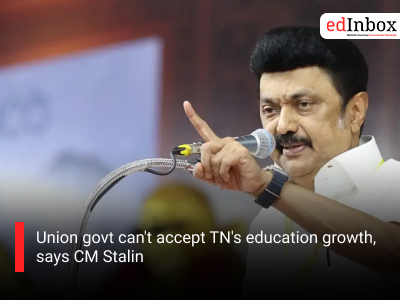
Tamil Nadu Chief Minister MK Stalin, who boycotted the last three Niti Aayog Governing Council meetings, participated in the 2025 iteration in Delhi on Saturday and requested the release of the Centre's share of Rs 2,200 crore of funds under the Samagra Shiksha Abhiyan (SSA). He requested Tamil Nadu's share in central duties to be raised to 50 per cent as envisaged by the vision of the Prime Minister to expedite the development of states.

"Due to a few states not joining the Memorandum of Understanding (MoU) with the Ministry of Education under the PM Shri scheme, the SSA fund has been withheld. To be precise, for the year 2024-2025, about Rs 2,200 crore of Union funding has been withheld from Tamil Nadu," Stalin continued in the 10th Niti Aayog meeting chaired by Prime Minister Narendra Modi.

He told the government that the hold-up of funds affects the education of students who are studying in government-run schools as well as children educated under Right to Education Act (RTE) and asked the Centre to release the funds at the earliest and without putting "unilateral conditions".

Previously, PM Modi had directed the states to make "future-ready" cities and one tourist destination at the international level. The Prime Minister directed the chief ministers to accelerate the development process in an effort to achieve the vision of a 'Viksit Bharat' or developed India by 2047. Referring to the PM's proposal for states' development, Stalin said the Centre must increase its share in the central taxes to 50 per cent, calling it essential for a dedicated urban regeneration mission in the state.

Tamil Nadu is receiving merely 33.16 per cent of central taxes when it is eligible for a minimum of 41 per cent, Stalin recently stated on social media.

"Long-term vision is to achieve economic growth that is inclusive and sustainable with social justice and equality and the Dravidian Model is how we achieve that for everyone," Stalin said, adding that it is also the vision of his administration to achieve a USD 1 trillion economy by 2030 and USD 4.5 trillion by 2047 to be aligned with PM Modi's "developed India" vision.

Tamil Nadu has also consistently posted an 8 per cent GDP growth in recent years and even 9.69 per cent growth during the previous year, MK Stalin reported at the meeting, which was chaired by Union Ministers, Niti Aayog Vice Chairman and other state Chief Ministers.

"Tamil Nadu has become industrialized across the board. From cars to green hydrogen, we've witnessed robust expansion across all sunrise sectors," the DMK leader enumerated major welfare initiatives his government utilized since 2021.

The National Medical Commission (NMC) has raised an alert against unauthorised medical colleges in the nation that are running in the absence of necessary approvals from NMC and making false claims to students and parents about recognition and accepting admissions in medical courses that are not legally approved.

The guidelines issued by NMC Secretary Raghav Langer to states stated they have put down some of the key points to be remembered by parents and students while admitting to a medical course in India and the rules to be adopted by the students who want to take medical education in foreign nations.

The NMC also identified two medical colleges - Singhania University in Rajasthan and Sanjiban Hospital and Medical College, Howrah, West Bengal - for providing MBBS courses without NMC approval.

In a second advisory, Sukh Kal Meena, Director, Under-Graduate Medical Education Board (UGMEB), stated, "The NMC has noted a couple of instances of unauthorized medical colleges functioning in the nation, without necessary approvals. These colleges are cheating students and parents by asserting recognition and accepting admissions in medical courses that are not legally approved."

It, however, did not specify any medical colleges which are violating the norms except those of Rajasthan and WB.

"Only those medical colleges shown on the official NMC website are legally entitled to offer MBBS and other medical degree courses in India. Those institutions that are not shown on NMC's official list are unauthorised and running in contravention of NMC norms," the advisory further said.

The NMC also provided regulations for students who wish to undertake medical studies in foreign nations. The NMC informed that the Foreign Medical Graduate Licentiate (FMGL) Regulations, 2021, clearly state the norms for foreign medical education to be eligible to practice medicine in India.

The main requirements are minimum 54 months of study in one institution; 12-month internship to be served at the same foreign university; clinical training cannot be done in segments or in different countries; medium of instruction should be English; completed the compulsory subjects enlisted in the Schedule-I; enrolled with the respective professional regulatory council or otherwise, authorized to issue license to practice medicine in their respective jurisdiction of the country from which the medical degree is granted and at par with the license to practice medicine issued to citizen of that country.

It further added that foreign medical graduates who do not meet these regulations can be disqualified from registration to practice medicine in India. The NMC also emphasized that students graduating from non-compliant colleges will be rendered ineligible for licensing exams - FMGE in India.

More Articles ...