The Gai Jatra festivals of Kathmandu or the variety of rituals and stories that Nepalis attribute to death are reminders that, for Nepalis, grief is a profoundly social experience. However, in the face of impending climate-related disasters, Nepal needs to start conceptualizing ways to understand, mitigate and prepare for them.
The recent disastrous flooding down the Bhote Koshi and other rivers is yet another reminder of this reality. As people get displaced from their homes, their belongings and personal property destroyed in the process, the logical question is, what has caused it? Some may be tempted to attribute it to divine intervention or misfortune. After all, Nepal is a land-locked, mountainous and disaster-prone country, so it is only logical that these disasters befell Nepal. However, if Nepal is to reduce the damage and the human toll that these disasters bring, it must start developing the necessary conceptual tools to prepare for such disasters.
Education for sustainability can teach citizens to think about disaster not just as something that happens but as a condition
Education for Sustainability Beyond Disaster Preparedness
When most people think of education for sustainability, they often associate it with recycling, green initiatives, and water harvesting. They are right to think that way, but people often forget that education for sustainability includes education for climate literacy, disaster preparedness, constructing climate-resilient structures and, more importantly, community preparedness and building climate-resilient communities.
For example, children have to learn why glaciers are melting, how mountainous ecosystems work, why rivers overflow, why trees ought not to be cut down, and where and how to build.
Children need to learn disaster preparedness and get trained in reading hazard maps, responding to earthquake alarms, water conservation techniques, protecting water sources from contamination during flooding, and how to respond during, after, and before a disaster to limit the damage and loss.
By providing children with tools to think through such issues, education for sustainability can help reorient the conversation about disaster around greater degrees of preparedness rather than simply asking, How to deal with it?
Geographical Destiny is Not Inevitable
Compared to many of its neighboring countries, Nepal may indeed have a more challenging topography that makes disaster management more difficult. Nepal sits on a confluence of many continental plates and hence is more susceptible to earthquakes. It has some of the most fragile mountainous ecosystems in the world
But only if one is willing to accept fate.
Two villages can be situated side by side in the mountains, and only one gets damaged by landslides based on where precisely a house is located, the road construction practices, the early warning systems, and the local government’s response, among other factors. Hence, the responsibility rests with local authorities to make sure that they reduce their vulnerability to such disasters. This is the message that Nepal’s education system needs to internalize and subsequently disseminate to the masses. A flood is a natural disaster, but the damage caused by it is man-made, so Nepal needs to start thinking through these issues in such terms. By educating the youth to think about disaster in this way, Nepal can begin to overcome its culture of fatalism around the issue.
From Theory to Practice: Making Schools Into Climate-Resilience Hubs
Nepal’s school system can do a much better job at engaging students in a variety of sustainability-related activities that will promote disaster preparedness, help them understand the local environment and its fragility, and help them think through practical measures that can enhance the region’s preparedness. For example, schools located near rivers can participate in flood-risk mapping, whereas schools situated in mountainous regions can engage in biodiversity mapping and auditing exercises. Students can be encouraged to think about the impact of their waste on downstream water sources or analyze their school buildings’ resilience to earthquakes. Students can work in tandem with local authorities to help the latter develop disaster preparedness plans and conduct drills to test their level of preparedeness.
Science classes can be used to study the connections between weather patterns and groundwater levels, glacial movements, and river flows. Geography classes can be used to study the local topography and help students think through terrain mapping and land-use practices. Finally, civics classes can be used to discuss Nepal’s role in the regional climate change and disaster preparedness ecosystem because many of Nepal’s rivers are shared with its neighbors.
By actively involving students in such activities, Nepal’s schools can help the nation think through a variety of climate-related issues while becoming more prepared for them.
Education Can Make Nepal Less Fatalistic about Disasters
One of the most important roles that education can play in Nepal’s preparedness for climate-related disasters is helping the country overcome fatalism about them. As mentioned above, Nepal has a rich cultural heritage of dealing with loss and the aftermath of disasters. The Gai Jatra festivals are a wonderful example of that. However, a culture of collective grief around the time of disaster needs to be balanced out with a culture of preparedness for the next one.
If Nepal continues to be overwhelmed by the grief and loss following each disaster, it will be hard-pressed to have the political and social capital to think through the preparedness for the next one. Hence, Nepal’s education system needs to help it think through how to cultivate such a culture of preparedness for disaster while encouraging the positive fatalism that Nepal’s unique cultural heritage.
Students need to be encouraged to think critically about the causes of the disasters and the factors that exacerbate them and about ways those factors can be mitigated. More importantly, students need to ask the right questions, such as What happened? Why did it happen? What risks contributed to it? What could have been done to prevent it? What is already being done? What is everyone’s role? What should be done differently?
Education for sustainability needs to focus on answering these questions.
- Education Can Help Build a Culture of Accountability
Disaster preparedness, mitigation, and management are deeply political processes. They entail making sure that institutional structures are in place, policies are coherent, regulations are comprehensive, and early warning systems are efficient. By cultivating political literacy among citizens, education can help Nepal build the culture of accountability that is necessary for effective disaster management.
Making people more politically aware can empower them to hold political leaders, administrators, scientists, local leaders, and even multinational corporations accountable for their roles in Nepal’s preparedness for climate-related disasters. A climate-literate society is more likely to respond appropriately to such disasters while also making responsible choices as a society since it will be aware of the costs and the regulatory frameworks that are in place to help minimize those costs. That is why education for sustainability needs to focus on empowering students to become politically active agents in disaster preparedness for Nepal.
- From Surviving to Being Prepared
Nepal has an incredibly rich cultural heritage around disaster and loss that has allowed it to heal following the many disasters that ravaged the country in the past. Its children may soon be able to develop their own unique cultural practices around disaster preparedness that will help the country as a whole become more prepared for the challenges it will face in the future. After all, Nepal’s experience with disaster is what made its people so resilient in the face of the most destructive events that the country has ever seen. However, this resilience needs to be redirected toward being prepared for the next disaster rather than simply responding to it when and if it comes. Sustainability education can help society as a whole evolve from reacting to disasters to being prepared for them.
It is important to recognize that education for sustainability cannot be a magic bullet that protects countries from all disasters because no government can be completely prepared for every eventuality. Nevertheless, it can help societies reduce human suffering following a disaster by diminishing the number of people exposed to it or making them more prepared to mitigate its effects. The Gai Jatra festivals will continue to remind Nepalis of their losses, but the culture of collective grief needs to be channeled into preparing for future disasters by developing new cultural practices around such preparedness so that Nepal’s people can, once again, be as resilient as they have always been.
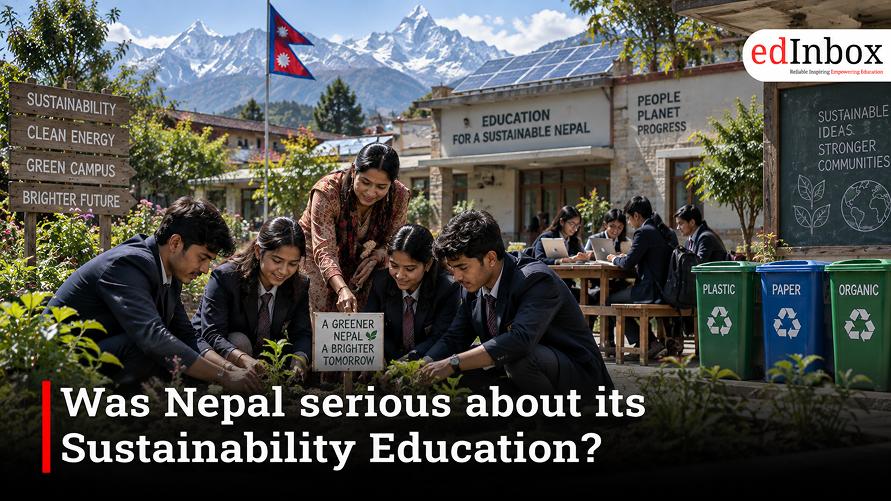
Was Nepal serious about its Sustainability Education?
Typography
- Smaller Small Medium Big Bigger
- Default Helvetica Segoe Georgia Times
- Reading Mode