“Journalism is printing what someone else does not want printed. Everything else is public
relations.” - George Orwell
When Najam Sethi, one of Pakistan's most prominent journalists, was kidnapped from his
Lahore home for exposing the corruption of the Pakistani government, the World Bank
came to his rescue. That's how strongly press freedom is seen in the developed world. But
what does press freedom even mean? Is it just about freedom of speech, or is it about the
freedom to objectively express and expose the happenings of the world?
In any democracy, the media is the fourth pillar. And in a country like India, where millions
of people depend on news to understand the policies and policing of the government, this
Freedom is extremely important. Without real journalism, we would just hear power and not
the politics behind it.
The Indian Constitution is one of the most profound democratic institutions in the world. It
gives every citizen the right to speak, express and get informed. And the honourable
The Supreme Court has emphasised the importance of press freedom on multiple occasions.
Simply put, if the media is not free, democracy cannot survive for long.
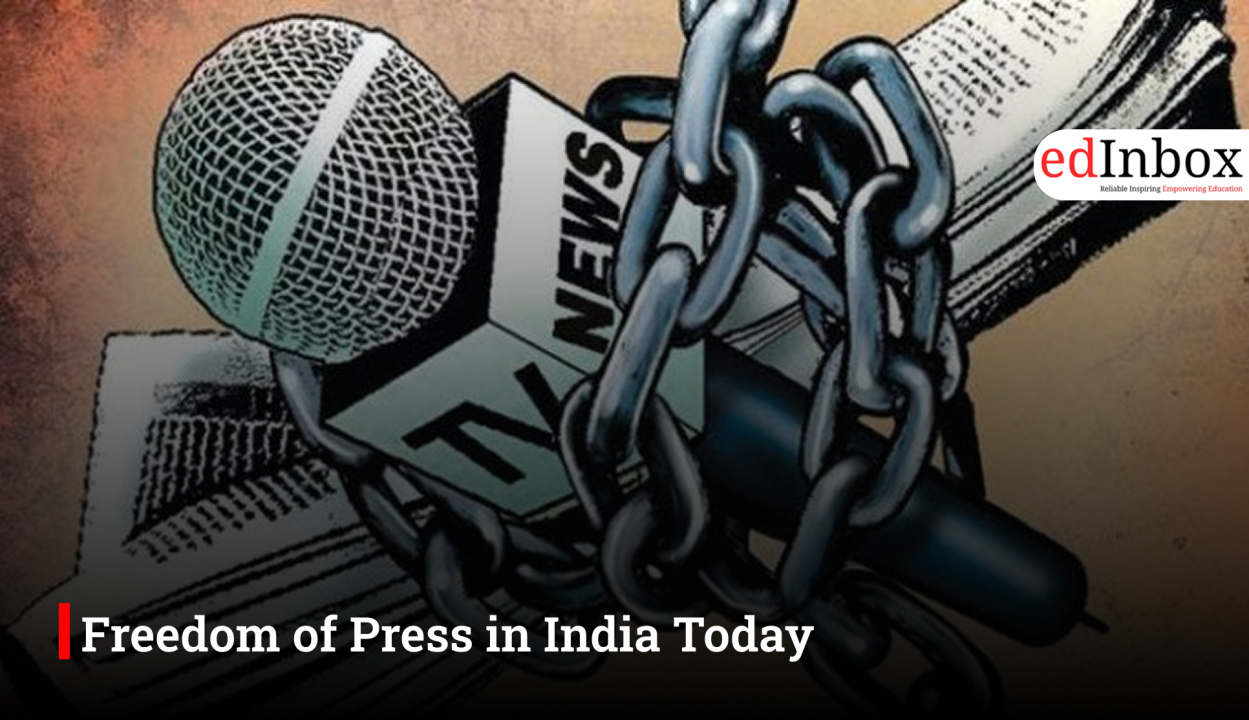
Today’s press freedom – India ranked 151 out of 180.
Even though press freedom exists on paper, the real situation is far from reality. Most
journalists in today's India works under hazardous situations. They are threatened, thrashed and thrown away if they dare to speak the truth.
With the corporatisation of the media, most press houses are now run by corporate houses
that are directly or indirectly associated with the government policies and politics. This is
making the mainstream media extremely sensitive to unbiased reporting.
Then comes another challenge - the new WhatsApp University. Fake news, scams, and
misinformation is the new norm in India’s digital world. People forward messages without
checking facts. This creates confusion and makes it harder to trust real journalism.
And if this is not enough, there come legal threats. Fake defamation cases used to silence
real journalism. Hence, the fear of being dragged into court makes some journalists think
twice before publishing sensitive stories.
Who Looks After Media Ethics?
India has had respected and independent bodies like the Press Council of India to protect
journalistic rights. Founded in 1978, The PCI works as a watchdog that guides newspapers
and journalists to report responsibly, fairly, and accurately. The Council handles complaints
from the public and media professionals and can warn or criticise publications that violate
journalistic norms. However, it lacks the power to impose fines or other legal penalties,
which limits its authority. Even so, its moral influence and recommendations play an
important role in promoting responsible journalism and strengthening democracy in India.
Unfortunately, in today's world, these institutions lack the power to truly deliver accurate
reporting.
Digital Media: A New Hope and a New Problem
With the advent of digitalization, anyone today with a cellphone can become a content
creator. But is that pragmatic journalism or desperate publicity? Students, bloggers,
podcasters, and independent reporters are creating their own platforms. Although this has
opened many new doors, at the same time, online abuse, trolling, and misinformation have
increased. Many journalists, especially women, face terrible comments and threats on social
media. This affects mental health and freedom of expression.
Is Press Freedom in India in Danger?
This is a question many people ask today.
Some reports say that India’s press freedom is declining. Journalists talk about restrictions
and pressure. At the same time, many brave reporters continue to speak up and investigate
powerful people.
So, the truth lies somewhere in between. The press is still alive and active, but it is working
in a difficult environment.
What Can Be Done?
Today, Gen Z has become the voice of reason. Asking for accountability, fighting for civic
rights, and protecting citizen freedom have always inspired generations of students
throughout the world.
So, can we help as students?
It’s simple. We have to follow these few simple steps:
- Supporting honest journalism
- Not spreading fake news
- Respecting facts
- Questioning wrong information
- Reading from reliable sources
- Students especially should learn how to think critically and not believe everything
they see online.
Freedom of the press is like oxygen for democracy. Without it, society slowly becomes blind
and barbaric. In India today, the media still has freedom, but it is under pressure from
politics, business, and misinformation. When corporations and corruption go together, it is
the young souls that need to arise, awaken and be aware of the future.
The good news is that many journalists continue to work with courage and honesty. They
risk their comfort and sometimes even their safety to bring the truth to us.
As future citizens and professionals, we students must understand the value of a free press
and stand for it. Because where the press is free, the people flourish.
Freedom of Press in India Today
Typography
- Smaller Small Medium Big Bigger
- Default Helvetica Segoe Georgia Times
- Reading Mode