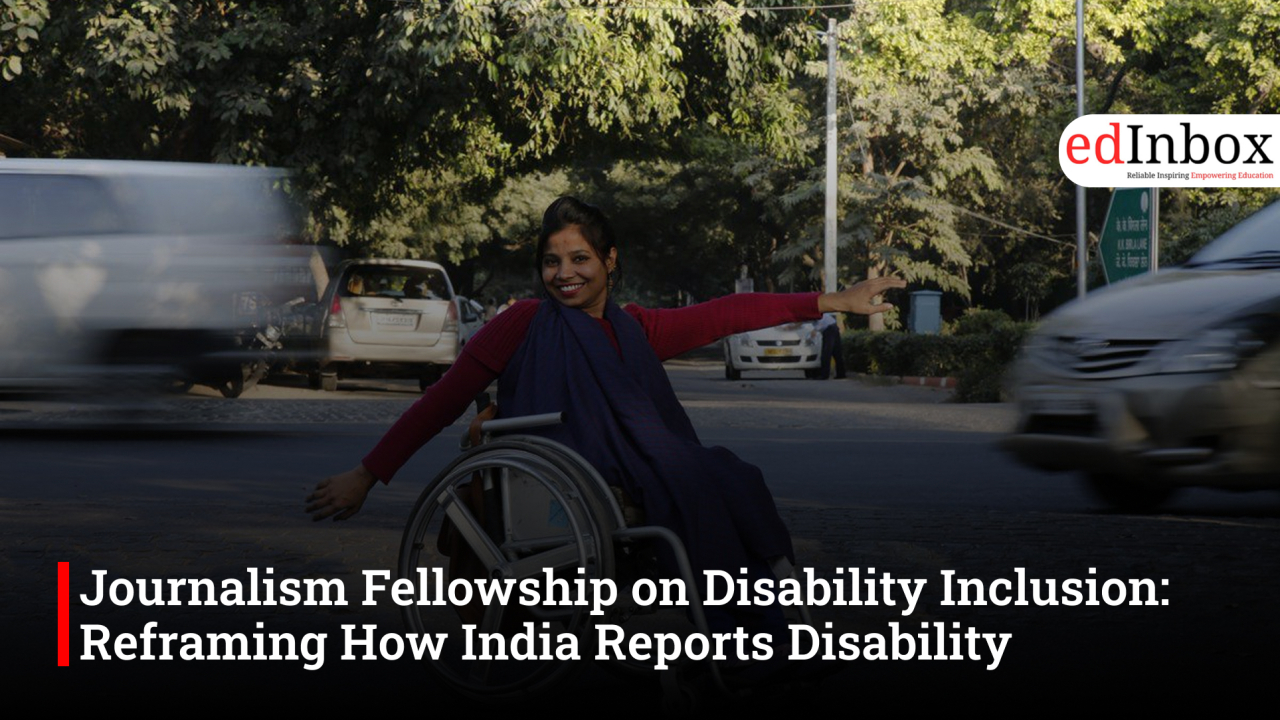
While disability is mainly looked at through the lenses of charity, sympathy, or welfare even now in many parts of the world, the Journalism Fellowship on Disability Inclusion is a right step in the opposite direction. It aims to encourage the production of rights- based, investigative stories in India. Initiated by the International Foundation for Disability Inclusion (IFDI), the six month fellowship was set up to provide independent journalists who are dedicated to writing about disability from the perspectives of human dignity, justice, accountability, and systemic reform with the necessary support.
According to Census 2011, India has over 26.8 million persons with disabilities. However, most of the experts concur that this is a gross underestimation of the actual population due to stigma, concealment, and lack of diagnosis in many cases. Even after the enactment of the progressive legislation such as the Rights of Persons with Disabilities (RPwD) Act, 2016, the PWDs have to struggle with various structural barriers in education, work, health, housing, transport, digital, and justice sectors. The laws are not properly enforced, and the media rarely questions the reasons behind the abuses.
The IFDI fellowship directly addresses this gap. Each cohort supports up to 10 journalists with at least three years of experience. They provide financial support, mentorship, editorial guidance, and capacity building. During the fellowship, fellows should come up with three original, in, depth investigative articles in English. These articles are suggested to highlight issues beyond personal suffering and, instead, explore the systems, policies, institutions, and power structures that determine the daily lives of PWDs. The fellowship program places great emphasis on the intersectionality aspect.
Journalists are requested to report on the intersections of disability and caste, gender, religion, geography, class, and sexuality. They should also highlight the voices of Dalit, Adivasi, Muslim, women, and LGBTQ+ persons with disabilities, communities which continue to be greatly underrepresented in mainstream media. The fellowship is not just about storytelling but also tries to combine journalism with policy. By grounding their pieces in evidence, life experience, and law, fellows contribute to improved public debate and policy discourse. Besides that, the program is set out to help journalists become a group of empathetic and aware professionals capable of producing inclusive narratives at the local and national levels continuously.
Ultimately, the Journalism Fellowship on Disability Inclusion is not just about creating stories. It is about changing the way disability is reported in India, moving it from the empathy margins and putting it at the centre of rights, justice, and democratic accountability.
Journalism Fellowship on Disability Inclusion: Reframing How India Reports Disability
Typography
- Smaller Small Medium Big Bigger
- Default Helvetica Segoe Georgia Times
- Reading Mode