India’s healthcare industry is seeing a big shift that is being driven by digital technologies, according to a new report. The report titled ‘Beyond the stethoscope: The digital pulse of healthcare’, by Grant Thornton Bharat and the Association of Healthcare Providers (India) (AHPI), evaluates how prepared Indian hospitals are for this digital transition.
The report takes into account the perspectives of hospital executives and senior professionals and reviews the strength of existing digital infrastructure, confidence in governance and regulatory compliance, the extent of artificial intelligence adoption, organisational and workforce factors shaping transformation, and areas expected to attract future investments.
Around 95% of hospitals have implemented Hospital Information Systems (HIS),. This suggests that foundational digitisation has largely happened across the sector. Electronic Medical Records (EMR) and laboratory information systems have been adopted by roughly two-thirds of hospitals.
However, what stands out is that even with this high rate of adoption of digital systems, the automation levels remain low. Less than 25% of hospitals make use of technologies such as robotic process automation. This means that administrative processes continue to rely heavily on manual effort, and clinicians and hospital staff still face documentation and operational workload.
About 34% of hospitals at present operate with real-time enterprise dashboards. This results in slower decision cycles and reduced operational efficiency.
A large majority of respondents in the report , over 90%, identified documentation workload as the key factor accelerating digital transformation.
The report discloses that Indian hospitals have achieved significant milestones in developing basic digital capabilities. However, changes in system integration, automation, and governance practices have lagged behind technology adoption to the same extent.
Nearly 60% of hospitals are looking to increase their digital investments in the next year. The upcoming phase of transformation will be less about the deployment of new technologies and more about the effective integration of existing systems into healthcare delivery, ensuring proper governance, and allowing clinicians to use digital tools in ways that lead to improved clinical outcomes and operational performance.a
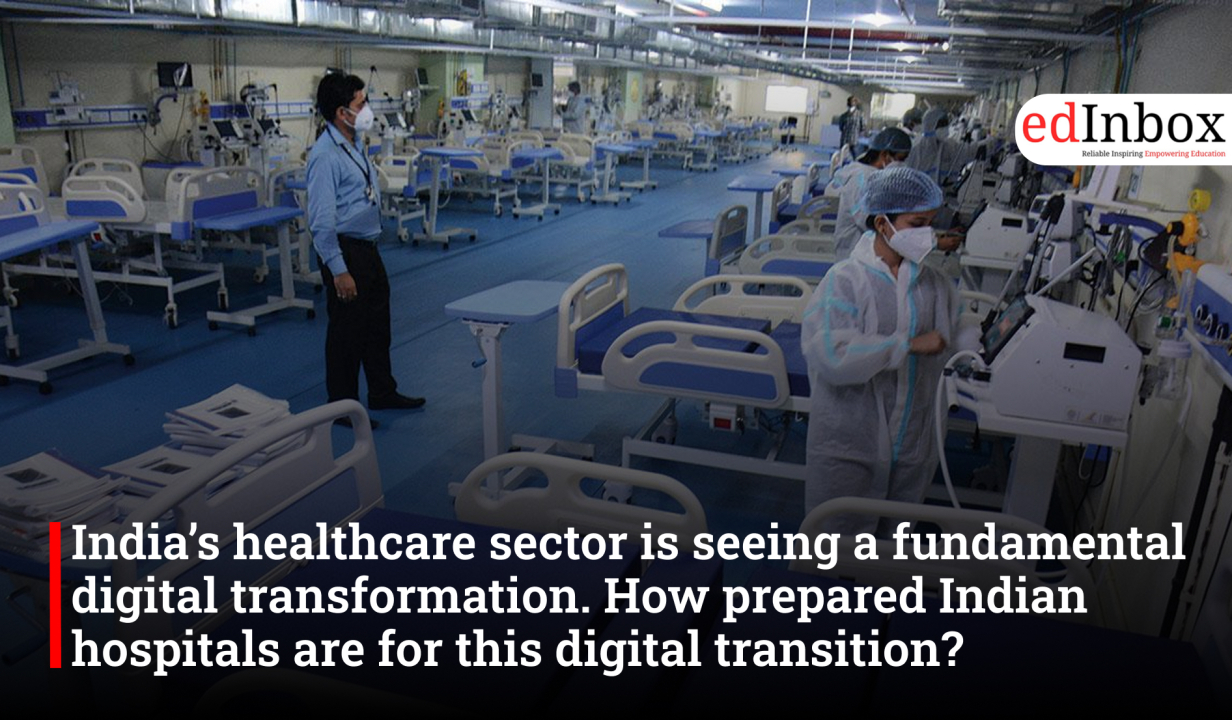
India’s healthcare sector is seeing a fundamental digital transformation. How prepared Indian hospitals are for this digital transition?
Typography
- Smaller Small Medium Big Bigger
- Default Helvetica Segoe Georgia Times
- Reading Mode