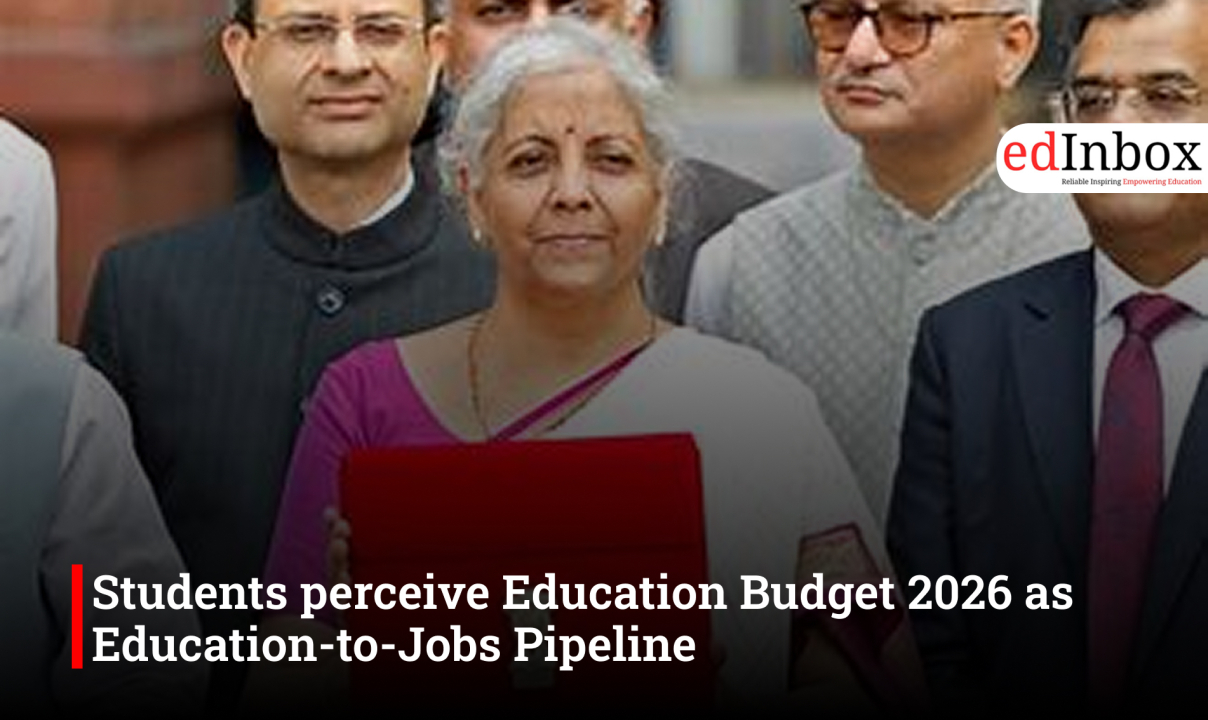
When Nirmala Sitharaman presented the Union Budget 2026-27, education was no longer framed as a social sector expense — it was positioned as economic infrastructure. With ₹1,39,285.95 crore allocated to the Ministry of Education, up 8.27% from last year, the message is clear: classrooms are now labour-market factories.
The most significant proposal is a high-powered committee tasked with aligning degrees to jobs and enterprises. India has long faced a paradox — millions of graduates but employers complaining of unemployable talent. Linking curricula to AI, services exports, and entrepreneurship could finally close that gap. If executed well, this may become the most important reform since the National Education Policy 2020.
But policy intent alone won’t fix structural inertia. Universities historically update syllabi slower than industries evolve. Without industry-embedded faculty, apprenticeship mandates and outcome-based funding, the committee risks becoming another advisory body producing reports instead of results.
The plan to build five university townships near industrial corridors is more promising. Education ecosystems succeed when learning, living and working coexist — much like global innovation clusters. If India truly integrates housing, skill hubs and companies, graduates may finally stop migrating solely to metros.
Equally transformative is the proposal of a girls’ STEM hostel in every district. Female participation in science drops sharply after school due to safety, mobility and accommodation barriers. This single intervention could quietly reshape India’s research workforce over a decade.
However, the reforms reveal a deeper shift: education is being woven into tourism, healthcare and technology economies. Medical hubs, upgraded astronomy facilities and professional tourist guide training suggest India wants knowledge industries — not just IT services — to drive GDP.
The reduction of TCS on overseas education remittances from 5% to 2% acknowledges a reality policymakers once avoided: students going abroad are not a “brain drain” but part of a global talent network.
Budget 2026 doesn’t merely fund education — it redefines its purpose. The real test now isn’t allocation, but execution. Because in India, reforms don’t fail on vision. They fail in classrooms.
Students perceive Education Budget 2026 as Education-to-Jobs Pipeline
Typography
- Smaller Small Medium Big Bigger
- Default Helvetica Segoe Georgia Times
- Reading Mode