Today’s news is not news. Its content. Gen Zs aren’t consuming news the way millennials
did, when people used to sit down for evening primetime shows. The structure of
announcing the top 10 headlines, in which anchors used to give bullet-point information on
the top stories, is now obsolete. The vitality of news now is about its virality.
For many young students, news is not accessed through full reports but through forwarded
links, influencer commentary, or peer conversations. Awareness exists, but context is thin.
They know what happened, but rarely why it happened or how it connects to larger systems.
In this environment, information is consumed quickly, emotionally, and often without
verification. The result is not ignorance, but incomplete understanding.
Three clear patterns define how students consume news today.
First, attention is now unattainable. In this digital era, nobody has the time to pay attention.
Hence, news is rarely consumed as sustained reporting. It appears in fragments — between
reels, inside social feeds, layered between entertainment content. The format encourages
scrolling, not reflection.
Second, the veracity is always in question. Verified journalism sits beside memes, influencer
commentary, satire, and partisan opinion — all in the same visual hierarchy. For a student
without strong media literacy, credibility becomes difficult to distinguish. Authority is
flattened.
Third, emotion drives engagement. Sensational crises, celebrity controversies, and dramatic
visuals dominate attention. Slow-moving civic issues — policy debates, governance
processes, institutional reforms — struggle to compete. Over time, this skews perception.
What is dramatic appears important. What is procedural appears irrelevant.
These patterns create both risks and opportunities. The risk is a shallow, anxiety-prone civic
awareness. The opportunity is that students are reachable through formats they already use:
short explainers, interactive quizzes, classroom-friendly explainer videos, and educator-
moderated discussions can turn passive exposure into active learning.
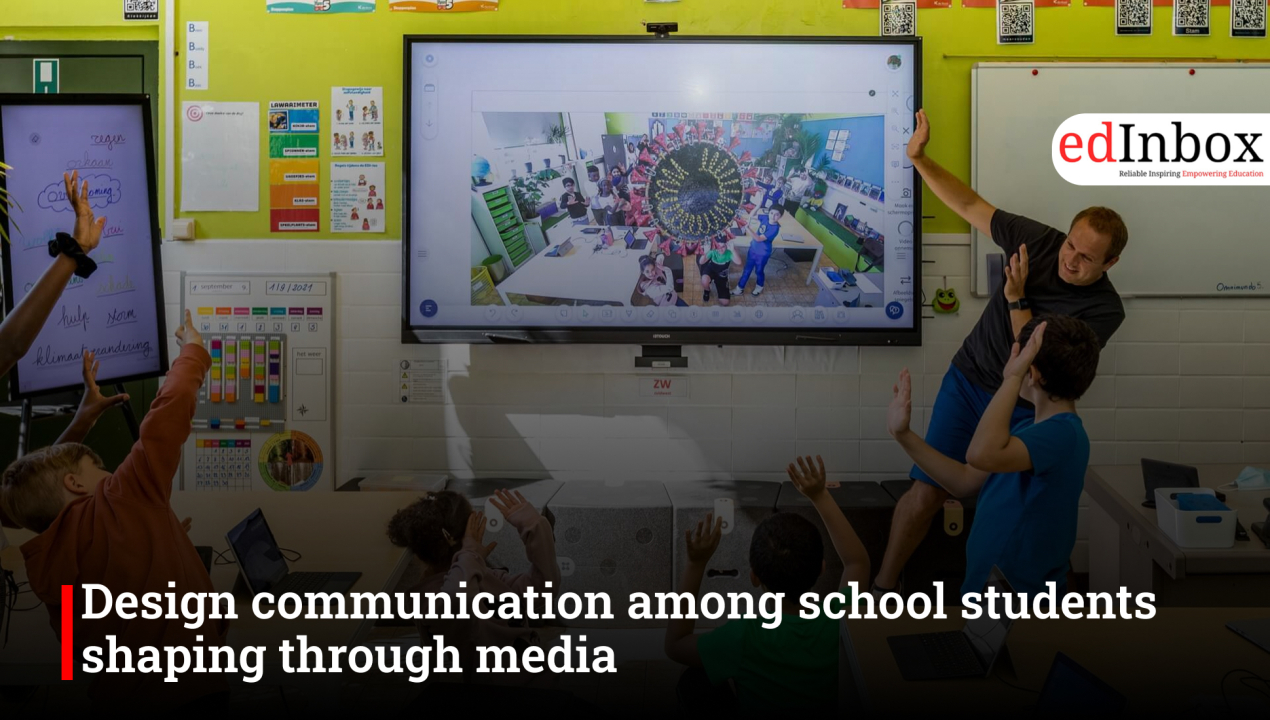
Design communication among school students shaping through media
Typography
- Smaller Small Medium Big Bigger
- Default Helvetica Segoe Georgia Times
- Reading Mode