A sorry came from Harvard when a message online, posted by its team teaching ancient Indian languages, upset some Hindus. The comment had ties to studies of old texts and sparked strong reactions among believers.
Friday brought words from the office, expressing strong regret over sharing a thoughtless picture tied to their Sanskrit course. Though brief, the message stressed years spent teaching the language, standing by its ideas and heritage. Behind the scene, effort continues to honor what Sanskrit carries through time. Mistakes happen, yet dedication does not fade easily here. The past matters, so does how they move ahead quietly.
The statement also said internal processes around social media are being reviewed. "We are reviewing our internal social media process to ensure future posts more accurately reflect the mission and values of the Department, " it noted.
Now here's something clear, the department made sure folks wouldn't mix things up. That job posting? Got nothing to do with Lakshmi Mittal and Family South Asia Institute. Turns out, they're two different setups under the same university roof.
What's the controversy?
Something stirred when a picture popped up for the college's beginner Sanskrit class. A group called CoHNA, standing for Hindu voices across North America, took issue with how it showed both Sanskrit and Hindu beliefs. They claimed the visual sent a hostile message about their faith, calling the post outright prejudice against Hindus.
The artwork in question -- titled Master of Puppets -- was created by Indian artist Anirudh Sainath under the brand Molee Art, according to a few social media users. The piece drew on themes from the Mahabharata and depicted Krishna's Ras Leela, claimed netizens.
CoHNA has welcomed the department's apology, calling it a rare instance of a university department formally expressing regret over such concerns. In posts on X, the group said it was encouraged to see respect shown towards Sanskrit, "an ancient language that has influenced civilisations across the world".
On its website, Harvard describes 'Classical Sanskrit' as a language that shaped intellectual and cultural life across South Asia for nearly three millennia. It notes that the language has been called "the language of the gods" and that major literary, philosophical and scientific works were composed in it.
Harvards South Asian Studies department teaches Sanskrit, starting from the basics, moving up through more complex forms. Instead of just grammar drills, learners explore grand epics: the Mahabharata shows up early, then the Ramayana joins later. Philosophy pieces mix in alongside poetry, building depth across lessons. Surprisingly, new students hear that Sanskrit might feel simpler than expected. By June, after months of steady work, reading classics like the Bhagavad Gita becomes possible, if youve got a dictionary nearby.
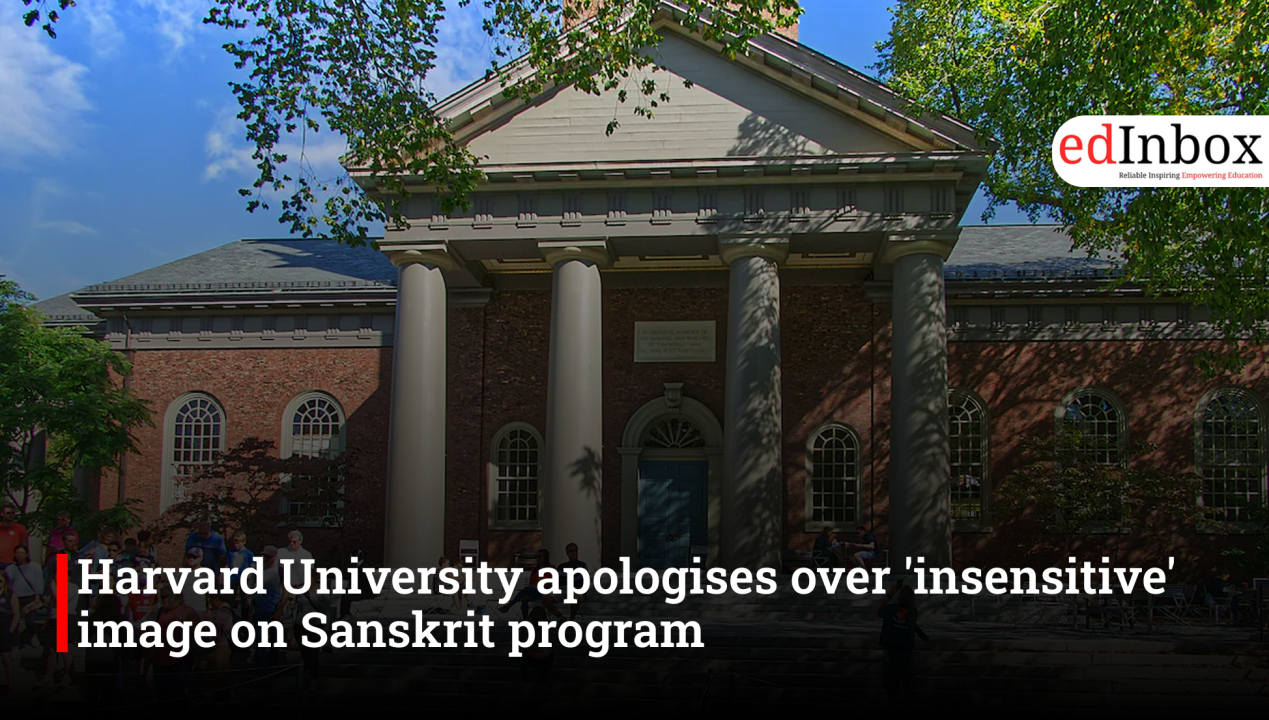
Harvard University apologises over 'insensitive' image on Sanskrit program
Typography
- Smaller Small Medium Big Bigger
- Default Helvetica Segoe Georgia Times
- Reading Mode