In what reads like a carefully engineered deception rather than a simple scam, a cyber fraud racket in Karnataka’s Gadag district has exposed how vulnerable students are being turned into unwitting conduits for digital crime. With just ₹2,000 and the promise of scholarships, the accused allegedly built a pipeline of bank accounts—later weaponised for cyber fraud.
According to police investigations, the operation was both calculated and psychological. The accused reportedly targeted students living in hostels—young, financially dependent, and often unfamiliar with banking risks. Posing as facilitators of scholarship benefits, they gained the trust of these students and persuaded them to open bank accounts in their own names.
To reinforce credibility, the suspects deposited ₹2,000 into each account—an amount small enough to seem harmless, yet significant enough to build trust. But this initial “investment” was the bait.
The Modus Operandi: Turning Students into Financial Proxies
Once the accounts were activated, the operation took a darker turn. The accused allegedly collected critical financial instruments from the students—passbooks, ATM cards, SIM cards linked to the accounts, and even internet banking credentials.
In forensic terms, this was not random fraud—it was infrastructure building. These accounts, detached from their rightful users, were intended to function as “mule accounts,” enabling the seamless movement of illicit funds while shielding the core operators from direct traceability.
Such methods are increasingly common in organised cybercrime, where layered anonymity is key. By using accounts in the names of unsuspecting individuals, fraudsters create a buffer between themselves and law enforcement, complicating digital trails and prolonging investigations.
The Breakthrough: Intelligence, Tracking, and Arrests
The case was formally registered on March 11 after police received inputs about suspicious activities linked to these accounts. A crucial breakthrough came when investigators learned that the accused were en route to Goa, allegedly to hand over bank kits and credentials to other members of the network.
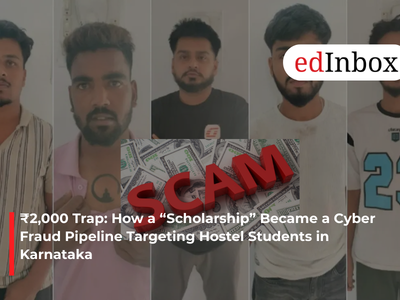
Acting swiftly, police tracked and intercepted the suspects, leading to the arrest of five individuals: Vakdoth Vakeel (24) and Raja (23) from Vijayanagara district; Zeeshan Ansari alias Zeesu (22) from Jharkhand; Akash (32), a DJ artist; and Sahil (22), a student from Chhattisgarh.
During the operation, authorities seized 11 mobile phones and eight complete bank kits—each containing passbooks, ATM cards, SIM cards, and internet banking details linked to accounts opened in Gadag and Haveri districts.
A Larger Network at Play
Investigators believe this is only the visible tip of a larger cyber fraud ecosystem. Preliminary findings suggest that several more accounts may have been created using similar tactics, raising concerns about the scale of the operation.
Police are currently working to trace at least three more suspects believed to be part of the wider network, indicating that the arrested individuals may have been intermediaries rather than masterminds.
The Bigger Picture: Exploiting Aspiration and Ignorance
What makes this case particularly alarming is not just the financial fraud, but the method—targeting aspiration. By leveraging the promise of scholarships, the accused exploited both trust and need, turning students into silent participants in cybercrime.
Forensic analysis of such cases reveals a growing trend: fraud is no longer just about hacking systems—it is about manipulating people. Social engineering, especially among young and digitally semi-aware populations, is becoming the weakest link in cybersecurity.
A Wake-Up Call
This incident serves as a stark reminder for educational institutions, policymakers, and law enforcement agencies. Financial literacy and digital awareness are no longer optional—they are essential safeguards.
Because in today’s cyber landscape, the line between victim and accomplice can be as thin as a ₹2,000 deposit.
₹2,000 Trap: How a “Scholarship” Became a Cyber Fraud Pipeline Targeting Hostel Students in Karnataka
Typography
- Smaller Small Medium Big Bigger
- Default Helvetica Segoe Georgia Times
- Reading Mode