Delhi might soon be testing roads and buildings that can "digest" pollution. However, the real question here is not only about innovations but why cities must rethink sustainability urgently.
Delhi Government e this first of its kind initiative which partnership with Indian Institute of Technology Madras to study photocatalytic surfaces coated with titanium dioxide (TiO). These smart materials upon sunlight exposure, break down harmful pollutants like nitrogen dioxide (NO) and volatile organic compounds (VOCs) into less harmful substances such as water and nitrates. The six-month study will implement these coatings in the areas of the roads, pavements, and building surfaces that may transform daily infrastructure to be the passive air purifiers.
Science backs it up. Continuously neutralising the pollutants without any additional energy input, photocatalysis allows for the surfaces to be low in maintenance and easily upgradeable. As a city which recorded no "good" air quality days in 2025 such tools could be a long-term addition to the policy measures which have been failing to produce results.
On the other hand this new technology does not help us to answer the more profound question: Are we merely trying to fix the pollution after it has been created when really we should be preventing it in the first place?
TiO coatings work - but they're not a fix. They clean up after the fact, like wiping blood off a wound. Delhi's air is poisoned by cars. Building dust, factories, and how energy is used - no real shift means these materials stay just that: temporary solutions.
Sustainability isn't about green slogans anymore. It's about cutting out polluting systems entirely. Public transit over private cars, efficient buildings, strict construction rules - these changes matter more than any new filter or paint. It seems hard to ignore how much we depend on old habits.
Then there's IIT Madras' work, quiet but real. These systems don't ask for change in behavior. And they just absorb pollution quietly. In cities like Delhi where emissions are high, such passive filters could cut down on exposure a lot.
The future doesn't rely only on tech or policy. It needs both - prevention and cleanup together. If Delhi pairs smog-reducing layers with real urban shifts, it might show how cities can respond differently to environmental threats, something arguably worth trying now. A passive system alone won't solve the problem, just a change in how people live and build does. that is what matters most soon.
Because ultimately, the goal is not just to build roads that clean the air—but to build cities that do not choke it in the first place.
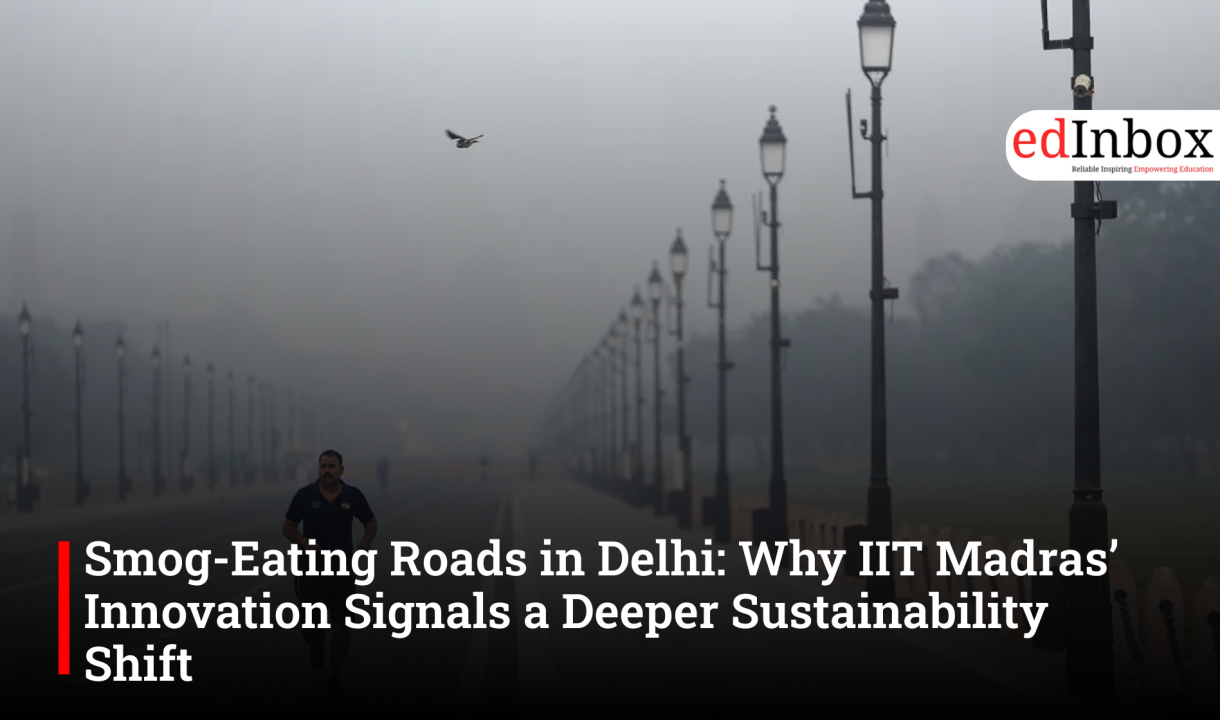
Smog-Eating Roads in Delhi: Why IIT Madras’ Innovation Signals a Deeper Sustainability Shift
Typography
- Smaller Small Medium Big Bigger
- Default Helvetica Segoe Georgia Times
- Reading Mode