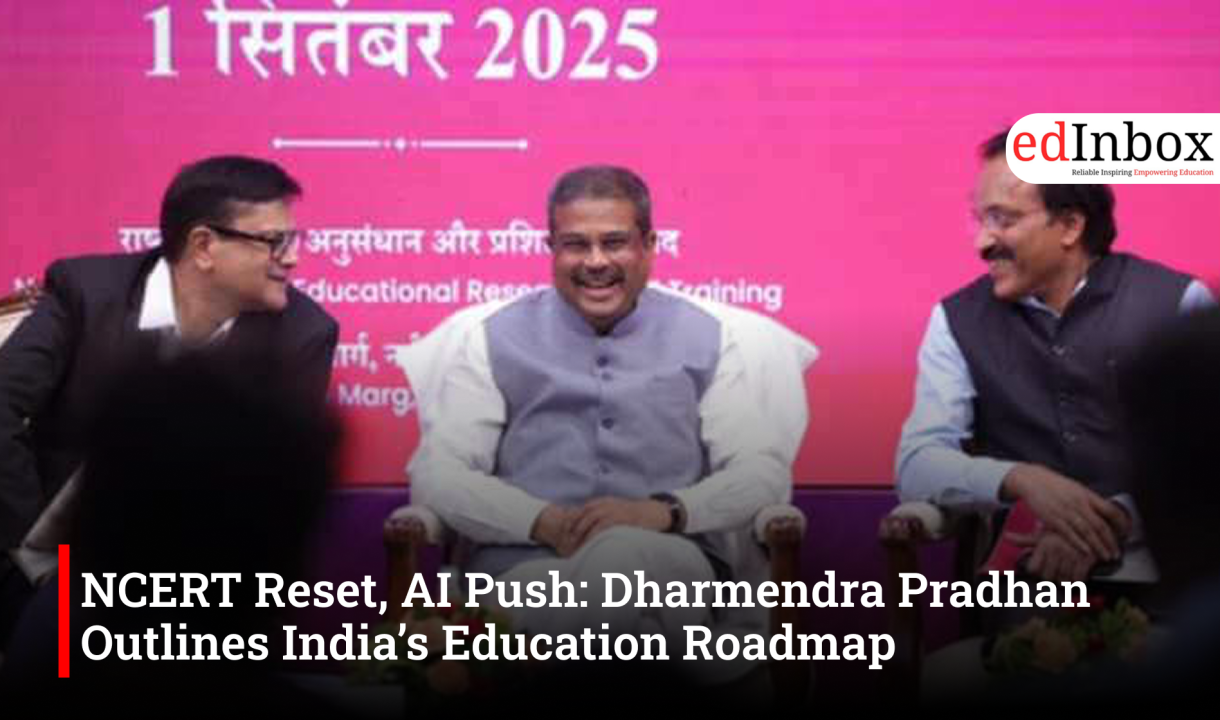
Union Education Minister Dharmendra Pradhan has outlined a forward-looking roadmap for India’s education system, combining curriculum reform, technology integration, and expansion of quality access. A key announcement includes the revision of a controversial NCERT textbook chapter on the judiciary, to be overseen by a committee led by former Supreme Court judge Indu Malhotra.
The UGC rules that recently inspired talk about standards and equity in higher ed? Pradhan says those are still under legal review. He doesn't commit to changes or push back - just notes the government will follow court orders if needed. Fairness and no discrimination remain core principles, even as policy moves slowly through the system.
India's education system now has to get through both public scrutiny and legal oversight, two forces that don't always play well together. The new committee will handle edits to a chapter many see as contentious - Mainly when it comes to how judges are portrayed. A lot of people want clarity on what's taught and why.
Beyond immediate policy issues, the minister highlighted the scale and responsibility of India’s education system, which caters to nearly 30 crore students. He stressed the need to strengthen infrastructure, expand access to quality learning resources, and build robust research ecosystems to support this vast student base.
The key feature of the roadmap is the introduction of artificial intelligence (AI) in education. Pradhan said that AI will not only be introduced as a subject but as a means to improve the quality of learning thus giving a clear message that education will become more technology-based. He explained that the objective is to equip students with skills that will make them capable of facing various challenges in the world which is becoming more digitized and automated.
The minister also reflected on India's expanding participation in the global academic community, emphasising that there has been a great increase in the number of Indian universities listed in the QS world rankings from 54 before 2014 to about 290 now. He gave this credit to the ongoing reforms and focus of policies in higher education.
The roadmap as a whole indicates a two-pronged approach: on the one hand, revising the original elements such as the curriculum; on the other hand, implementation of emerging technologies. As India deals with both hereditary problems and prepares for future needs, it seems that the aim is to build an education system which is not only inclusive and credible but also globally competitive and technologically aligned.
NCERT Reset, AI Push: Dharmendra Pradhan Outlines India’s Education Roadmap
Typography
- Smaller Small Medium Big Bigger
- Default Helvetica Segoe Georgia Times
- Reading Mode