The Central Board of Secondary Education (CBSE) is introducing further changes to its curriculum that go beyond traditional academic subjects, aiming to make education more holistic and future-ready. Several key areas have been made mandatory for students across grades, reflecting the board’s push toward skill-based and experiential learning.
AI and Computational Thinking from Class III
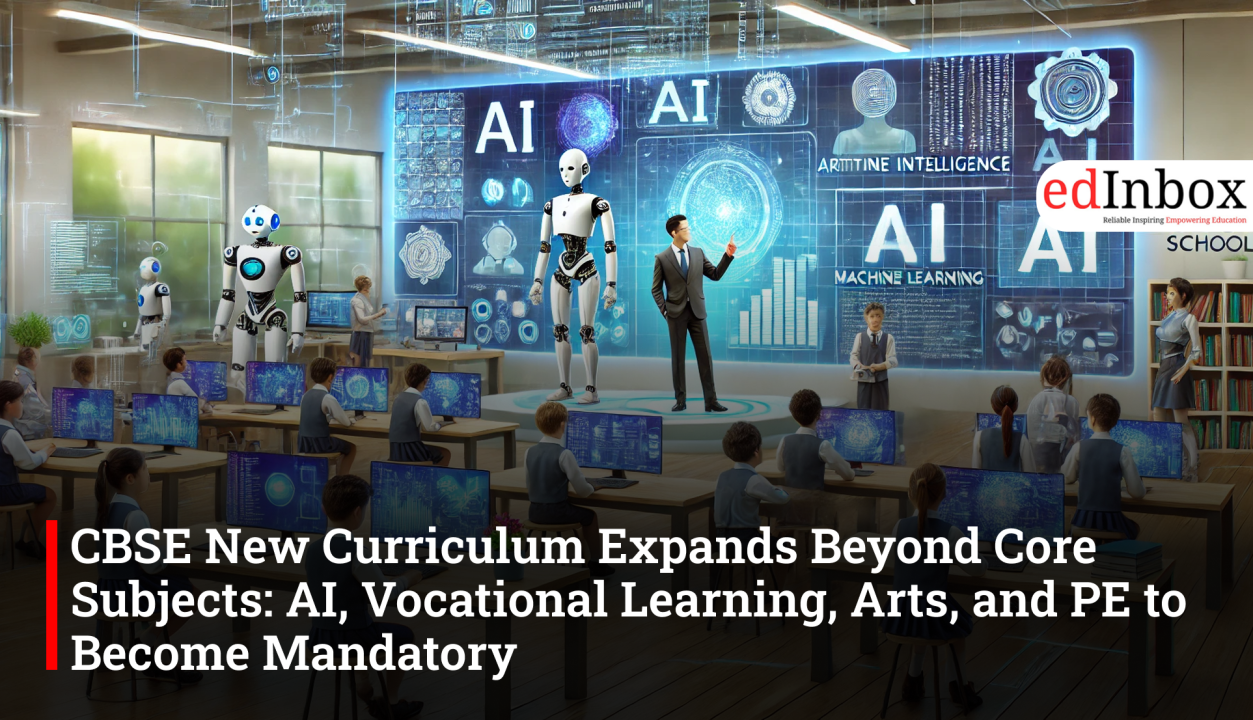
Artificial Intelligence (AI) and computational thinking will now be a mandatory part of learning starting from Class 3. While full-fledged board exams on AI are scheduled only from 2029, current students in Classes 9 and 10 will engage in skill-based learning modules on AI. These modules focus on building foundational problem-solving abilities, algorithmic thinking, and understanding real-world applications of technology.Vocational Education Integration
Vocational education has also become compulsory under the new framework. Schools will conduct internal assessments to monitor progress, and there is a strong possibility that vocational education will become a formal subject for board examinations starting 2028. This reflects a broader aim to prepare students for employment-oriented skills and hands-on experience alongside traditional academics.Arts, Flexible Learning, and Physical Education
The updated curriculum makes arts education and flexible learning mandatory, ensuring students can explore creative skills alongside core subjects. Physical education, often neglected in earlier frameworks, will now receive structured attention and internal assessments, ensuring holistic development in physical, mental, and social skills.Challenges Ahead for Schools and Teachers
While these changes are aimed at fostering a well-rounded education, questions remain about implementation. Teachers will need training to handle AI modules, vocational assessments, and integrated arts and PE classes effectively. Schools will have to adjust infrastructure, scheduling, and resource allocation to ensure 100 percent compliance.Experts caution that while the vision is progressive, successful execution depends on teacher preparedness, access to updated learning resources, and institutional readiness. Without adequate support, there could be gaps in delivering these new subjects effectively.
As CBSE moves toward a curriculum that blends traditional academics with skill development, AI, arts, vocational education, and physical health, the coming years will be crucial in testing whether schools and teachers can fully embrace the ambitious reforms.
CBSE New Curriculum Expands Beyond Core Subjects: AI, Vocational Learning, Arts, and PE to Become Mandatory
Typography
- Smaller Small Medium Big Bigger
- Default Helvetica Segoe Georgia Times
- Reading Mode