As children transition into their teenage years, many parents notice a shift—conversations become shorter, sharing reduces, and friends suddenly take centre stage. While this change can feel unsettling, experts say it is a natural and healthy part of adolescent development rather than a sign of emotional distance.
One of the main reasons teenagers turn to friends is relatability. Their peers are experiencing similar challenges—school pressure, social dynamics, identity questions—and this shared reality creates an immediate sense of understanding. Teens often feel that their friends “get them” in ways adults may not, making conversations more comfortable and less formal. Talking to someone going through the same phase helps them feel less isolated.
Another key factor is the growing need for independence. Adolescence is a time when individuals begin to shape their own identities, opinions, and values. Engaging with friends allows teens to explore ideas freely, without the influence or expectations they may associate with parental guidance. What may appear as distancing is often just a step toward self-discovery and decision-making.
Fear of judgment also plays a role. Many teenagers hesitate to open up to parents because they worry about criticism, lectures, or being misunderstood. Friends, on the other hand, feel like a “safer” space where they can express themselves without immediate consequences. This perception—whether accurate or not—makes peer conversations more appealing during emotionally sensitive situations.
Emotional support is another reason friendships become central. Teenagers rely on their friends to process feelings, seek advice, and navigate personal struggles. These interactions help them build communication skills, empathy, and emotional intelligence—essential tools for adulthood. Friends become a support system that complements, rather than replaces, parental support.
However, this shift does not mean parents are no longer important. In fact, teenagers still deeply value parental guidance, even if they do not express it openly. They may choose friends for everyday sharing, but often turn to parents during major decisions or crises—provided they feel heard and understood.
For parents, the key lies in adapting rather than resisting. Creating a non-judgmental environment, listening without immediate correction, and showing patience can encourage teenagers to reconnect. Instead of competing with friendships, parents can position themselves as a steady, trusted support system.
Ultimately, teens talking more to friends is not about pushing parents away—it’s about growing up. Understanding this shift can help families build stronger, more balanced relationships during one of life’s most transformative phases.
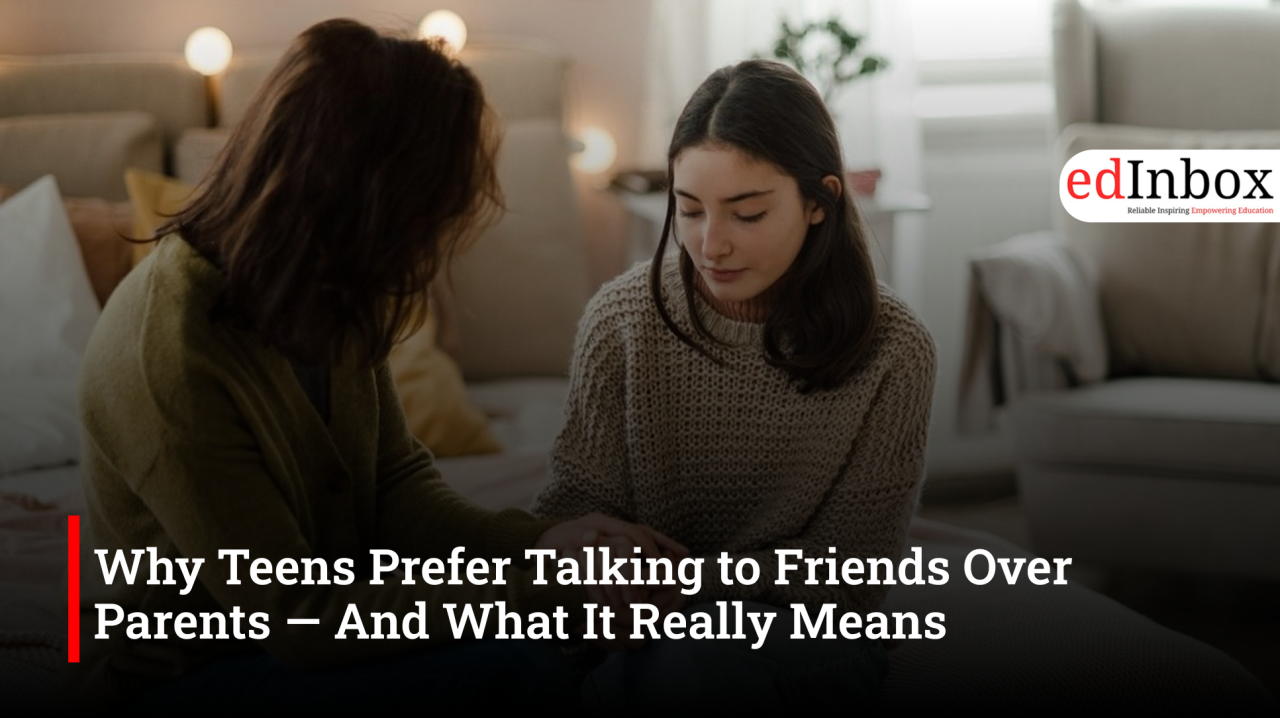
Why Teens Prefer Talking to Friends Over Parents — And What It Really Means
Typography
- Smaller Small Medium Big Bigger
- Default Helvetica Segoe Georgia Times
- Reading Mode