For lakhs of medical graduates appearing for NEET PG every year, understanding the All India Quota (AIQ) is essential to building an effective counselling strategy. The AIQ system allows candidates to compete for postgraduate medical seats across India, regardless of their home state, making it one of the most significant mechanisms in India’s medical admission process.
The system plays a major role in ensuring merit-based admissions while also increasing mobility and access to government medical colleges across states.
What is the All India Quota?
The All India Quota is a national pool of postgraduate medical seats available to candidates from across the country without domicile restrictions.
Under the AIQ system, 50% of all MD, MS, and PG Diploma seats in government medical colleges are reserved for national-level counselling. This means a student from one state can apply for a government medical seat in another state through a common merit-based process.
The remaining 50% of seats fall under the State Quota, which is managed separately by individual state authorities and is generally restricted to candidates who meet domicile requirements.
In simple terms, AIQ creates a nationwide competition for half of the government postgraduate medical seats in India.
Why was the AIQ system introduced?
The AIQ system originated from a Supreme Court directive in 1986 aimed at promoting equal opportunity in medical education.
Initially, only 25% of postgraduate medical seats were placed under the national quota system. However, in 2009, the quota was expanded to 50% to improve merit-based access and allow greater movement of students between states.
The expansion became especially important for students from states with limited medical infrastructure or fewer government medical colleges, giving them an opportunity to compete for seats nationwide.
Over the years, AIQ has become a key instrument for balancing regional disparities in medical education and improving access to specialised training.
How AIQ counselling works
The counselling process for AIQ seats is conducted by the Medical Counselling Committee (MCC), functioning under the Directorate General of Health Services (DGHS), Ministry of Health and Family Welfare.
The entire process is conducted online and typically includes:
- Registration and payment of counselling fees
- Choice filling and locking of preferred colleges and courses
- Seat allotment based on rank, reservation, and preferences
- Reporting to the allotted institution
Apart from AIQ seats, MCC also conducts counselling for deemed universities, central universities, ESIC medical colleges, and Armed Forces Medical Services (AFMS) institutions.
Which colleges come under AIQ?
Most government medical colleges across India participate in the All India Quota system.
However, some institutions have separate counselling mechanisms. Institutes such as All India Institute of Medical Sciences (AIIMS), Jawaharlal Institute of Postgraduate Medical Education and Research (JIPMER), and Postgraduate Institute of Medical Education and Research (PGIMER) follow their own admission procedures, although NEET PG eligibility remains mandatory.
Jammu and Kashmir has historically maintained a separate admission system linked to domicile requirements, though policies may vary depending on government notifications.
Why AIQ matters for medical aspirants
The AIQ system has become a crucial bridge between merit and opportunity in India’s healthcare education ecosystem.
For students from smaller towns and states with limited postgraduate medical seats, AIQ offers access to some of the country’s leading government medical colleges. At the same time, it exposes students from metropolitan regions to healthcare systems and public health challenges in different parts of India.
The system also contributes to national integration within medical education by encouraging geographic mobility and diversity in classrooms and hospitals.
For NEET PG aspirants, understanding AIQ is not just about seat distribution. It directly affects counselling strategy, college selection, specialisation choices, and career planning.
As competition for postgraduate medical seats continues to intensify each year, the All India Quota remains one of the most important pathways shaping the future of India’s medical workforce.
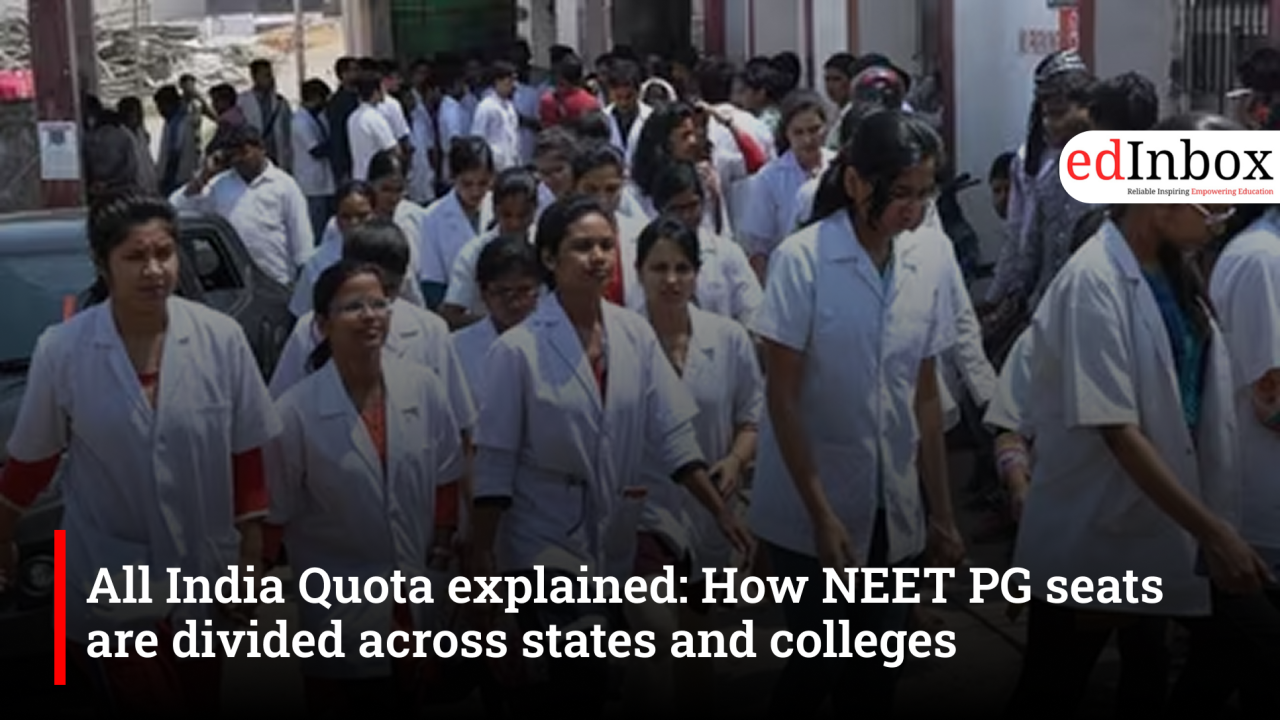
All India Quota explained: How NEET PG seats are divided across states and colleges
Typography
- Smaller Small Medium Big Bigger
- Default Helvetica Segoe Georgia Times
- Reading Mode