Following widespread controversy over the alleged leak of the NEET-UG 2026 question paper, the National Testing Agency has announced a series of institutional reforms aimed at improving transparency, security and operational efficiency in India’s high-stakes examination system.
The changes come after the cancellation of the NEET-UG 2026 examination triggered intense criticism from students, parents and education stakeholders across the country. Acting on recommendations made by a high-level expert committee constituted by the Government of India, the agency said the reforms are part of a “comprehensive and continuing programme” to rebuild trust in the examination ecosystem.
Senior Officers Inducted Into NTA
As part of the restructuring process, the National Testing Agency has inducted four senior government officers into key administrative positions.
The appointments include two joint secretary-level officers who will serve as additional director generals, along with two director-level officers. According to the agency, the officers bring extensive experience from central services and inter-ministerial administration, which is expected to support the NTA’s expanding responsibilities.
Specialist Leadership Positions Opened
The agency has also invited applications for three major specialist roles:
- Chief Technology Officer (CTO)
- Chief Finance Officer (CFO)
- General Manager (HR)
The NTA said the CTO will oversee the entire digital examination ecosystem, including candidate-facing platforms, confidential question-paper management systems, AI-driven integrity monitoring, cyber-security measures and technological modernisation.
Meanwhile, the CFO will supervise examination-wise accounting, treasury management, statutory compliance and financial oversight, including coordination with the Comptroller and Auditor General (CAG).
The GM (HR) will focus on workforce management, professional HR policies and institutional reforms within the organisation.
Applications for the three positions can be submitted within 15 days from the publication of the advertisements on the official NTA website. Selections will reportedly be made through a formal selection committee based on qualifications, experience and demonstrated capability.
What Changes Can Students Expect?
According to the National Testing Agency, the broader reform programme will introduce major structural and technological changes in the examination process.
Key measures expected include:
- Stronger question-paper preparation and logistics systems
- AI- and analytics-based monitoring controls
- Biometric authentication of candidates
- Enhanced cyber-security systems
- Improved coordination between stakeholders
- Professionalisation of human resource management
- More proactive communication with students and parents
The reforms are aimed at tightening security and reducing the chances of malpractice in competitive examinations such as NEET-UG 2026.
The developments also follow action taken in the paper leak investigation, including reports that the Pune Municipal Corporation sealed RCC Coaching Classes linked to accused Shivraj Mategonkar in connection with the case.
The latest reforms signal a major shift in how the NTA plans to conduct national-level examinations, with greater emphasis on technology-driven monitoring, accountability and institutional oversight.
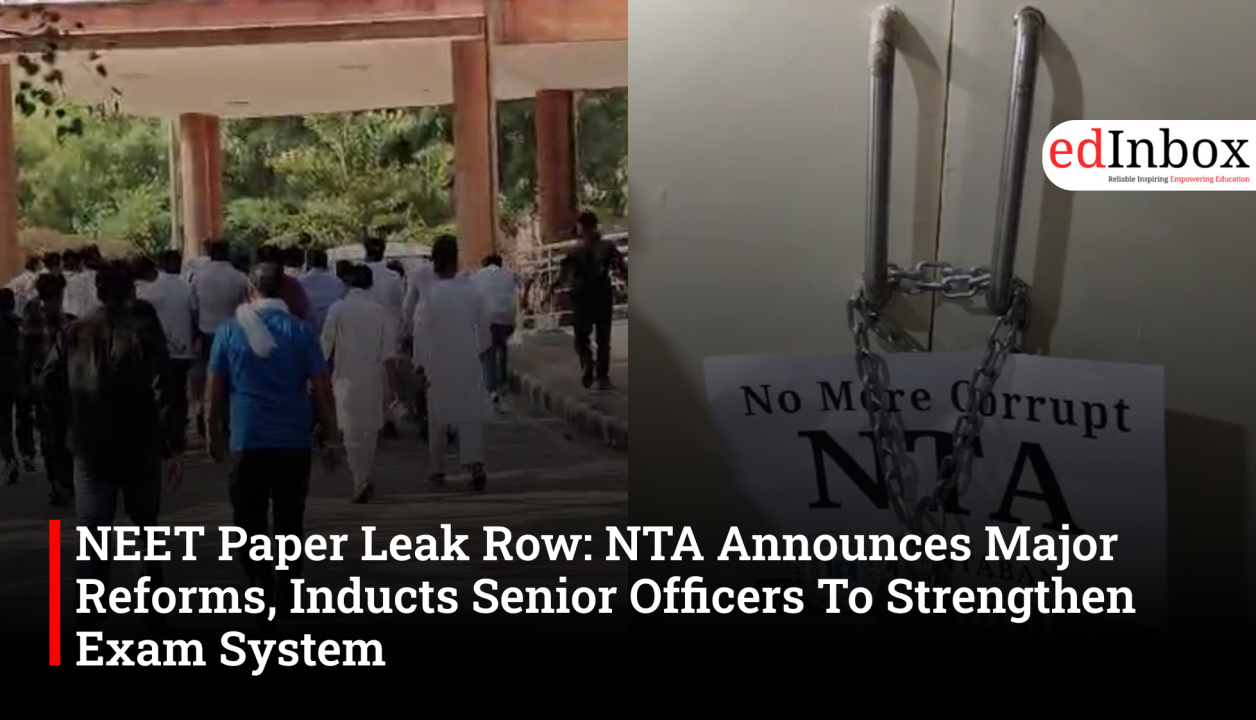
NEET Paper Leak Row: NTA Announces Major Reforms, Inducts Senior Officers To Strengthen Exam System
Typography
- Smaller Small Medium Big Bigger
- Default Helvetica Segoe Georgia Times
- Reading Mode