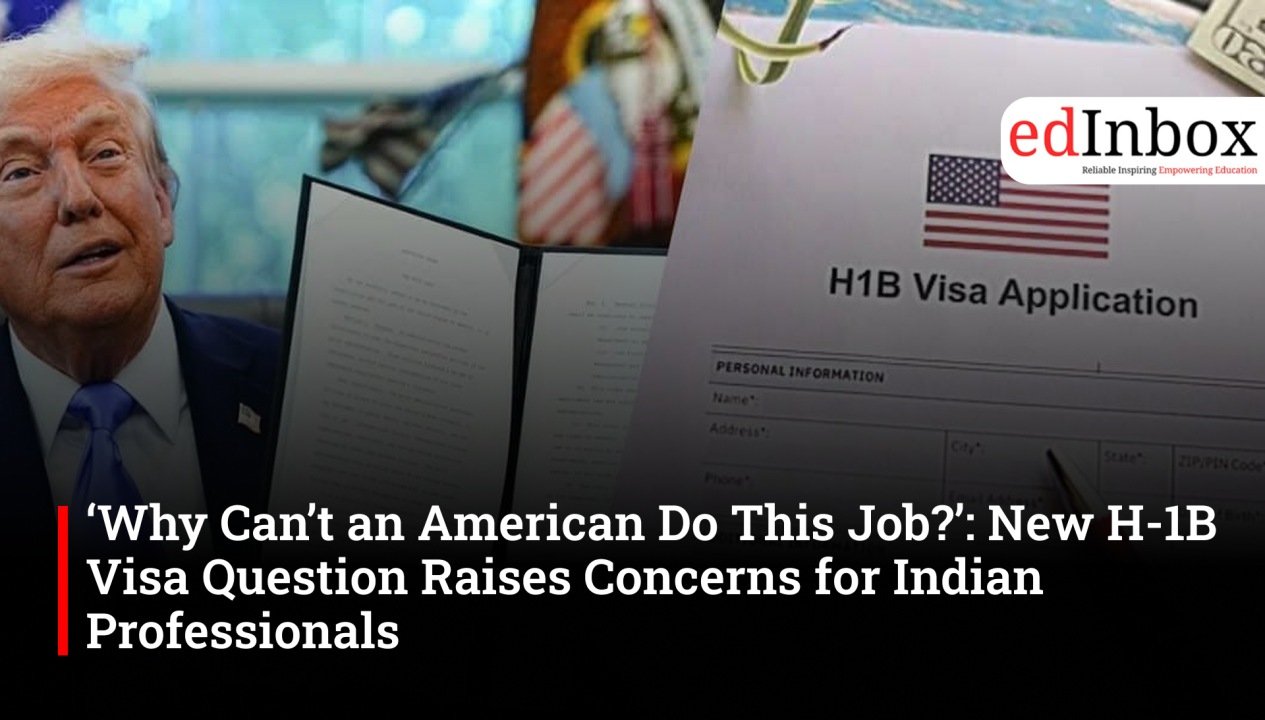
A growing number of H-1B visa applicants are encountering a new question during US visa interviews: “Why can’t an American do this job instead of you?” Immigration attorneys say the query is increasingly shaping visa outcomes and reflects a renewed emphasis on protecting domestic employment opportunities.
The trend comes at a time when Indian professionals dominate the H-1B programme, accounting for nearly 71 per cent of all approved petitions in fiscal year 2024. According to data from the US Citizenship and Immigration Services (USCIS), India-born beneficiaries received 283,397 of the 399,395 H-1B approvals granted during the year.
Legal experts believe the question signals a return to the “Buy American, Hire American” approach that gained prominence during the first Trump administration. While applicants are typically prepared to discuss their qualifications, technical expertise and educational background, many are now finding themselves challenged to explain why their specific role requires foreign talent.
James Hollis, a business immigration attorney with McEntee Law Group, told The American Bazaar that the shift has become increasingly noticeable in recent months. He noted that applicants must now clearly demonstrate the specialised knowledge, experience or industry connections they bring to a role that may not be readily available in the domestic labour market.
The heightened scrutiny appears particularly focused on professionals working in information technology, consulting and IT contracting sectors. Attorneys report that Indian and Chinese applicants face stricter examination standards, especially those employed by large consulting firms and technology service providers.
Experts suggest that visa outcomes may increasingly depend on factors beyond an applicant’s personal qualifications. Consular officers may also consider company-specific variables such as salary levels, hiring patterns and the number of similar visa applications submitted by an employer.
The development has reignited debate over the purpose of the H-1B programme. Critics argue that some companies use the visa system to replace American workers with lower-cost foreign labour. Supporters, however, point to persistent shortages of skilled professionals in emerging technology fields.
Dallas-based entrepreneur Kishore Khandavalli, who began his own career in the United States on an H-1B visa, argues that employers continue to face a significant skills gap. According to him, many organisations struggle to find workers with expertise in rapidly evolving technologies, creating a demand that domestic talent pipelines have not fully met.
The numbers underscore the programme's importance. Computer-related occupations accounted for approximately 64 per cent of all H-1B approvals in FY2024. Median salaries for H-1B workers reached $120,000 annually, while technology-related roles commanded median compensation of around $135,000.
For Indian students and professionals aspiring to build careers in the United States, immigration experts say preparation is becoming increasingly important. Beyond technical competence, applicants may now need to articulate how their unique expertise contributes to innovation, business growth and specialised industry needs.
As US immigration authorities tighten scrutiny, the future of high-skilled migration may increasingly depend on a candidate's ability to answer one simple but consequential question: What makes their contribution indispensable?
‘Why Can’t an American Do This Job?’: New H-1B Visa Question Raises Concerns for Indian Professionals
Typography
- Smaller Small Medium Big Bigger
- Default Helvetica Segoe Georgia Times
- Reading Mode