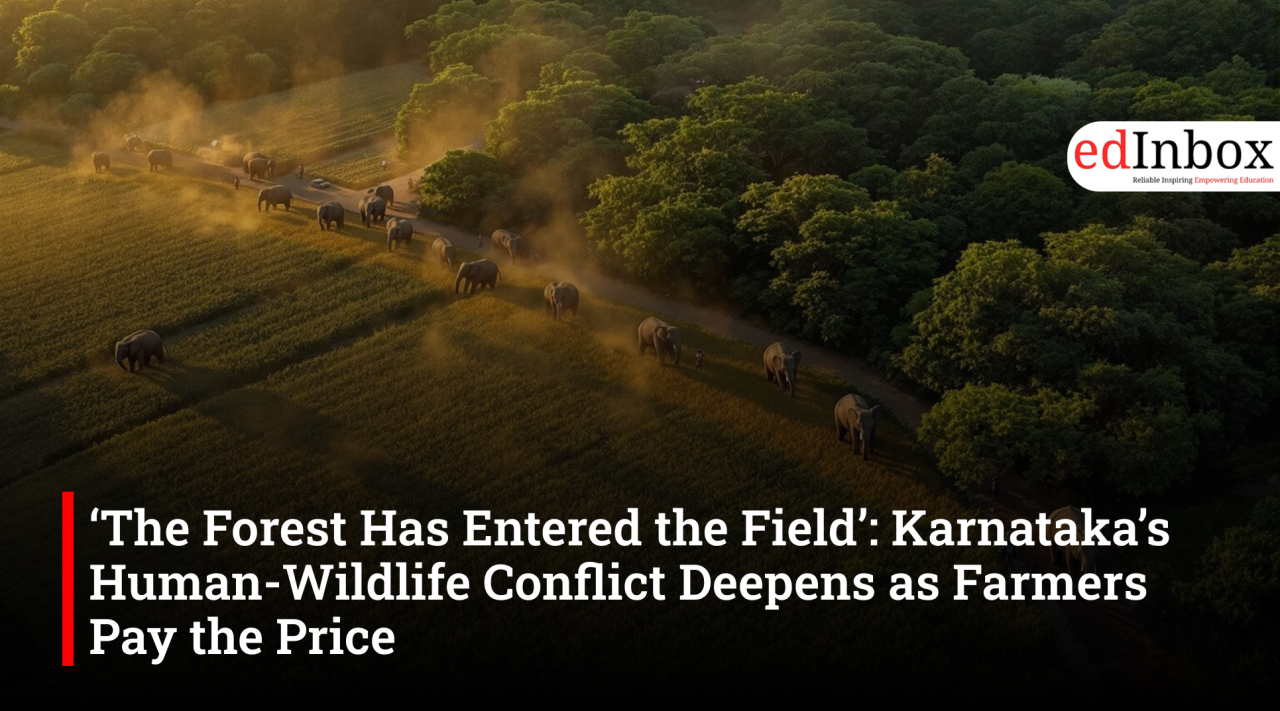
What was once considered a problem confined to villages bordering forests has evolved into a statewide crisis in Karnataka. From tiger attacks in Mysuru district to elephant encounters in Chikkamagaluru and Chamarajanagar, human-wildlife conflict is increasingly threatening lives, livelihoods and rural economies.
Recent incidents have reignited debate over whether conservation efforts are adequately balancing wildlife protection with the safety and well-being of communities living closest to forests.
A Tragic Season in Saragur
The crisis came into sharp focus in Saragur taluk of Mysuru district, where several devastating incidents unfolded within weeks in late 2025.
Farmer Madhava Gowda suffered permanent blindness after being attacked by a tiger while working in his field near Badagalapura village. The attack left both his eyes irreparably damaged, transforming the family's life overnight as his wife became his full-time caregiver.
Days later, Rajashekarappa, a marginal farmer from Bennegere village, was killed in another tiger attack while grazing cattle. According to family members, repeated calls to forest authorities allegedly went unanswered during the emergency, fuelling anger among villagers.
In November, another farmer, Dhana Naika, lost his life after a tiger attack near the Nugu Wildlife Sanctuary, leaving behind his wife, three daughters and elderly mother.
These back-to-back tragedies triggered protests, road blockades and demands for greater accountability from forest authorities.
Conflict Extends Beyond Forest Borders
Experts say Saragur is not an isolated case but part of a broader trend.
According to Karnataka Forest Department records, the state recorded more than 35,500 human-wildlife conflict incidents during 2024–25, with elephants accounting for over 22,000 reported cases.
The conflict now stretches across several regions, including:
- The Bandipur–Nagarahole landscape
- Chamarajanagar and Mysuru districts
- The BRT Wildlife Sanctuary region
- Coffee-growing districts such as Kodagu and Chikkamagaluru
- The Kudremukh landscape
- Parts of Hassan, Ramanagara and Tumakuru
Across these areas, many farmers say agricultural routines have fundamentally changed. Work schedules are adjusted around wildlife movement, labourers often refuse to enter fields during dawn or dusk, and families spend nights guarding crops using torches, watchtowers and firecrackers.
Why Are Encounters Increasing?
Wildlife experts point to a combination of ecological and developmental pressures rather than a single cause.
Growing fragmentation of forests, shrinking wildlife corridors, expanding plantations, highways, railway lines and settlements have reduced the natural movement space available to elephants and tigers.
Many conservation scientists also note that degradation of forest water sources and invasive plant species has reduced food availability inside forests, forcing animals to venture into agricultural landscapes.
These ecological pressures, they argue, are increasing encounters between humans and wildlife.
Conservation Success Brings New Challenges
Conservationists acknowledge that Karnataka has achieved significant success in protecting flagship species such as tigers and elephants. However, they caution that successful wildlife recovery must be matched by stronger support systems for communities living alongside protected areas.
Experts argue that while measures such as solar fencing, railway barricades, drones, AI cameras, radio collars and compensation schemes have helped in some locations, many interventions remain reactive rather than preventive.
In several cases, problematic animals are captured only after fatalities or repeated attacks, leaving communities feeling that official action comes too late.
Economic Burden on Farmers
The impact extends well beyond fatal encounters.
Farmers across Karnataka report repeated crop losses caused by elephants, deer, gaur, monkeys, peacocks, parrots and rodents. Damage to ginger, areca nut, coffee and horticultural crops often results in substantial financial losses, while the fear of wildlife discourages agricultural labour and delays harvesting.
Research based on Karnataka's e-Parihara compensation database indicates that wildlife-related losses affect thousands of villages, with some households in plantation belts reportedly losing between ₹50,000 and ₹1.5 lakh annually when crop damage, labour shortages and infrastructure losses are considered.
The Way Forward
Experts increasingly agree that reducing conflict requires a shift from emergency response to long-term landscape management.
Key recommendations include:
- Restoring degraded forests and natural water sources.
- Protecting and reconnecting wildlife corridors.
- Regulating infrastructure projects that fragment habitats.
- Expanding real-time wildlife monitoring and early warning systems.
- Strengthening rapid-response teams in conflict-prone villages.
- Improving communication between forest departments and local communities.
Conservationists also emphasise that coexistence depends on trust. Timely warnings, quick emergency responses and meaningful community engagement are considered as important as compensation after an incident.
As Karnataka continues to balance biodiversity conservation with rural livelihoods, the challenge is no longer simply protecting wildlife. It is ensuring that conservation policies also protect the people who share landscapes with some of India's most iconic—and increasingly mobile—wild animals.
‘The Forest Has Entered the Field’: Karnataka’s Human-Wildlife Conflict Deepens as Farmers Pay the Price
Typography
- Smaller Small Medium Big Bigger
- Default Helvetica Segoe Georgia Times
- Reading Mode