Uttarakhand UCC, Uttarakhand Madrasa Board, madrasa education reforms, Uniform Civil Code Uttarakhand, and modern education in madrasas have emerged as key discussion points after the state government initiated a review of the madrasa education system. Months after implementing the Uttarakhand Uniform Civil Code (UCC) Act, 2024, the state is now examining the future of the Madrasa Board, with an emphasis on expanding access to mainstream education while preserving cultural and religious learning.
The Uniform Civil Code came into force in Uttarakhand on January 27, 2025, replacing religion-based personal civil laws in the state and addressing issues such as child marriage, polygamy, instant triple talaq, halala and iddat.
According to Manu Gaur, a member of the UCC drafting committee and the Strategic Advisory Committee (SAC), the government believes educational reform should follow legal reform.
"After the UCC, the next essential step was to ensure that every child, irrespective of community, receives access to quality modern education. Educational deprivation cannot continue under any framework," Gaur said.
The state government constituted the Strategic Advisory Committee (SAC) on June 5, 2025, under the Chief Minister's chairmanship to deliberate on major policy issues. During its first meeting, members discussed concerns that some children studying in madrasas may have limited exposure to mainstream academic education.
As part of the review, committee members examined the Uttarakhand Madrasa Education Board Act, 2016, and the Uttarakhand Non-Government Arabic and Persian Madrasa Recognition Regulations, 2019. The panel also consulted senior officials, including Uttarakhand Madrasa Board Chairman Mufti Shamoon Qasmi, Special Secretary for Minority Welfare Parag Madhukar Dhakate, and other experts.
Officials involved in the exercise stated that several madrasas were operating without formal recognition. They also estimated that only 2–4% of school-going Muslim children in Uttarakhand study in madrasas.
The government has maintained that the proposed reforms are not targeted at any particular community but are intended to eliminate parallel religion-based educational structures and align students with mainstream academic standards. According to the committee, the objective is to expand opportunities for students to pursue careers in medicine, engineering, civil services and other professions while continuing to receive religious and cultural education.
The SAC also reviewed landmark Supreme Court judgments, including the TMA Pai Foundation and PA Inamdar cases, which recognise the rights of minority institutions while permitting reasonable regulations to uphold academic standards.
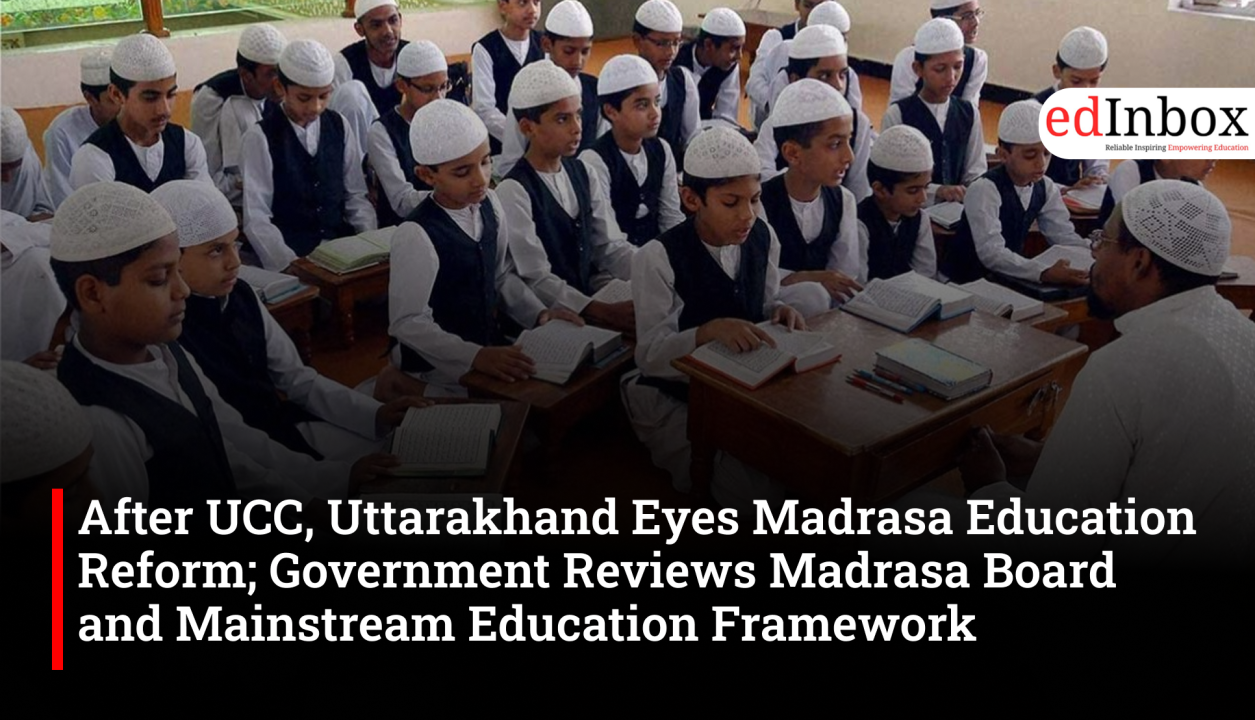
After UCC, Uttarakhand Eyes Madrasa Education Reform; Government Reviews Madrasa Board and Mainstream Education Framework
Typography
- Smaller Small Medium Big Bigger
- Default Helvetica Segoe Georgia Times
- Reading Mode