Artificial intelligence is steadily reshaping classrooms, and educators are now using Large Language Models (LLMs) to create interactive educational games that make learning more engaging for young students. A unique initiative by the Universal Teachers Academy (UTA), a Tamil Nadu-based teachers' collective, is empowering educators to design simple AI-generated games for primary school classrooms, helping children learn mathematics, language and memory skills through play rather than traditional rote methods.
The initiative reflects a growing shift in education, where AI is no longer viewed merely as a tool for administrative tasks or information retrieval but as a resource that can fundamentally improve classroom pedagogy and student engagement.
AI-powered games for primary classrooms
The games are primarily designed for students in Classes I to III and cover foundational concepts such as basic mathematics, alphabet recognition, vowel identification, picture matching, pattern recognition and vocabulary building.
Using large language models, teachers generate simple HTML-based educational games that can be played on mobile phones, laptops or classroom smartboards. Since the games are saved as HTML files, they can also be accessed without an internet connection, making them suitable for schools with limited digital infrastructure.
According to the organisers, the objective is to transform conventional lessons into interactive learning experiences that encourage participation and improve concept retention.
One example involves a game where letters move across the screen and children must identify and catch only the vowels. Such activities help students remember concepts more effectively while keeping them actively engaged throughout the lesson.
Teachers learn AI and basic coding
The Universal Teachers Academy, which has a network of around 28,000 teachers, is organising a free online workshop to train more than 1,200 educators in designing AI-powered educational games.
The programme introduces teachers to the fundamentals of HTML, prompt engineering and the effective use of large language models.
The process begins with teachers visualising the learning objective and planning the game concept. They then define the number of levels, degree of difficulty, user interface, time limits and classroom objectives. Using carefully designed prompts, the AI generates the required code, which is compiled into an HTML file that can be used directly in classrooms.
Once educators become familiar with the process, they can refine their prompts to add more challenging levels, customise the interface and develop increasingly sophisticated learning activities.
No coding expertise required
Organisers emphasise that even teachers with little or no programming experience can create meaningful educational content using AI.
Teacher and UTA member Gauyathrie shared that she recently designed a picture card matching game for her students using the approach and successfully conducted the activity in class through her laptop.
According to her, the game generated enthusiastic participation from students and demonstrated how AI tools can help educators create innovative classroom experiences without requiring advanced technical skills.
Education experts welcome the initiative
Educationists believe such AI-enabled teaching methods can significantly improve student motivation, especially during the foundational years of schooling.
Experts point out that interactive games stimulate curiosity, strengthen problem-solving abilities and make abstract concepts easier to understand. Since the games are specifically designed for young learners, they also encourage active participation and improve long-term retention of lessons.
Members of parents' associations have also welcomed the initiative, noting that teachers who invest additional effort in developing innovative teaching methods deserve recognition and institutional support.
AI emerging as a classroom partner
The initiative highlights the expanding role of artificial intelligence in education, where AI is increasingly assisting teachers rather than replacing them. By enabling educators to quickly create customised learning resources, large language models are helping make classrooms more engaging, inclusive and student-centred.
As schools continue integrating digital tools into teaching, initiatives like UTA's demonstrate how AI can be harnessed responsibly to enhance learning outcomes, encourage creativity and make education both enjoyable and accessible for young learners.
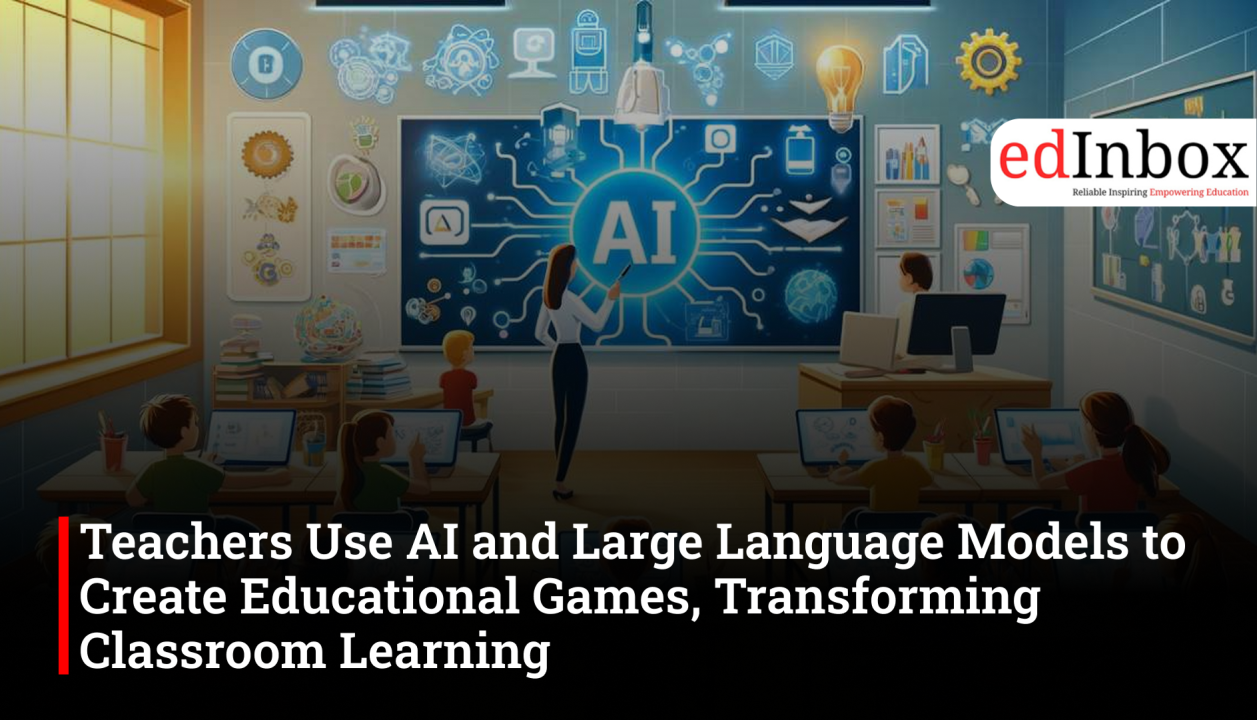
Teachers Use AI and Large Language Models to Create Educational Games, Transforming Classroom Learning
Typography
- Smaller Small Medium Big Bigger
- Default Helvetica Segoe Georgia Times
- Reading Mode