In the wake of the NEET 2026 paper leak controversy, the Central government has unveiled a sweeping reform agenda aimed at strengthening India's public examination system. Combining stricter legal penalties with technology-driven reforms, the proposed changes seek to prevent paper leaks, dismantle organised cheating networks, and restore public confidence in competitive examinations.
The reforms come after the cancellation of NEET 2026, an unprecedented development that affected nearly two million medical aspirants, triggered nationwide protests, and renewed concerns over the integrity of India's examination system.
Tougher Anti-Paper Leak Law Proposed
To strengthen the Public Examinations (Prevention of Unfair Means) Act, 2024, the government has introduced the Public Examinations (Prevention of Unfair Means) Amendment Bill, 2026 in Parliament.
The proposed legislation significantly increases penalties for individuals and organisations involved in examination fraud.
Key proposed changes include:
- Minimum imprisonment increased from three years to five years.
- Maximum fine increased from ₹1 crore to ₹5 crore.
- Companies or agencies found guilty of facilitating examination fraud could face an eight-year debarment, compared to the existing four-year ban.
- Stronger provisions for faster investigation and time-bound prosecution of organised examination fraud.
According to the government, these amendments are intended to act as a stronger deterrent against paper leak syndicates and ensure more effective enforcement of the law.
Technology at the Centre of Exam Reforms
Alongside legal reforms, the government has launched a broader effort to modernise India's examination ecosystem through technology.
Following the NEET controversy, Prime Minister Narendra Modi announced the formation of a high-level committee headed by Infosys co-founder Nandan Nilekani to recommend technology-driven solutions for improving the credibility and security of public examinations.
The committee has been tasked with identifying ways to strengthen every stage of the examination process through digital innovation.
Digital Exams and Multi-Shift Testing
Several recommendations under consideration focus on reducing the risk of paper leaks through technological changes.
Among the key proposals are:
- Expanding computer-based testing (CBT) for large-scale examinations.
- Conducting examinations in multiple shifts instead of a single nationwide session.
- Using secure digital systems to reduce dependence on printed question papers.
- Strengthening examination logistics and monitoring mechanisms.
- Improving technology infrastructure for test administration.
Experts believe these measures could significantly reduce opportunities for organised cheating and improve operational efficiency.
Building on Earlier Reform Recommendations
The latest initiative builds upon recommendations made by an earlier expert committee constituted after the 2024 NEET paper leak.
That committee submitted a report containing 101 recommendations covering examination design, security protocols, technology adoption, governance, and administrative safeguards.
According to submissions made before the Supreme Court in May, several recommendations have already been implemented, while others remain at advanced stages of execution.
The newly constituted Nilekani committee is expected to further accelerate India's transition towards a more secure, technology-enabled examination system.
Restoring Trust After the NEET Crisis
The cancellation of NEET 2026 and subsequent protests intensified demands for accountability and comprehensive examination reforms.
India conducts hundreds of entrance examinations and recruitment tests every year, with millions of students competing for limited seats in universities and government jobs. Repeated incidents of paper leaks have raised serious concerns about fairness, transparency, and the credibility of the system.
The government's latest strategy combines stronger legal enforcement with administrative and technological reforms to address both the immediate challenge of examination fraud and the long-term need for a resilient testing framework.
What the Reforms Mean for Students
If enacted and implemented effectively, the proposed reforms could bring several changes for candidates:
- More secure examination processes with reduced risk of paper leaks.
- Wider adoption of computer-based examinations.
- Increased use of multi-shift testing for large-scale entrance exams.
- Faster legal action against individuals and organisations involved in examination fraud.
- Greater transparency and accountability in conducting public examinations.
The reforms also aim to rebuild trust among students and parents by ensuring that merit, rather than malpractice, determines admission to educational institutions and recruitment to public services.
As Parliament considers the proposed amendments and expert committees continue to refine the examination framework, India is moving toward what could become its most comprehensive overhaul of public examinations, combining stringent legal action with technology-driven safeguards to strengthen the integrity of one of the world's largest testing systems.
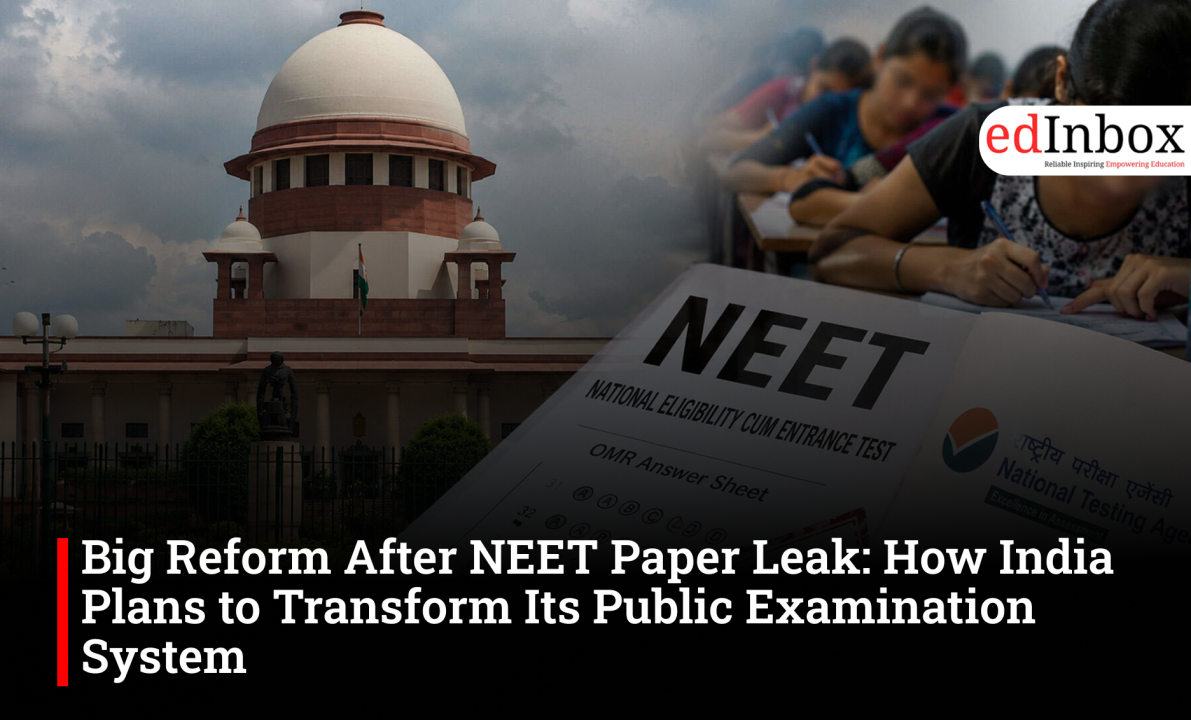
Big Reform After NEET Paper Leak: How India Plans to Transform Its Public Examination System
Typography
- Smaller Small Medium Big Bigger
- Default Helvetica Segoe Georgia Times
- Reading Mode