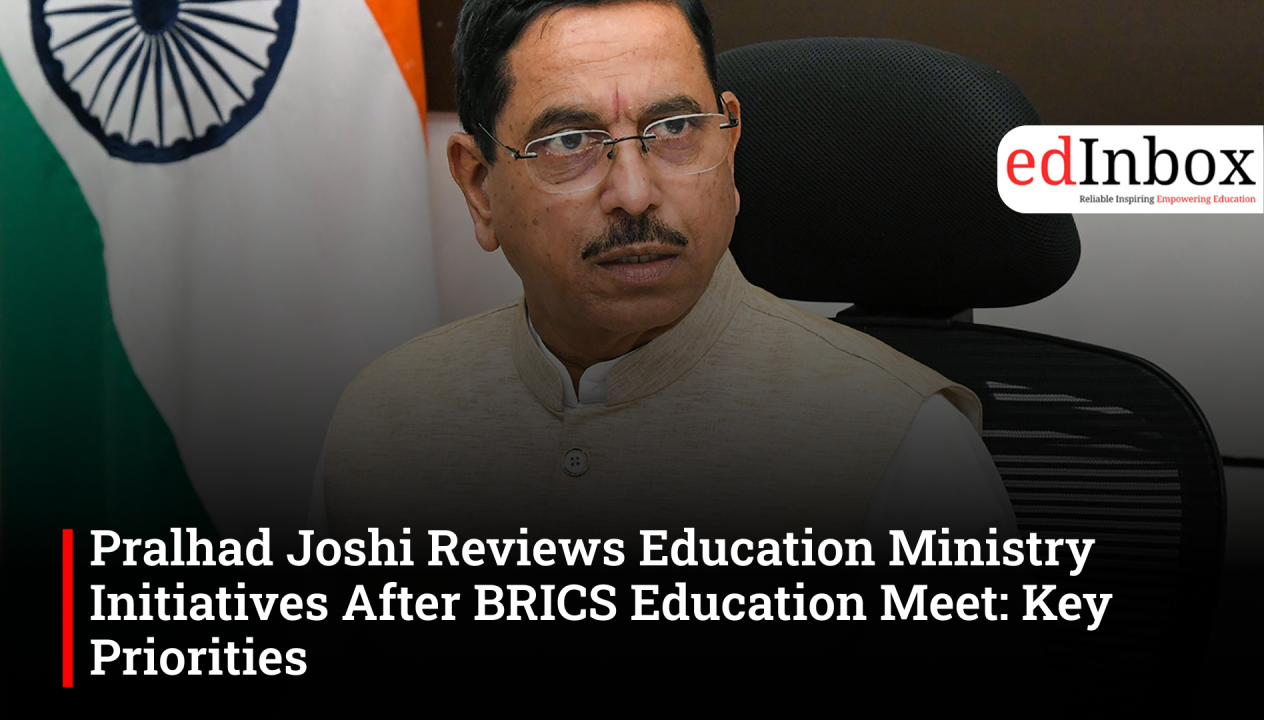
Pralhad Joshi Education Minister: Union Education Minister Pralhad Joshi has reviewed the ongoing initiatives of the Ministry of Education and discussed implementation priorities with senior officials after returning to New Delhi from the 13th BRICS Education Ministers' Meeting in Bhubaneswar, Odisha.
The review focused on key education programmes, areas requiring greater attention and the next steps for strengthening India's education ecosystem.
Joshi chaired the 13th BRICS Education Ministers' Meeting, which concluded with the adoption of the 13th BRICS Education Ministers' Declaration. The declaration identified several areas for cooperation, including early childhood education, foundational learning, skill development, research and innovation.
Pralhad Joshi Reviews Education Ministry Programmes
After returning to New Delhi, Joshi held detailed discussions with senior officials of the Ministry of Education to assess ongoing programmes and determine the next course of action.
In a post on X, Joshi said the meeting reviewed ongoing initiatives, implementation priorities and areas requiring focused attention.
He said the ministry remains committed to the timely and effective execution of programmes aimed at strengthening India's education ecosystem.
The minister also emphasised the need to build an inclusive, future-ready and globally competitive education system.
The review assumes significance as the ministry moves to translate policy priorities and international commitments into implementation across India's education sector.
BRICS Education Meeting Focuses on Future-Ready Learning
At the BRICS Education Ministers' Meeting, Joshi highlighted India's commitment to working with other BRICS nations on common education priorities.
He said discussions held during India's BRICS Chairship should lead to concrete action and cooperation.
India's 2026 BRICS Chairship theme is "Building for Resilience, Innovation, Cooperation and Sustainability."
Joshi emphasised that education systems must prepare young people to take advantage of emerging opportunities while ensuring that human values remain central to learning.
He also said learners, teachers, researchers and young people should remain at the centre of education policymaking and international cooperation.
Key Areas in BRICS Education Declaration
The 13th BRICS Education Ministers' Declaration outlined several areas for strengthening cooperation among member countries.
Early Childhood Education and Foundational Learning
The participating countries highlighted the importance of Early Childhood Care and Education (ECCE) and Foundational Literacy and Numeracy (FLN) in building strong learning foundations.
Skill Development and Vocational Education
Greater cooperation in skill development and Technical and Vocational Education and Training (TVET) was another major priority.
The focus is intended to help learners develop skills aligned with changing employment opportunities and economic requirements.
Research, Innovation and Start-ups
The declaration also emphasised collaboration in research, innovation and start-up ecosystems.
The initiative seeks to strengthen academic and research partnerships while encouraging innovation across BRICS countries.
Recognition of Qualifications
Mutual Recognition of Qualifications (MRQ) and capacity building for academic leadership and institutional development were also included among the areas of cooperation.
Such collaboration could help facilitate greater academic mobility and strengthen institutional partnerships between participating countries.
Traditional Knowledge Systems Included in BRICS Cooperation
The BRICS meeting also welcomed India's initiative concerning the BRICS Guiding Principles on Strengthening Academic Collaboration on Traditional and Indigenous Knowledge Systems.
The meeting suggested that the BRICS Network University may consider traditional and indigenous knowledge systems as an additional International Thematic Group.
The proposal brings traditional knowledge into the broader framework of academic collaboration and higher education cooperation among BRICS nations.
Education Ministry Focuses on Implementation
The post-BRICS review signals the Education Ministry's focus on converting international discussions and policy commitments into concrete programmes.
With foundational learning, skill development, research, innovation, academic collaboration and traditional knowledge emerging as key priorities, the ministry is expected to focus on implementation and coordination in the coming months.
The review also comes as Joshi settles into his role as Union Education Minister following Dharmendra Pradhan's resignation from the post amid protests over the NEET-UG 2024 examination controversy.
Pralhad Joshi Reviews Education Ministry Initiatives After BRICS Education Meet: Key Priorities
Typography
- Smaller Small Medium Big Bigger
- Default Helvetica Segoe Georgia Times
- Reading Mode