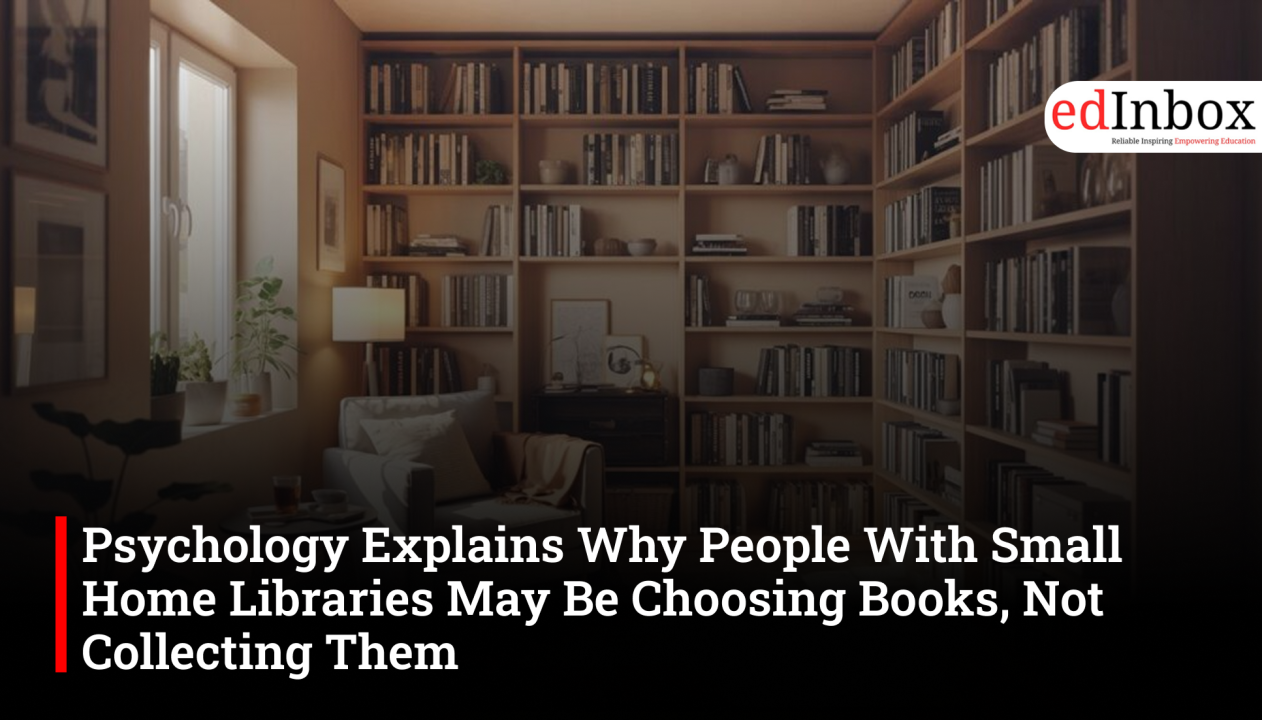
A bookshelf filled with hundreds of books may immediately suggest a love of reading. But a small library at home does not necessarily indicate limited knowledge or interest in books.
For some people, a compact collection reflects deliberate choices rather than a lack of interest. They may keep only books they have read, are currently using or expect to return to. Others may rely heavily on e-books, audiobooks and libraries, reducing the need to own physical copies.
The number of books on a shelf, therefore, cannot by itself tell us how much a person reads or knows.
A small library can reflect intentional curation
People organise their homes differently, and books are part of that process.
Someone with a small collection may select books based on personal relevance, professional use, hobbies or emotional value. Instead of keeping every book they encounter, they may donate, exchange or discard titles they no longer need.
This makes the bookshelf less of a display and more of a working collection.
For example, a person may keep a few favourite novels, professional reference books and titles related to a particular subject while reading everything else digitally or borrowing it from a library.
That does not mean someone with a large library is disorganised or that someone with a small one is more intelligent. Library size is not a measure of intelligence, reading ability or curiosity.
Why might someone keep fewer books?
Several practical and psychological factors can influence the size of a physical book collection.
1. Limited space
People living in smaller homes may simply have less room for bookshelves and storage.
2. Digital reading
E-readers, tablets and smartphones allow readers to store hundreds of books without taking up physical space.
3. Audiobooks
People who consume books through audio may have extensive reading or listening habits despite owning very few physical books.
4. Selective ownership
Some readers prefer to physically own only books they consider particularly useful or meaningful.
5. Fewer choices
A smaller collection can make it easier to decide what to read next. A shelf containing dozens of unread books can sometimes create more choices than a reader wants to manage.
6. Home organisation
Some people simply prefer open, uncluttered spaces and limit the number of objects they keep around them.
What does environmental psychology say?
Environmental psychology examines how physical surroundings can influence people's behaviour, attention and emotional experiences.
The environment around us contains visual information that our brains continuously process. A room filled with objects can therefore provide more visual stimuli than a relatively minimal space.
This does not mean that a large library is inherently stressful. Many people find large bookshelves comforting, inspiring or enjoyable.
However, someone who prefers a visually simple environment may deliberately keep fewer physical possessions, including books.
The connection with cognitive load
Another useful concept is cognitive load — the amount of information the mind has to process while performing a task.
When there are numerous visible objects or choices, they can potentially compete for attention. A carefully organised environment may reduce some of this background information.
The same principle can apply to books.
A shelf containing 20 carefully selected titles may make it easier for its owner to remember what they have, why they kept each book and which one they want to read next.
A shelf containing hundreds of books may create far more possibilities.
But individual responses vary. Some people thrive surrounded by books and experience a large collection as motivating rather than overwhelming.
Small collection, not necessarily small reading habit
One of the biggest misconceptions is that physical ownership equals reading.
It does not.
A person can read hundreds of books while owning only a handful. They may use a library, borrow books from friends, subscribe to digital reading services or listen to audiobooks.
The opposite can also happen: someone can own hundreds of books but read only a fraction of them.
A bookshelf is therefore a snapshot of physical possessions, not a complete record of someone's intellectual life.
Quality can matter more than quantity
A smaller library can represent a form of intentional ownership.
Instead of asking, “How many books do I want to own?”, a person may ask:
- Have I read this book?
- Will I read it again?
- Do I need it for work or study?
- Does it have personal significance?
- Can I access the same information digitally?
- Is it worth giving physical space to?
This approach can extend beyond books to clothes, furniture, gadgets and other possessions.
What can we learn from a small library?
A compact bookshelf may reflect several practical habits:
Intentionality: The owner may carefully decide what deserves physical space.
Prioritisation: Fewer possessions can make it easier to identify what is genuinely valuable.
Flexibility: Reading does not require physical ownership.
Organisation: A smaller collection can be easier to maintain and navigate.
Purpose: Books may be treated primarily as tools for learning, entertainment or reference rather than objects for display.
None of these characteristics, however, can be assumed simply by looking at someone's bookshelf.
The bigger lesson
There is no psychologically “correct” size for a home library.
For one person, a wall filled with books may represent comfort, identity and years of learning. For another, five carefully chosen books may be enough.
The important distinction is between owning books and engaging with them.
A small library may contain books representing years of education, favourite stories, professional expertise and personal experiences. It may also reflect limited space or a preference for digital reading.
So instead of asking how many books someone owns, a more revealing question may be: Why did they choose to keep those particular books?
That choice can tell us considerably more about how they use, value and organise their possessions than the size of the bookshelf itself.
Psychology Explains Why People With Small Home Libraries May Be Choosing Books, Not Collecting Them
Typography
- Smaller Small Medium Big Bigger
- Default Helvetica Segoe Georgia Times
- Reading Mode