The Central Board of Secondary Education (CBSE) has launched more than 845 virtual labs and digital learning resources on the DIKSHA platform, giving students access to interactive experiments and learning activities beyond the traditional classroom.
The initiative aims to strengthen students’ conceptual and practical understanding of subjects such as science and mathematics through simulations, animations and other digital tools. It is also aligned with the recommendations of the National Education Policy (NEP), which emphasises experiential and technology-enabled learning.
The virtual laboratory content has been developed by the Central Institute of Educational Technology (CIET) under the National Council of Educational Research and Training (NCERT), in collaboration with the Ministry of Education and the Ministry of Electronics and Information Technology.
According to CBSE, the resources have been mapped to the NCERT curriculum and organised according to specific classes, subjects, chapters and learning outcomes. This allows students to locate digital experiments and other resources relevant to what they are studying in school.
Students Can Experiment From Home
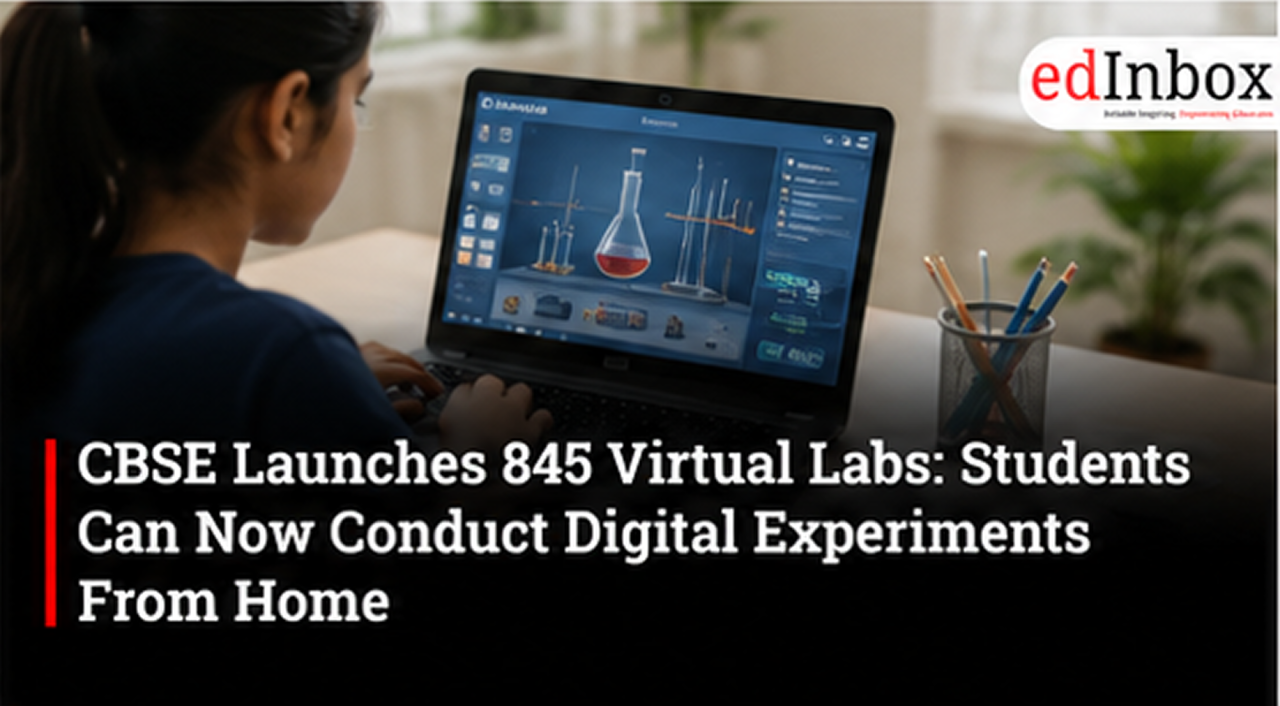
One of the key advantages of the virtual labs is that students can conduct interactive experiments without requiring physical laboratory equipment. Through simulations and animations, learners can explore scientific phenomena and mathematical concepts in a practical and engaging format.
The resources are available beyond regular school hours, allowing students to revisit experiments, practise concepts and learn at their own pace.
The initiative could particularly benefit students studying in schools where laboratory facilities are limited. Teachers can also use the virtual laboratories during classroom lessons to demonstrate concepts that may otherwise be difficult to explain using conventional teaching methods.
Parents can similarly support students in using the resources for practical learning activities at home.
Multiple Ways to Access Resources
CBSE has provided several access points to make the digital resources easier to use. Students can visit the DIKSHA portal or app and search for resources according to their class, subject and chapter.
Students can also access relevant digital learning materials by scanning QR codes printed at the beginning of chapters in NCERT textbooks.
An AI-based chatbot is another access option, enabling students to ask questions and locate relevant learning resources.
Virtual Labs to Supplement Physical Laboratories
CBSE has clarified that the virtual laboratories are designed to complement rather than replace physical laboratories.
The board has encouraged school principals and teachers to motivate students to use the digital resources alongside conventional practical work. By combining physical experiments with simulations and digital learning, CBSE aims to provide students with a deeper conceptual understanding and greater exposure to practical applications.
The expansion of virtual laboratories marks another step towards integrating technology into school education while making practical learning more accessible to students across different educational settings.
CBSE Launches 845 Virtual Labs: Students Can Now Conduct Digital Experiments From Home
Typography
- Smaller Small Medium Big Bigger
- Default Helvetica Segoe Georgia Times
- Reading Mode