
To develop India's medical research sector with technology, innovation, driven, the Indian Institute of Technology Hyderabad (IIT Hyderabad) organised a national workshop on Technological Advances in Healthcare Research for 3 days. The event went through the Anusandhan National Research FoundationPartnerships for Accelerated Innovation and Research (ANRF, PAIR) programme. The focal point of the program was to facilitate cross-disciplinary research, increase institutional collaborations, and help the use of state of, theart technologies in healthcare and biomedical sciences.
The healthcare sector of the ANRF, PAIR grant being one of the initiatives, the to the central institution is stated to be IIT Hyderabad which is also mentoring five partner or "spoke" institutionsNational Institute of Technology (NIT) Raipur, Indian Institute of Information Technology (IIIT) Raichur, IIIT Dharwad, Pt Ravishankar Shukla University, and the Central University of Andhra Pradesh. Their main goals through this working together are, to raise their research capabilities and establish long term academic and scientific structures.
The workshop had nine invited talks by renowned scientists, clinicians, and technology experts who presented on the most recent and possibly high impact areas of healthcare research. Highlights from the sessions were mass spectrometer, based metabolomics for translation medicine, in vivo imaging technologies for therapeutic development, electroencephalography (EEG) and neuromodulation, and the use of artificial intelligence (AI) clinically in healthcare facilities.
Currently, the main highlight was the event that acted as a bridge between engineering, life sciences, and clinical research, and the students had the chance to witness cutting edge tools, methodologies, and real healthcare applications through the eyes of patients.
In addition to that, the workshop led to extended collaboration between the hub and spoke institutions that came about as a result of the workshop. The interactive sessions thus provided lecturers and researchers with a great chance to identify common research interests, consider partnering projects and writing up proposals targeting national healthcare priorities.
Besides, the event coordinators remarked that the programme is consistent with the bigger objective of the ANRF, PAIR initiative, which aims to accelerate innovation through fair and collaborative research partnerships between institutions from different parts of the country. Therefore, they believe that the outcomes of the workshop will be manifested in joint research projects, shared infrastructures, and improved capacity building, which in turn will significantly contribute to India's continuous emphasis on technology, based healthcare research and innovation.
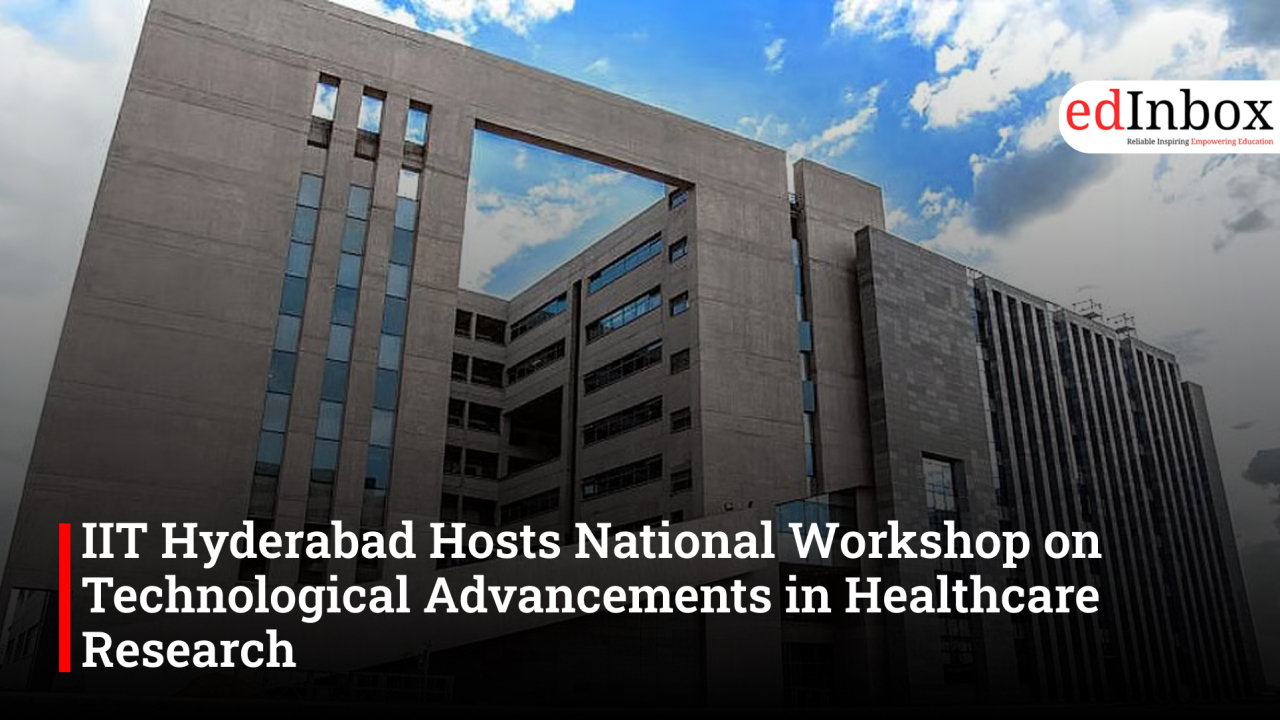
IIT Hyderabad Hosts National Workshop on Technological Advancements in Healthcare Research
Typography
- Smaller Small Medium Big Bigger
- Default Helvetica Segoe Georgia Times
- Reading Mode