
India's healthcare system has grown at a fast pace over the last ten years. New hospitals, better diagnostic facilities, specialized care, both in public and private sectors, have been the visible signs of the growth. But the result of this expanding infrastructure has largely hinged on the one group of workers that have frequently been out of the spotlight - Allied and Healthcare Professionals (AHPs). The numbers of AHPs are insufficient to support the healthcare system and as a result the existing system is overburdened. India according to estimates is short of 6.6 million AHPs, constituting an important source of stress to the already strained system.
With the Union Budget 202627, the government is bringing about a big change in its healthcare policy by recognising the above-mentioned gap. By setting aside 1,000 crore for training one lakh allied healthcare professionals over the next five years, the administration has made AHPs a part of national discussion. This action shows that boosting healthcare workforce is not only about doctors and nurses, instead it is the entire ecosystem supporting patient care. Allied healthcare sector is on its way to becoming the most employment generating sector for the Indian youth. These roles which are a part of the healthcare system contribute to nearly 60% of it, ranging from diagnostics and imaging to rehabilitation and clinical support. Despite this, the country is struggling with a shortage of over six million professionals in this segment putting tremendous strain on the existing system.
The result of this shortage can be seen directly at hospitals and clinics. Without enough support staff around, doctors are being given more and more workload which causes them to work longer hours, get tired and burnt out. Besides these, they also have to deal with patients' complaints like, delays in diagnostics, long waiting times, and slow treatment processes. The problem is not only about numbers but also about preparedness. Unawareness of allied healthcare as a career and the lack of job readiness among the graduates are the factors for continuing to increase the gap.
Structural reforms have been focusing on these problems in the last few years. The National Commission for Allied and Healthcare Professions Act 2021 gave a clear direction towards roles, qualifications and training in the allied healthcare sector which was mostly disorganized earlier. The recently announced budgetary support is based on this development plan and is intended to increase both capacity and ability.
Training more people will not be sufficient by itself. Making sure that quality is maintained uniformly among various institutions also is a very big and difficult challenge because the availability of infrastructure, teaching staff, and exposure to clinical situations differ a lot. More support needs to be provided to universities for revising their syllabi, organizing staff training, and providing students with access to learning through simulations. At the same time, tightening the link between academia and healthcare providers will be vital to give students practical skills, which are industry-ready, from the very beginning.
One area with substantial potential is using India's healthcare infrastructure as a training environment. The integration of hospitals, clinics, and diagnostic centres in the learning process would allow practical training to be extended beyond the classroom to the actual work environment. The use of common facilities like simulation labs and high-tech diagnostic equipment can also elevate the capacity while keeping the costs relatively low.
This push isn't just about India's domestic needs - it's about how the country will show up globally. And the UK, Germany, and Japan already struggle with clinical staff shortages because their populations are aging. India has a massive young population and a growing education system. It can become a major supplier of trained allied healthcare workers abroad. The thing is, that won't work unless training and certification match international standards exactly.
The 1,000 crore investment isn't just money, it signals a real change in how healthcare education is valued. Instead of just adding more seats, the focus shifts to building professionals who are skilled, flexible, and prepared for actual hospital conditions.
Right now, performance is the key factor. If done right, this reduces strain on India's overwhelmed health system, leads to better patient results, and creates large job openings. Most importantly, it could turn allied healthcare from behind-the-scenes support into something vital - central to both India's health outcomes and long-term economic growth.
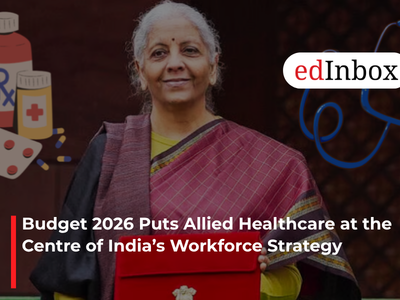
Budget 2026 Puts Allied Healthcare at the Centre of India’s Workforce Strategy
Typography
- Smaller Small Medium Big Bigger
- Default Helvetica Segoe Georgia Times
- Reading Mode