
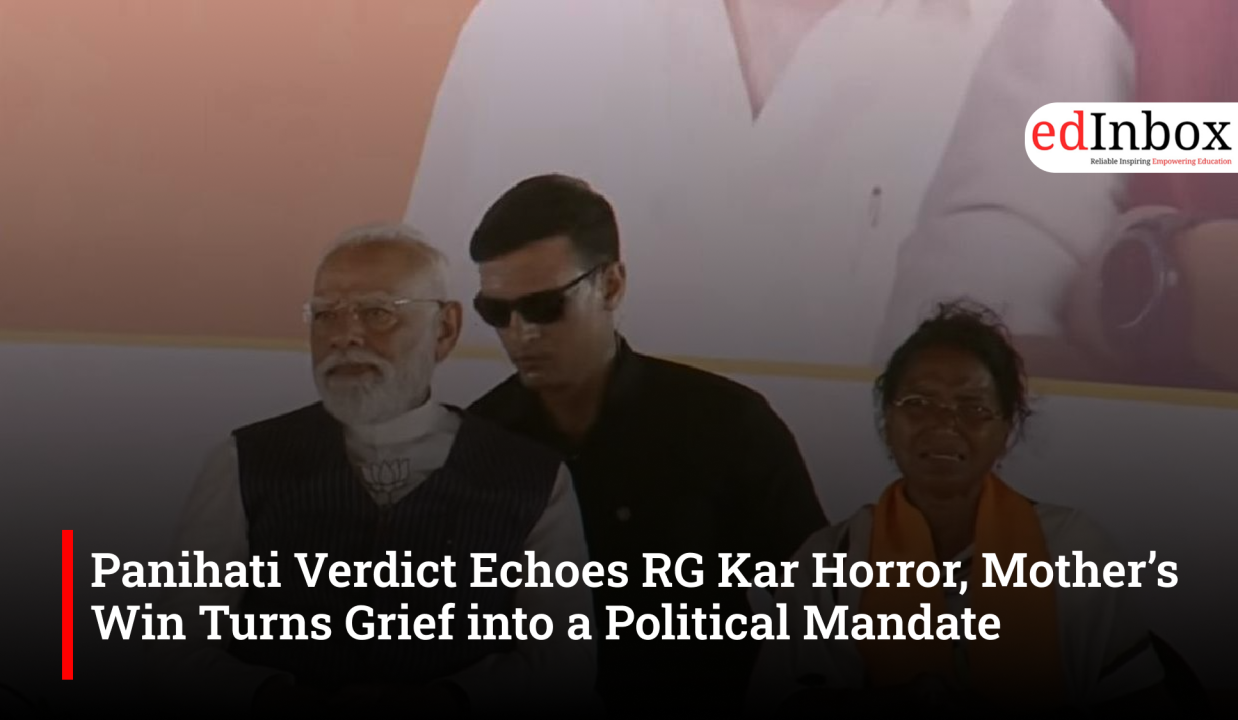
The shadow of the brutal rape and murder at RG Kar Medical College and Hospital continues to loom over West Bengal’s public discourse, with fresh political ripples emerging from Panihati. In a striking electoral outcome, Ratna Debnath—mother of the victim—has won the Panihati seat, transforming a deeply personal tragedy into a powerful democratic statement.
Her victory comes at a time when the state is still grappling with questions of safety, accountability, and institutional response following the incident that shook Kolkata and beyond. For many voters, the result is not merely about political representation but about channeling collective grief and anger into action. The ballot, in this case, has become a medium of protest.
Ratna Debnath’s entry into politics was not born out of ambition but out of a relentless pursuit of justice. After the tragic loss of her daughter, she emerged as a voice demanding accountability from institutions meant to protect students and young professionals. Her campaign resonated strongly with citizens who saw in her struggle a reflection of larger systemic failures.
At the heart of this political moment lies a deeper concern about the safety and well-being of students within educational institutions. The RG Kar case exposed uncomfortable truths about gaps in campus security, administrative oversight, and crisis response mechanisms. For students, especially young women, the incident amplified fears that spaces meant for learning and growth may not always guarantee protection.
Education experts argue that the tragedy has triggered a necessary, albeit painful, conversation about the structural weaknesses within the system. From inadequate surveillance to delayed institutional action, the case has underscored the urgent need for reforms that go beyond symbolic assurances. Many believe that stricter protocols, transparent grievance redressal systems, and accountability frameworks must become integral to campus governance.
Ratna Debnath’s victory reflects how these concerns have moved beyond classrooms and into the political arena. Her win signals that issues of student safety and institutional responsibility are no longer confined to academic debates—they are now influencing electoral choices. Voters, particularly the youth and parents, appear to be demanding tangible change rather than rhetoric.
The backdrop of her journey also highlights the emotional toll borne by families navigating such tragedies. Yet, by stepping into public life, Debnath has reframed her personal loss as a broader fight for justice, ensuring that her daughter’s story continues to spark dialogue and demand reform.
Observers note that this election result could mark a shift in how education-related issues are perceived in politics. Traditionally overshadowed by larger economic or infrastructural concerns, the safety and dignity of students are now emerging as central electoral themes.
As West Bengal processes both the memory of the RG Kar incident and the implications of this political outcome, one thing is clear: the intersection of tragedy, education, and governance has reshaped public expectations. Ratna Debnath’s win stands not just as a personal milestone, but as a reflection of a society seeking accountability—and a safer future for its students.
Panihati Verdict Echoes RG Kar Horror, Mother’s Win Turns Grief into a Political Mandate
Typography
- Smaller Small Medium Big Bigger
- Default Helvetica Segoe Georgia Times
- Reading Mode