
In a major push to strengthen healthcare education and build a skilled allied health workforce, Dr NTR University of Health Sciences (NTRUHS) has announced plans to introduce 17 National Commission for Allied and Healthcare Professions (NCAHP)-approved Allied and Healthcare Profession courses across Government Medical Colleges (GMCs) in Andhra Pradesh. The new programmes will be rolled out in a phased manner beginning with the 2026–27 academic session.
The proposal was reviewed during a high-level meeting chaired by Vice-Chancellor Dr Pulala Chandrasekhar at the university campus in Vijayawada. Senior university officials, representatives from the Andhra Pradesh State Allied and Healthcare Professions Council (APSAHPC), and academic administrators participated in the discussions on implementing the new courses.
The initiative is aimed at expanding opportunities in allied healthcare education while strengthening existing programmes in line with the standards prescribed by the National Commission for Allied and Healthcare Professions (NCAHP). The phased implementation will depend on the availability of qualified faculty, institutional infrastructure and compliance with regulatory norms.
Addressing the meeting, Dr Pulala Chandrasekhar said the university remains committed to producing competent allied healthcare professionals who meet national academic and professional standards. He emphasised that the introduction of the new programmes will help address the growing demand for skilled healthcare professionals across hospitals, diagnostic centres and other healthcare institutions.
Registrar Dr T Sai Sudheer assured full administrative support for the successful implementation of the courses. He said the university would work closely with Government Medical Colleges across the state to ensure the timely rollout of the programmes while maintaining academic quality and regulatory compliance.
Highlighting the importance of research in healthcare education, Director of Research and Development Dr Surya Prabha stressed the need to integrate research, innovation, evidence-based learning and interdisciplinary collaboration into allied healthcare programmes. According to her, these elements are essential for enhancing academic excellence and preparing graduates for evolving healthcare challenges.
During the meeting, Joint Registrar (Academic) Dr Neelima presented a detailed implementation roadmap covering curriculum adoption, academic regulations, institutional preparedness and the phased introduction of the 17 courses across participating medical colleges.
Dr Y Venkateswara Rao, Chairman of the Andhra Pradesh State Allied and Healthcare Professions Council (APSAHPC), highlighted the importance of systematically implementing the NCAHP-approved curriculum to develop a competent and professionally trained allied healthcare workforce. He noted that standardised education and competency-based training are essential for improving healthcare delivery and ensuring uniform professional standards.
APSAHPC Secretary Sumaila also outlined the regulatory framework governing allied healthcare education and explained the implementation strategy that institutions will follow during the phased rollout.
The introduction of these programmes comes at a time when India is placing greater emphasis on strengthening allied healthcare education to address the growing shortage of trained healthcare professionals. Allied health professionals—including laboratory technologists, radiographers, physiotherapists, operation theatre technologists and other specialists—play a vital role in diagnosis, treatment, rehabilitation and patient care.
With the launch of these 17 NCAHP-approved allied healthcare courses, Andhra Pradesh aims to expand educational opportunities for students while contributing to the development of a skilled healthcare workforce capable of meeting the state's and the country's increasing healthcare demands.
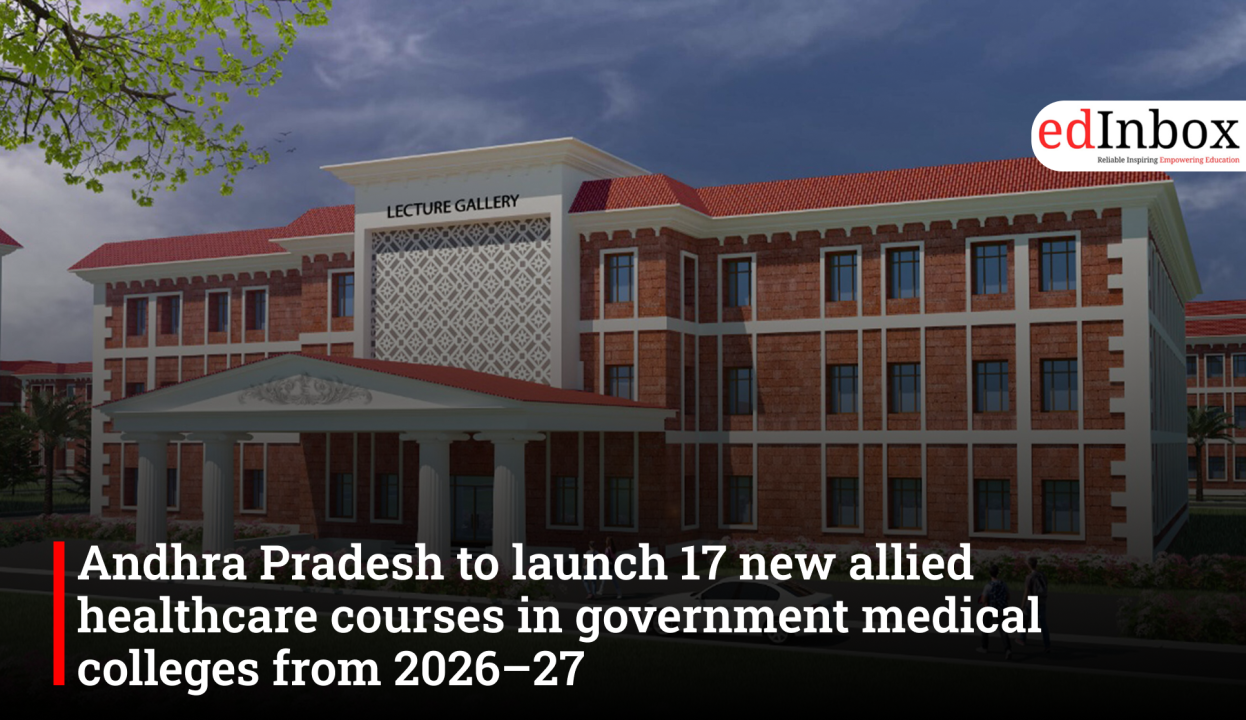
Andhra Pradesh to Introduce 17 New Allied Healthcare Courses in Government Medical Colleges from 2026–27
Typography
- Smaller Small Medium Big Bigger
- Default Helvetica Segoe Georgia Times
- Reading Mode