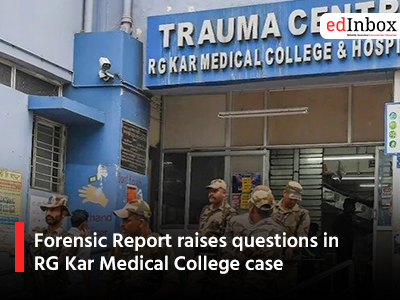
Forensic science, a cornerstone of modern criminal investigation, applies scientific methods to analyze physical evidence and reconstruct crime scenes. Also known as criminalistics, it plays a pivotal role in solving crimes and ensuring justice. By utilizing cutting-edge techniques, forensic science bridges the gap between physical evidence and courtroom convictions, making it an indispensable tool in law enforcement.

Key Contributions of Forensic Science to Criminal Investigations

Forensic scientists, often called criminalists, specialize in examining evidence such as DNA samples, fingerprints, body fluids, and trace materials found at crime scenes. Their primary goal is to establish connections between suspects, victims, and the events surrounding criminal activities.

One groundbreaking advancement in forensic science is DNA fingerprinting. This technology compares DNA found in evidence, like blood, hair, or saliva, with samples from suspects or crime scenes. The accuracy of DNA analysis has revolutionized investigations, providing irrefutable evidence that can either confirm a suspect’s involvement or exonerate the innocent.

Fingerprint analysis remains another critical technique, enabling the unique identification of individuals. Alongside advancements in forensic toxicology, ballistics, and digital forensics, investigators now have a robust toolkit to uncover the truth behind complex cases.

The Role of Forensic Science in Law Enforcement

  • Forensic science is central to modern law enforcement strategies, offering key insights to solve crimes and secure convictions. Through the analysis of physical evidence, forensic scientists assist investigators by:
  • Identifying suspects and linking them to crime scenes.
  • Reconstructing crime scenes to understand the sequence of events.
  • Exonerating innocent individuals wrongfully accused.
  • Providing expert testimony in court to strengthen legal cases.

By leveraging forensic evidence, law enforcement agencies can close cases more effectively and build public trust in the justice system.

The Growing Importance of Forensic Science

As technology advances, forensic science continues to evolve, enhancing its capabilities to tackle emerging challenges in criminal investigations. From cybercrime forensics to AI-driven analysis, the field is constantly adapting to modern threats.

Forensic science is not just about solving crimes; it’s about creating a safer and more equitable society. Its role in identifying perpetrators, protecting the innocent, and providing closure to victims underscores its significance in upholding justice and promoting public safety. As the demand for innovative crime-solving techniques grows, forensic science remains at the forefront of law enforcement worldwide.


Forensic science in India has undergone remarkable transformation, evolving from ancient methods to a sophisticated system supporting justice and investigation. With its roots in the primitive yet effective poison detection techniques detailed in Chanakya Kautilya’s Arthashastra, the field has steadily advanced, embracing modern scientific practices and establishing itself as a cornerstone of the justice system.

The Arthashastra, a seminal ancient treatise on statecraft, economics, and military strategy, documented ingenious methods for poison detection, including the use of birds as testers, claims Journal of Forensic Sciences & Criminal Investigation in an article written by Deepika Bhandari, Institute of Forensic Science, University of Mumbai. Despite this early ingenuity, the systematic development of forensic science in India began under British rule. The first Chemical Examiner’s Laboratory was established in Madras in 1849, followed by laboratories in Calcutta (1853), Agra (1864), and Bombay (1870).

The turn of the 20th century marked the inception of specialized forensic departments. The Anthropometric Bureau in Calcutta (1892), the Fingerprint Bureau in Calcutta (1897), and the Inspectorate of Explosives in Nagpur (1898) laid the groundwork for forensic science’s future. The establishment of the Government Examiner of Questioned Documents in 1904 and the Central Fingerprint Bureau (CFPB) in 1905 further expanded the scope of forensic science.

Post-independence, India’s progress in forensic science accelerated significantly. The establishment of the first state forensic science laboratory in Calcutta in 1952 marked a pivotal moment, enabling regional accessibility to forensic expertise. Today, every Indian state boasts its own forensic laboratory, catering to diverse needs such as forensic medicine, toxicology, anthropology, serology, ballistics, psychology, and even forensic accounting.

India’s commitment to forensic science reflects its dedication to justice and its embrace of innovation. The evolution of forensic methodologies has not only bolstered the criminal justice system but has also enhanced public confidence in the rule of law. Modern forensic practices are increasingly leveraging technologies like DNA analysis, cyber forensics, and artificial intelligence, pushing the boundaries of what is possible in criminal investigation and evidence analysis.

The journey of forensic science in India, from ancient poison detection to cutting-edge laboratories, is a testament to the nation’s enduring quest for truth and justice, underscoring the critical role of science in upholding societal values.

A growing body of evidence suggests that the oral microbiome plays a crucial role in our overall health, with far-reaching implications for our susceptibility to various diseases. Recent research has shed light on the intricate relationships between the oral microbiome and systemic diseases, including respiratory diseases, heart disease, and others.

Respiratory Diseases: A Breathing Ground for Oral Microbiome

The respiratory tract, which begins in the mouth, provides a conduit for oral microbiome to infiltrate the lungs. This can lead to infections such as pneumonia, particularly in the elderly. Research has demonstrated that poor oral hygiene can contribute to an overgrowth of oral bacteria, including Streptococcus pneumoniae and Haemophilus influenzae.

Heart Disease: A Glimpse into the Oral-Systemic Connection

Chronic gum disease, a destructive inflammatory response, has been linked to cardiovascular disease. While the exact mechanisms remain unclear, researchers propose that common risk factors, such as smoking, may contribute to this association. Alternatively, the inflammatory immune response triggered by gum disease may damage the cardiovascular system.

Forensic Implications: Unravelling the Oral Microbiome's Role in Disease Causation

As the connection between the oral microbiome and systemic diseases becomes increasingly evident, forensic scientists and investigators must consider the potential implications of this relationship. By examining the oral microbiome, investigators may uncover valuable evidence in cases involving respiratory diseases, heart disease, and other conditions linked to oral health.

The oral microbiome's role in disease causation presents a new frontier in forensic science. As research continues to unravel the complexities of this relationship, investigators and forensic scientists must remain vigilant, recognizing the potential for the oral microbiome to yield critical evidence in a wide range of cases.

Forensic science is on the brink of transformation with the introduction of microbe fingerprinting—a groundbreaking method leveraging the unique collection of microorganisms present on an individual’s skin, clothing, and surroundings. This innovative approach has the potential to revolutionise crime scene investigations, offering new avenues for identifying perpetrators and reconstructing events.

What is a Microbe Fingerprint?

A microbe fingerprint refers to the distinct microbial community found on an individual’s skin and belongings. Comprising trillions of microorganisms, including bacteria, viruses, and fungi, these fingerprints are as unique as human DNA. Factors influencing this microbial signature include personal hygiene, diet, and environmental exposure.

Formation and Components

Skin Microbiome: The microorganisms naturally residing on an individual's skin.

Environmental Microbiome: Microbes from surfaces, air, and clothing that interact with the skin.

Hygiene Habits: Washing, showering, and other routines that alter microbial populations.

Dietary Influence: Gut microbiota, shaped by diet, indirectly affects the skin's microbial makeup.

Applications in Forensic Science

The potential uses of microbe fingerprints in forensic investigations are vast and promising:

Crime Scene Analysis: Identifying the microbial signature left behind can help link suspects to crime scenes or objects.

Clothing Evidence: Microbial analysis on clothing may reveal whether an individual was at a specific location or in contact with another person.

Human Identification: Even in cases where traditional identifiers like fingerprints or DNA are unavailable, microbial fingerprints can help establish identity.

Challenges and Limitations

While promising, this technique faces several obstacles:

Variability: Microbial signatures can change over time or due to environmental factors, making consistent identification challenging.

Contamination: External microbes from other individuals or objects can interfere with the analysis.

Complexity: The interpretation of microbial data requires advanced tools and specialized expertise.

The Road Ahead

Despite these challenges, microbe fingerprinting has the potential to be a valuable addition to the forensic toolkit. Its ability to complement traditional evidence, such as fingerprints and DNA, could enhance the accuracy and depth of criminal investigations.

As research progresses, microbe fingerprinting may soon become a standard in forensic science, offering unparalleled insights into crime scene reconstruction and human identification. This innovative approach underscores the growing importance of microbiology in addressing modern forensic challenges.

Forensic chemistry has been recognized as a crucial tool in criminal investigations, aiding in the solving of crimes and bringing perpetrators to justice. The science of forensic chemistry involves the application of advanced techniques to analyse evidence, detect narcotics, identify substances, and trace explosive materials. These methods are pivotal in unravelling complex criminal cases.

As per Forensic Experts of Central Forensic Science Laboratory, the key techniques used in forensic chemistry include chromatography, spectroscopy, mass spectrometry, and Gas Chromatography-Mass Spectrometry (GC-MS). These sophisticated analytical methods are employed to scrutinise a wide range of materials found at crime scenes. Chromatography, for example, allows for the separation and identification of substances, while mass spectrometry provides detailed molecular information. GC-MS is widely used for the analysis of volatile compounds, particularly in narcotic and explosive investigations.

Real-world applications of forensic chemistry extend across multiple disciplines, such as crime scene investigation, forensic toxicology, environmental forensics, and food and beverage analysis. Crime scene investigators rely on forensic chemists to identify substances that might be crucial to a case. Toxicologists, on the other hand, utilise chemical analysis to detect poisons or drugs that may have been involved in a crime.

Advanced instruments are employed to perform these analyses. Instruments such as Gas Chromatographs (GC), Mass Spectrometers (MS), Infrared Spectrophotometers (IR), and Ultraviolet-Visible Spectrophotometers (UV-Vis) are commonly used in forensic laboratories to analyse evidence and generate reliable results.

The demand for forensic chemistry experts has significantly increased, with various career opportunities available in the field. Positions such as forensic chemists, crime scene investigators, toxicologists, forensic analysts, and research scientists are sought after by law enforcement agencies and research institutions. Professionals are required to possess a Bachelor’s or Master’s degree in Chemistry or a related field, along with specialised training in forensic chemistry.

The Madras High Court has issued a significant directive urging the state to ensure that forensic science laboratories submit chemical analysis reports within the prescribed time limits. This ruling aims to eliminate delays in criminal investigations and trials caused by the non-availability of crucial forensic reports. The move comes amid increasing concerns regarding the efficiency and capacity of forensic science facilities in the country.

Delays in the submission of forensic reports have been a longstanding issue in the criminal justice system, often leading to prolonged trials and, in some cases, acquittals due to lack of evidence. The court's recent decision highlights the urgent need for forensic science laboratories to streamline operations and prioritize the timely submission of reports. A key instance of such delays came in a recent case where the Calcutta High Court granted bail to an individual charged under the Narcotics Drugs and Psychotropic Substances Act, 1985, due to the absence of a chemical examination report.

In a parallel development, the Punjab and Haryana High Court expressed concerns over the shortage of forensic science laboratories and the outdated infrastructure of existing facilities. The court directed the states of Punjab, Haryana, and Chandigarh to establish modern, state-of-the-art forensic laboratories within a year, further underscoring the critical role that these labs play in ensuring justice is served. This directive also emphasized the need to increase manpower in these laboratories to cope with the growing workload.

Forensic science laboratories across the country face several challenges that hinder their efficiency, including inadequate infrastructure, a shortage of skilled personnel, limited budgets, and overwhelming workloads. These issues often contribute to significant delays in forensic report submissions, which can have serious implications for criminal investigations and justice delivery.

The Directorate of Forensic Science Services was established to address these concerns and assist law enforcement agencies in improving the effectiveness of forensic services. This initiative aims to provide proactive support to forensic laboratories, ensuring that they have the resources and capacity needed to meet the demands of modern criminal investigations.

As forensic science plays a pivotal role in solving crimes and securing convictions, it is imperative that the infrastructure and operational efficiency of these laboratories be enhanced to prevent delays and ensure timely justice.

Forensic science is gaining significant momentum in India, fueled by a growing interest among students, professionals, and enthusiasts. With an expanding portfolio of courses and career opportunities, the field has become a popular choice for those keen on understanding the science behind crime investigation and legal proceedings

The rising popularity of true-crime documentaries, TV shows, and digital content has sparked widespread interest in forensic science. Simultaneously, industries such as law enforcement, healthcare, and legal services are seeking skilled professionals to meet the demand for expertise in solving complex cases.

Forensic science courses offered by universities, colleges, and online platforms in India span a variety of topics, ensuring learners have access to comprehensive training. These programs cater to everyone, from beginners and students to seasoned professionals looking to enhance their knowledge and skills. Popular areas of study include:  

  • Crime Scene Investigation
  • DNA Analysis 
  • Fingerprinting Techniques  
  • Forensic Anthropology  
  • Forensic Chemistry  
  • Forensic Psychology  
  • Expert Testimony in Court  

Forensic science courses in India stand out due to their accessible structure and quality content:  

  • Duration: Flexible options ranging from short-term certifications to full-fledged degrees.  
  • Levels: Beginner, intermediate, and advanced courses to match varying expertise.  
  • Affordability: Programs available at competitive prices across institutions.  
  • Expert Guidance: Training from experienced professionals in forensic and legal fields.  
  • Recognition: High demand for forensic experts in various sectors, including government and private organisations.  

Some of the leading forensic science programs and institutions in India include:  

  1. B.Sc. in Forensic Science – Popular at universities like Gujarat Forensic Sciences University (GFSU).  
  2. M.Sc. in Forensic Science – Offered by institutions like LNJN National Institute of Criminology and Forensic Science.  
  3. Certificate Courses in Crime Scene Investigation – Available through online platforms and private institutes.  

As India continues to advance in technology and innovation, forensic science remains a critical field that bridges science and justice. The increasing availability of courses and career opportunities ensures a bright future for those venturing into this domain.  

Explore more about forensic science education opportunities in India by visiting leading universities and online platforms.

More Articles ...