Cloud-stored and cloud-processed data powers every swipe, tap, and click you do. From cloud-streamed movies to running companies, cloud computing is cutting-edge technology today. The digital revolution has arrived and it's coming at a blistering pace.
This transition has not merely altered how we engage with technology, but how we build careers in IT. Whether or not you save files, build apps, or play around with data, cloud computing is at play.
If you are merely an IT newcomer or intend to register for an IT course, cloud computing basics is your entry point. Here, we'll walk you through the basics and familiarize you with how this skill can define your future.
What Is Cloud Computing?
Cloud computing is the delivery of computer services over the Internet. They provide servers, storage, databases, software, and other capabilities. You simply pay for what you consume, much like your electricity or water provision.
Think about needing electricity in your home. You do not operate your generator but utilize the national grid.
Cloud computing does the same thing. You do not buy and operate physical servers. Rather, you use computer resources remotely from data centres.
You won't need to install or update anything. Just a live internet connection is required.
Why Cloud Computing is Important for IT Starters?
Cloud computing is not a choice anymore, it's the pillar of modern-day IT. From start-ups to big technology giants, all use it.
If you are starting your career in IT, cloud awareness helps you:
Learn about the pillars of the new tech world
Select the appropriate course in IT
Get ahead in a competitive job market
Most jobs today require a general understanding of cloud platforms. Knowledge like that brings many jobs into reach.
Cloud Computing Essentials
Let's go over the key components:
Servers – Computers that host websites, applications, and databases
Storage – Where content is stored in a secure environment
Databases – Organizing and maintaining large sets of data
Networking – Enables all systems to communicate
Software – Web-based, no need to install anything
Private Cloud
Used by a single organisation. Offers improved security and control.
Hybrid Cloud
Public and private clouds are integrated. Offers flexibility to sensitive processes.
Most appropriate for: Enterprise business, medium-scale businesses.
Multi-Cloud
This is usage of services offered by more than one cloud vendor.
Backend Components
Data Centres – Large warehouses holding rows of servers
Virtualisation – A single computer emulates many using specialized software
APIs – Permit different services to talk to one another
Frontend Components
Web Browser or App – What customers physically touch
Internet – Connects your computer to the data centre
Real-Life Example
You store a photo on Google Drive from your mobile. That photo uploads over the internet to a secure server in some remote data centre. You can then access it on your laptop from any corner of the world.
Start Small
Try free solutions that enable you to experiment:
AWS Free Tier – Virtual servers and databases
Google Cloud Free Tier – Try out apps and services
Microsoft Azure for Students – Free resources and credits
Choose the Perfect IT Course
While selecting a cloud computing IT course, make sure it offers:
Cloud computing basics
Hands-on lab training
Real-world cloud platform projects
Certification guidance
Practical Certifications
Serverless Computing – Code, not infrastructure
Edge Computing – Placing processing at the edge of the user
AI in Cloud – Smarter automation and smart systems
Jobs on the Up
Cloud Engineer
Solutions Architect
DevOps Specialist
Cloud Security Analyst
Companies require experts with the skill to manage cloud infrastructure. It's time to learn and lead.
Cloud computing is today the backbone of IT. It fuels everything from cloud storage to on-demand collaboration and worldwide business operations. To new players in the industry venturing into the tech industry, it is no longer an option but a must to have some knowledge of cloud computing. It is an advantage to have information regarding different types of cloud computing and how cloud services like IaaS, PaaS, and SaaS work in a competition-oriented business. As increasingly more industries demand cloud professionals, it is time to learn new skills. If you are beginning from the ground up with a few rudimentary tools or looking for formal education in IT, then cloud computing offers a universe of opportunities.
Biotechnology is transforming and re-designing businesses across the globe. BTech in Biotechnology is the application of technology and biology to create new innovations for actual issues. The inter-disciplinary course opens the gateway to a life of discovery, innovation, and revenue-generating professional avenues. The students of biotechnology are the future leaders who will come up with innovative solutions in the vast spectrum of such businesses.
Most suitably, biotechnology has also been the most sought course. Some of the Major Industries Which Hire Biotechnology Professionals:
SectorThe Applications
Healthcare
Drug development, vaccine manufacturing, gene therapy, biomedical engineer jobs
Improved government as well as private sector placement statistics
Apart from this, Lovely Professional University offers LPUNEST-based scholarships to deserving candidates. Merit scholarships waive BTech Biotechnology fee, thus making quality education more affordable and accessible.
Conclusion
Indian BTech Biotechnology is a broad and growing field of applications with highly fruitful professional career opportunities in health care, agriculture, research, and sustainability. With the newly emerging technologies like gene editing and bioinformatics on the anvil, professionally well-trained professionals are in need.
Graduation from a reputable university such as Lovely Professional University (LPU) can lead to the major players and research labs. BTech Biotechnology is an apt career path to the job of tomorrow due to science affection and innovation.
As the world is shifting towards greener methods, the prospects for the experts in this domain are becoming imperative. Lovely Professional University (LPU) aims to make students eligible for higher courses to meet the needs of various industries. The opportunities in careers and industry trends towards the scope of MTech in Environmental Engineering in India are explained in this blog. Indian students can also study the science and engineering streams and civil engineering and chemical engineering streams pursuing this program.
Scope of MTech in Environmental Engineering
This can be augmented further by pursuing post graduation for students in the last year of a bachelor's degree from an engineering college.
MTech Environmental Engineering Scope in India
India is at the juncture of development and green conservation. MTech Environmental Engineering in India is widening its scope at a fast rate because of:
Government policies like Swachh Bharat Mission and National Clean Air Programme
Growing infrastructure requires green planning because of environmental issues
Global Industry Trends in Environmental Engineering
Worldwide, the environment industry is showing preference towards investment in green infrastructure, climate resilience, and clean energy. LPU students acquire skills to:
Be part of international development organizations such as the UN or World Bank
Be associated with international climate resilience and carbon-free projects
Work with multinational sustainability consulting firms
Why MTech Environmental Engineering at LPU?
Lovely Professional University has a dynamic learning environment and quality learning for future environment leaders. Here's why LPU is reputed to be an excellent institute for the provision of this program:
Highlights of MTech Environmental Engineering Scope at LPU
Live projects and internships with industry partners
Access to cutting-edge environmental simulation labs
Top placement opportunities with leading recruiters from the public and private sectors
Future career opportunities on international exposure through research collaborations and exchange programs
Admission eligibility for MTech Environmental Engineering is determined through LPUNEST (Lovely Professional University National Entrance and Scholarship Test). The test not only evaluates the knowledge of students but also offers a platform to be rewarded with scholarships in terms of performance, thus making quality education affordable for meritorious aspirants.
Most Preferred Recruiters of LPU for Environmental Engineering Graduates
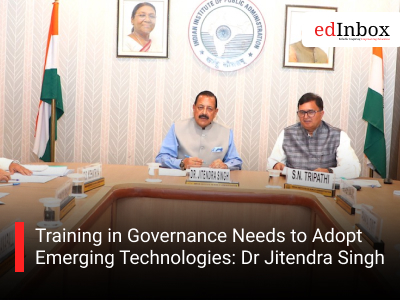
Union Minister of Personnel, Public Grievances and Pensions, Dr Jitendra Singh, has emphasized the need to bring governance training in sync with emerging technologies like artificial intelligence (AI), digital platforms, and data analytics. He said that as India progresses towards translating the vision of Viksit Bharat 2047 into reality, administrative reforms and capacity building need to change so as to keep up with technological transformation.
Speaking to the Institute of Public Administration (IIPA) Council Meeting in New Delhi, Dr Singh underlined that 21st-century governance requires the interplay of conventional administrative ethics and contemporary digital savvy. He called upon such training centres as IIPA to make it a point to prepare officers with the skills and know-how needed to navigate digital environments wisely and effectively.
Emphasizing the increasing role of social media in public administration, Dr Singh urged special workshops to prepare officers on the proper use of online communication platforms. "While social media can be a great tool for openness and citizen participation, it is also a threat of misinformation," he warned. He underlined the need to raise the awareness of officers on the ethical dimension of communications and to ensure that public information is credible and evidence-based.".
The Minister also urged the IIPA, being a premier institution for training and research in governance, to enhance its partnerships with both domestic and international stakeholders. By adopting global best practices and facilitating the exchange of knowledge, the institute can be a driving force in developing a model of governance that is transparent, efficient, and technology-enabled.
Dr Singh reaffirmed the government's pledge to overhaul administrative systems through ongoing learning, innovation, and flexibility. He explained that in an age characterized by quick digital change, government entities have to not only embrace technology but also develop a culture that accepts innovation. The way ahead in governance, he said, is through tapping into the potential of AI and data-driven decision-making to citizenize administration and make it more responsive.
He concluded by urging the IIPA to remain at the forefront of India’s governance transformation journey, preparing officers to meet the challenges and opportunities of a rapidly digitizing world.
Not more AI—but all-pervasive AI. Just as we no longer pause to appreciate the light flickering on or the inaudible HTTP protocol behind the internet, AI is going about becoming an ambient thing in our world.
Technology has become so integrated into our lives these days that we barely even notice it's even there. That is what AI is building, and one closer than you can think of. The "Tech Trends 2025" report represents a turning point for India, where AI-fueled breakthrough technologies fuel record levels of innovation, productivity and social transformation.
This year's Tech Trends report sets at the front of mind how AI is preparing the ground for nearly all of this year's new technology trends. AI is the foundation, which accelerates and enables innovation in many industries. It is not about AI itself—it is about how it creates a tidal wave of innovation and stimulates innovation in technology enablers. In India, this diffusion and integration of AI are already gaining steam in the tech landscape, transforming industries and creating the grounds for disruptive change. India's diverse and rapidly changing ecosystem only serves to underscore the growing need for leaders who will generalize across silos. Experts can excel in-depth, but the world of today needs generalists—visionaries who will connect the dots between industries and technologies.
With industries and technologies being increasingly convergent, Indian firms have just one agenda: they must embrace interdisciplinary approaches so that they are able to take advantage of game-changer prospects. If intersectoral collaboration merges agriculture with technology or by merging sophisticated AI with blockchain technologies, India has the ideal convergence of events to become a global innovation powerhouse.
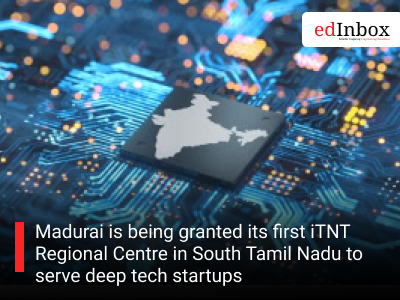
Madurai made history in the Southern Tamil Nadu technology landscape with the launch of its first regional center under the Tamil Nadu Information Technology and Digital Services (iTNT) hub on September 26, 2025. Launched at Anna University's regional campus, the new center signals the state's growing emphasis on building deep-tech and emerging-tech startups and stimulating a new generation of innovation and entrepreneurship in the region.
The launch ceremony was graced by State Minister for Information Technology and Digital Services, Palanivel Thiaga Rajan, accompanied by business leaders and scholars. The Madurai center is the second in Tamil Nadu, expanding the connectivity and benefits of the iTNT ecosystem to a greater number of researchers, startups, academic institutions, and industries in the south.
Designed to be more than an open office environment, the hub provides advanced physical facilities, shared space, and access to technology transfer programs. Startups and researchers can become a part of all iTNT programs, gaining access to mentorship, innovation funding, and industry partnership needed for rapid growth and successful market entry.
Importantly, the department will also create its inaugural satellite office for the iTNT hub at Thiagarajar College of Engineering in Madurai. This will further promote the backing of the ecosystem for local technology talent, promote collaboration between academia, and bridge the gap between research and industry application.
Stakeholders and authorities expressed optimism that the Madurai regional centre would be a stimulus to entrepreneurship, boost employment generation, and position southern Tamil Nadu at the cutting edge of technology innovation. The fact that the facility exists proves Tamil Nadu's aggressive effort towards strengthening its standing as a deep-tech investment and development destination of choice.
By the co-location of industry, startups, and academia, iTNT hub aims at developing future technology leaders as well as entrepreneurs, resulting in an innovative diversity-rich culture in the southern suburbs
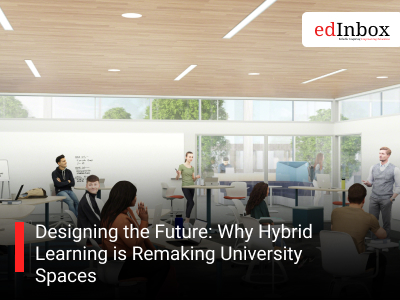
Higher education's future is flat-out hybrid, balancing on-campus and remote learning to produce a more flexible, accessible model that's redefining how universities are run.
With flexibility now a standard, not an added bonus, students these days—the many who've grown up with hybrid school during pandemic times—are rewriting the playbook for learning spaces. Following the pandemic years, studies have indicated that there has been a diversified change in students' preferences. Gensler's 2023 Education Index also provides insight into a notable trend: as much as there is increasing demand for more on-campus, with 45% of students wanting a totally on-campus experience, most students, faculty, and staff currently want a hybrid or virtual model, which is not necessarily off-campus but from other learning environments.
In order to fulfill these contemporary needs, schools need to re-think campus design. Spacestor's downloadable guide, Designing for Education, addresses these important trends in contemporary education architecture and how universities can address these challenges head-on.
Flexibility and Personalization
It's necessary to learn about what each community has and doesn't have so as to prevent the creation of a "one-size-fits-all" environment and design spaces that support flexible and diverse patterns of engagement. Spaces for learning should be flexible, equipping students with the resources for rearranging spaces to match their unique or collective demands.
Our partnership with Birmingham City University is the ideal reflection of how flexibility can be incorporated in spaces of higher learning. We outfitted a number of Railway Carriage booths, turning the campus into an individual focus area and collaborative work space. With the capability to infuse technology, offer power supply, and personalize, these booths represent the ultimate flexible learning space that may be used for any purpose.
Personalization also plays a vital role when students are made to feel like they own the environment, say, because they are more participative and engaged. Our HotLockers are another case in point, providing secure storage that can be easily fitted into any campus environment and allocated to a student depending on their timetable. In learning environments or shared spaces, branded or personalized lockers serve to create a sense of belonging—a key component of student wellbeing.
Tech-Enabled Spaces
Technology is at the core of making hybrid learning a success, with universities making a gradual move towards adopting smart classrooms that are fitted with interactive screens, video conferencing tools, and integrated software that supports physical and remote participation. Spacestor has designed the Portals Studio to make room for this hybrid collaboration, promoting seamless integration of technology to enable group collaboration, virtual meetings, and so on.
An excellent example of this is the collaboration we undertook with the University of East London, wherein we dictated hybrid work and virtual meeting rooms. We installed our Residence Connect booths in order to create perfect hybrid meeting rooms with custom lighting, ergonomic seating, and integrated technology, enabling students to be fully immersed in physical and virtual learning spaces.
This technology-driven approach is entirely in tandem with the report of Work Design Magazine that is focused on how technology must be integrated in learning environments. By providing classrooms and learning zones with the right tools, institutions can facilitate a better learning place—whether offline or online.
Wellbeing at the Forefront
Functionality is also necessary, but we require learning environments that foster physical and mental well-being. As much as we would like to have supportive learning environments, the well-being of the whole must come first. A 2022 Wiley report concluded that "supporting students through their financial, mental, and emotional struggles can also help institutions with multiple challenges, including enrollment, retention, and engagement levels."
This new model of university design is an expression of a wider cultural transformation toward the kind of integrated wellness that sees that student success is not just about learning architecture, but also about designing spaces to nourish the body and mind.
One of the greatest challenges of hybrid learning is how to make students feel connected and part of a community despite the fact that some of their learning happens online. In Gensler's Education Engagement Index, there are a few strong data points across the association between belonging, relationships, motivation, engagement, and learning outcomes, and it is all about being observant with regard to the type of spaces in which students can build connections in terms of having a sense of belonging and being motivated.
Community is not merely learning in the same space, it's the way the space encourages interaction. Universities that organize their space to promote teamwork and social interaction, yet offer sufficient space to allow for customization, are enriching the academic experience overall.
This is an ethos practiced at the University of East London. Supported by the Railway Carriage booths that are a main motif throughout the building and the modular Bleachers seating system, providing an ideal area for collaboration meetings, socializing or just a spot for some quiet sanctuary to allow focused work. The whiteboard rear of the Railway Carriages within this complex translates to even greater freedom to create another room for interactive debate and collaboration. This considerate layout enables students to easily alternate between working in groups and independent study, promoting a community ethos and supporting a wide spectrum of learning requirements and personalities.
Since hybridity will become the defining feature of education's future, with more face-to-face interaction required, universities need to reinterpret their strategy for planning campuses