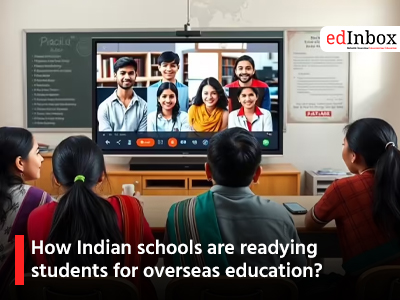
Indian school exchange programs have gained fresh vigour in recent years. What was previously a novelty or an additional facility for the privileged few is now being sold as a required step in readying the child for overseas education.

As Indian students turn in greater and greater numbers to foreign universities, schools are being expected to do more than simply assist in building applications, but think-building. But whereas as much international travel and cultural exchange as one could perhaps desire may sound good on paper in theory, the question is: how well are schools getting students into the international education experience ahead with their exchange programs?

An emerging pattern, but of uneven depth

Today, there are greater international exchanges from Indian schools than ever before. There are some that have short cultural programmes for a few days to two weeks. Others have had structured academic relationships with partner schools, where the students stay with the host families and attend regular classes. Even during post-pandemic periods, virtual exchanges have seen an increase, connecting Indian classrooms with their European, North American, and Southeast Asian counterparts.

This is to be cultivated. These courses expand minds, habituate students to learning in novel ways, and offer a high-quality relief from the memorization pedagogy many are used to from an early age. 

But underlying the sparkle of images and rave reports, there is a basic question: are these courses deep enough to prepare students for the long-term prospect of studying and living abroad? For some, the answer is positive.

Exposure vs. preparation

Ten days abroad does not measure up to a full degree done in one. Student exchange programs are mostly shallow, providing a taste of culture rather than extended, self-reflective education. Students tour landmarks, take superficial classes, and return home with tales—but maybe not the kind of inner development that leads them to the real issues of solo living in a foreign culture.

Study abroad does more. It requires a living situation with less comfortable support systems, flexibility in accommodating individualized academic needs, and contact with students from around the world. It requires emotional tolerance, cultural flexibility, and academic confidence.

A brief school field trip cannot foster all these. But these are exactly the things students need to learn to excel—not just survive—within a foreign university.

What exchange programs can do right

If carefully thought through, exchange programs can be a fine stimulus to international education. They can give students a first taste of strangeness, the key to forming perceptions and humility about cultures. They can create new patterns of thought, break stereotyping, and extend intellectual curiosity.

They also build independence in small steps—learn to get by behind a language barrier, adapt to a different learning environment, or even navigate public transport in a host city.

Implemented effectively, they make students think not only about the host culture, but their own. They begin to pose deeper questions: Where am I from? How can I belong and still not be lost? What does it mean to be part of more than one place?

They are questions dear to anyone in pursuit of education abroad.

The access and affordability gap

While promising, most exchange programs are reserved for foreign and private schools in urban India. The cost of travel, insurance, visa, and program fees disqualifies most families from taking part. Even the cost of a journey abroad alone may be between ₹1.5 lakh and ₹4 lakh or more.

Virtual exchange programs have bridged some of the gaps, but the availability is still a question of infrastructure, technical competence, and institutional connection—not ubiquitous in small towns or government schools.

The result is a growing gap: while one set of students graduates from school with international exposure, the rest may graduate with good academic performance but intercultural exposure missing. This gap can affect access to international universities as well as performance there.

The weight of NEP 2020

India's National Education Policy (NEP) 2020 also addresses this issue on paper. It has a strong emphasis on internationalisation at the school level and also at the university level. It prefers the development of global partnerships by institutions, mobility of students, and integration of global matters in the curriculum.

More importantly, NEP 2020 focuses attention on the necessity that education needs to be holistic—that is, educational outcomes go beyond marks in class to include moral reasoning, cultural sensitivity, and social sensitivity. It is here that strong exchange programs have the potential to make an impact, if schools only look beyond the transactional culture.

But most of policy delivery remains focused on tertiary education. School-level international readiness roll-out is patchy and an institution-by-institution affair.

What needs to change

Exchange programs will never succeed in preparing students for international education if they are more than superficial visits. Schools need to plan such programs consciously, methodically, and follow through.

This is pre-departure training with cultural education, academic comparisons, and affective preparation. It is official reflection after the program in writing, group discussion, or portfolio submission. And it is using global perspectives to make a difference over the course of an entire school year, not just within a time-limited exchange window.

Of equal concern, they must be universalized and expanded. Scholarships, subsidized schemes, and models of the internet can go to students of all socio-economic groups. Student exchange schemes must be framed not as elitist privileges, but as part of a student's preliminary training for the globalized world.
The United States has attracted the world's top brains for three decades not only because of its top universities, but also because of a comparatively stable visa regime that permitted foreign students to remain behind on campus for the length of their course. A new rule proposed by the Department of Homeland Security (DHS) now hangs in the balance to upset that guarantee, swapping scholarly uniformity for bureaucratic timers, and along the way risking the future prospects of more than 4.2 lakh Indian students.

The DHS proposal, now pending before the Office of Management and Budget (OMB), would impose fixed stays on F, J, and I visa holders, categories that include students, exchange visitors, and foreign media. The shift, if enacted, would be from centuries of policy of granting stay by academic activity, or "duration of status."

Fixed dates, fluid anxiety

The actual issue isn't administrative; it's existential. Under the current rules, students can stay in the US as long as they're enrolled full-time academically. The new regime would substitute that flexibility for a hard cut-off time limit on their visa and force students to seek renewals, whether their studies are finished or unfinished.

Immigration.com managing attorney Rajiv S. Khanna told the TNN, "Now, international students can stay in the US provided they continue to maintain full-time student status in authorized programs. This is known as 'duration of status'. The Trump administration is eager to do this to a specific duration of stay. With their visa having an expiry date, international students would have to file for extensions periodically.". This will result in further unnecessary delays, cost, and uncertainty for the students. Considering that the processing of a typical status extension application may take months, such restrictive legislation will add to the uncertainty the international students would experience.

For Indian students, the biggest group of foreign students in the US, the stakes are even greater. An ICE report calculates 4.2 lakh Indians who enrolled at American institutions in 2024 alone. The disruption could affect not just their academic calendars but that of the broader Indo-US education corridor too.

A rule revived from the good old days

While new to the regulatory docket, this regulation is not a first try. The same initiative was initiated in 2020 under the previous administration but was unable to progress past the later stages. Its reappearance now has ignited concerns of reinstated tough visa channels under procedural cover.

Compounding the stress is the potential for the DHS to ram the rule through as an interim final rule, essentially bypassing the customary public comment period and putting it into effect on the fly. Institutions and students could find themselves scrambling to understand and react to a historic policy shift under deadline.

Unlawful presence: A legal minefield

Legal professionals caution that the impact runs far beyond reapplication exhaustion. A notable alteration would involve the calculation of "unlawful presence." Current policy does not render foreign students unlawfully present except when there is a formal finding by USCIS or an immigration judge. But with this new rule as proposed, a student who exceeds the allotted time, even mistakenly, might start accumulating illegal presence from the day following the expiration of their visa. 

Sector opposition and factual inconsistencies

US higher education institutions are mounting a strong resistance. They contend that the policy is predicated upon a hyperbolic tale of student overstays. By the way, the overstay rate for F, M, and J visas was only 3.6% in 2023, a fraction compared to other visa types.

Arriving at a moment when Canada, the UK, and Australia are going out of their way to re-balance their student visa systems to appeal for international talent, the US action can be interpreted as retreat, not progress. For thousands of Indian families making long-term plans for higher studies overseas, the new rule can bring in multiple layers of complexity shifting the balance in favour of competing destinations.

Though its final shape will not be evident until its Federal Register appearance, the underlying message is one that cannot be misread: America is rethinking under what conditions it welcomes intellectual ability.

A clock ticking on certainty

What was once a system of visas founded upon intellectual advancement may soon be regulated by expiration dates and reapplication cycles. For Indian students, who have traditionally considered the US the gold standard of college education, the proposed change means more than a policy adjustment. It is a radical departure from the scholarly bargain, one that would reshape whom to study about in America, and at what price.

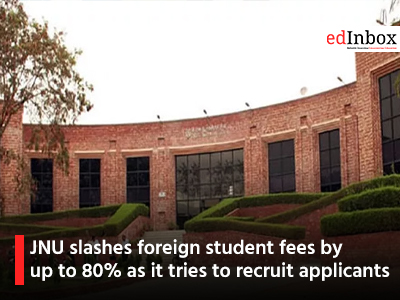
Jawaharlal Nehru University has cut international student fees by up to 80% with enrollments plummeting sharply. The fee structure will come into effect from this year and will largely hit students from SAARC countries who come to study in Delhi. The cut in tuition fees will be in the range of 33% to 80% and would vary according to courses as well as location.

The largest fee cuts have been offered to the SAARC nations, as well as to African and Latin American countries. It aims at minimizing financial burdens on those from the economically weaker segments.

Under the new system, SAARC students will only have to pay $200 for humanities courses and $300 for the science stream. Conversely, African countries as well as Latin American countries will see fees decrease by 80% to $400 to $300 for courses. West African students will, as has been reported, pay $500 for humanities courses and $600 for science courses. To the remaining students, fees have been cut to $1000 for humanities and $1250 for science.

All foreign students will also need to pay a one-time registration charge of $500.

What have been JNU fees until now?

The recent prospectus of the university had clearly mentioned that foreign students were to pay $1900 per semester as tuition fee for science courses and $1500 per semester for humanities and social sciences. This would comprise courses such as MTech, MPH, MA, MSc, MCA, BA(Hons), the BSc-M.Sc integrated programme as well as part-time programmes.

Meanwhile foreign students from SAARC countries will pay a significantly lower rate between $700 per term for science subjects and $600 for the others. Tibetan students, on the other hand, pay fees similar to Indian students.

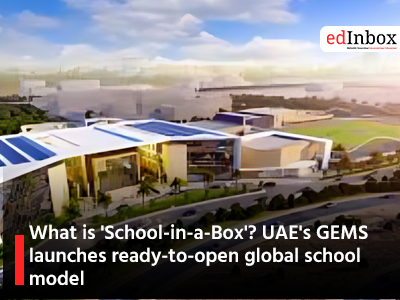
Taking a bold step towards rethinking the construction and operation of schools all over the world, UAE-based educational services firm GEMS Education introduced a revolutionary initiative to provide global-class education through an entire, ready-to-use solution. Named the "school-in-a-box," the new concept is being led by GEMS School Management (GSM), an initiative created to streamline and speed up the process of opening or renovating schools anywhere in the world.

A Turnkey Solution for International Schooling

GEMS School Management provides an end-to-end solution that encompasses school design, curriculum, recruitment and training of all teachers, operation systems, technology integration, and student safeguard frameworks. The basis of this new business is the ASPIRE model, which is defined as an adaptive, plug-and-play system developed by GEMS' top educators to provide high-impact schooling.

Fundamentally, the ASPIRE model is constructed to:

Open new schools in a quick manner

Improve existing schools

Adhere to global standards but not at the expense of local cultures

Scale with respect to community demand and investment potential

Addressing the global virtual launch on Monday, Robert Tarn CBE, Managing Director of GEMS School Management, said:

"We are collaborating with partners who want more than well-performing schools, they want benchmark schools. GSM applies the entire range of the GEMS ecosystem to bear, from exceptional educators and international best practice to costed, turnkey solutions."

Tarn highlighted GSM's capability to summon resources rapidly:

"Whether you're a developer, government, or school group looking to scale or enhance results, we're here to assist you in delivering."

He went on to say:

“Our partners often have the vision, the site, and the capital, what they need is deep educational expertise. That’s where GSM comes in. We’ve done the thinking, built the model, and can be ready to open a high-impact school with the right team, systems and students in as little as 12 months.”

Flexible, Customisable, and Globally Scalable

GSM is in advanced talks with customers in eight overseas markets, serving everything from high-end schools in capital cities to budget community schools in low-income areas.

Every partnership is designed to address the distinct regulatory, cultural, and educational aspirations of the host setting. Schools have a choice between curriculum-mapped models including:

Premium British

American

Indian

International Baccalaureate (IB)

This versatility means the model can be applied to anything from high-end private schools through mid-market or state schools, with extension contracts also being offered to assist successful schools in developing and becoming more efficient.

Hardik Shah, Commercial and Financial Director at GEMS School Management, said:

"The strategy will be very different for different schools, whether we have a mid-market school, mid-market plus or a premium school, and we are working with different geographies also. We are working with anywhere between the Middle East, South America and so on and so forth. So, the strategy would be very individualized and different for each investor, and the fee would also depend upon that."

Commitment to Special Educational Needs

One of the most notable aspects of the GSM model is its commitment to inclusivity, and specifically the placing of children with special educational needs as a top priority.

Tarn emphasized that in the launch:

"We have a huge team and capacity. The systems and processes to support children with additional needs, particularly the most vulnerable children.That will be in the front and centre of the school-in-a-box model.". So, all of that training for personnel across the waves of intervention, and the mapping provision for children will be something we're proud to include, and something that's highly personal and a passionate issue for several members of my team.

This guarantees that all schools opened under GSM are ready to provide for many different learning needs with empathy, organization, and top-of-the-line training.

Sharing a Legacy, Shaping Futures

GEMS Education has long been a leader in international schooling, and with GSM, the organization is expanding its influence by enabling other entities to replicate its success globally.

Sunny Varkey, Chairman and Founder of GEMS Education, stated:

"Each child has a right to world-class education, regardless of where they are. GSM is how we are sharing our legacy, our know-how, and our belief in the potential of education to transform lives with like-minded partners. Together, we'll create schools that mold not just futures, but nations."

Some universities like Ashoka, Plaksha, and Masters Union have gone out of their way to offer greater convenience to students with admits in overseas universities to apply to their university. In other cases, there are rising inquiries from students and parents who either suffer visa rejections or fear venturing abroad

When it is becoming increasingly difficult to study abroad, new-generation private universities that brand themselves on their global education are being seen as a worthy alternative for those students who would otherwise be opting for a foreign undergraduate education. Such institutions have also gone out of their way to attract these students.

Universities like Ashoka, Plaksha, and Masters Union are some of the private universities who have gone out of their way to facilitate the process of enrollment for students with admits in foreign universities and have also witnessed interest under such isolated application streams. Others like FLAME University mention rising queries from parents and students who either receive rejected visas or are hesitant to study abroad.

Plaksha University extended its application deadline for students holding firm acceptance offers from global engineering universities.

Rajiv Khosla, VP - Ext Engagement, Plaksha University, said, “We introduced this initiative to accommodate exceptionally talented students who were considering alternative pathways despite already securing places at prestigious institutions abroad. We’re very pleased with the interest it generated, and the extended deadline has now closed.”

“At Plaksha, our curriculum is built on interdisciplinary learning and is supported by partnerships with renowned universities such as UC Berkeley,” he added.

Ashoka has specifically opened up a special admissions track for those holding US admissions and said that this was to support students and families seeking academic continuity and a world-class education, as they navigate increasing concerns around safety, visa delays, and shifting global policies.

Gurugram's Masters' Union, which provides undergraduate courses in tech and business management, data science and other programs in collaboration with other institutes, has made it possible for foreign admits to bypass their entrance test and invites them directly for group discussion this year. "It opened last week and we have received about 30 applications during this time frame, and we can enroll about 60-70 students in this stream," Masters' Union Director of Undergraduate Programmes Swati Ganeti said.

While FLAME University has closed admissions for the year and is not extending it to such students, director-admissions outreach, FLAME, Anju Deoskar shares that they are receiving calls from foreign admits students who are now facing visa denial or are fearful of pursuing abroad. "Actually a few of these requests and inquiries are also from second year US students," she adds.

In addition, joint degree programmes offered by universities and involving two years of study in India and two foreign partner universities are also gaining more takers.

"Back at BITS, we are also getting good traction for our joint degree programmes where students do 2 years here and 2 there. We have tie ups with US, Australia and France universities for that. It reduces up to 40 per cent of tuition fees for the parents and also makes them relaxed to send the kid abroad after two additional years," V Ramgopal Rao, vice chancellor BITS Pilani group of institutions, said.

Educationists averred that although the new-age universities are not an alternative for those students who have gained admissions at marquee US institutions, they are quickly becoming a choice in place of global education.

Ramkumar Ramamoorthy, ex-Chairman and MD, Cognizant India, opines that private universities of the new era, particularly those supported by corporate houses as well as group philanthropy initiatives, have revolutionized Indian higher education and are making standards in a very short span. "These universities have enticed the best talent in the world, created collaborative linkages with the world's finest institutions, and introduced inter-disciplinary thinking and immersion learning," he added.

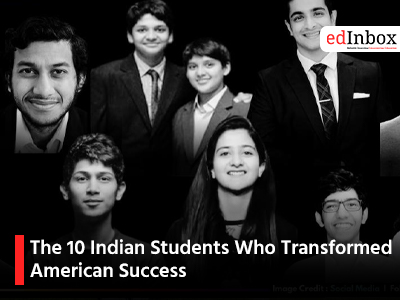
They came to America with suitcase full of books, hope in their hearts, and in most cases no more than a pocketful of dollars in their pockets. Where there was no money, there was plenty of guts and inherent talent. These ten Indian students—some from small towns, some from premier colleges—came to America not in name, but in hope. Today, they are health, tech, and public policy titans, a testament to the reality that talent nationality is never anywhere and victory is never linguistic.

Vinod Khosla: From Rejection to Reinvention

Denied first choice at IIT Delhi, Khosla majored in mechanical engineering, attended Stanford, co-founded Sun Microsystems, and ended up one of Silicon Valley's most famous venture capitalists. "IIT was the only level playing field," he once told The Chronicle of Higher Education. Today, he makes other people's dreams others have not yet had the courage to dream.

Kanwal Rekhi: The Man with Eight Dollars and a Vision

He stepped onto American soil with just $8, a degree from IIT Bombay, and unshakable resolve. Rekhi’s journey through layoffs and struggle led him to Silicon Valley, where he built Excelan—the first Indian-owned tech firm to go public on Nasdaq—and mentored a generation of Indian-American entrepreneurs.

Suhas Patil: Father of the Fabless Chip

From MIT to IIT Kharagpur, Patil had less money in his pocket but a mind that would revolutionize semiconductors once and for all. From Cirrus Logic, he developed the "fabless" model of business that led to chip manufacturing and exporting today.

Vinod Dham: The Pentium Father

With a degree in electrical engineering and just $8 in his wallet, Dham was among the people who helped develop the Pentium processor that powered PCs for millions and changed personal computing forever.

Shantanu Narayen: Revolutionizing Adobe

Engineering alum Narayen, born in Hyderabad, joined Adobe and became CEO. Under his watch, Adobe revolutionized itself into a cloud-based subscription model business, revolutionizing consumption of creative tools worldwide.

Satya Nadella: The Humble Revolutionary

From Manipal to Microsoft, the humble determination of Nadella was able to get Microsoft overhauled as a cloud-first firm and the largest tech giant in the world. His pragmatic, open-minded, and vision-driven approach of leadership attracted a new generation of technology leaders to Microsoft.

Nikesh Arora: Cybersecurity's Power Player

IIT BHU graduate who reached the top of Google search rankings to be among America's highest-paid executives, Arora is now the chief executive at Palo Alto Networks, international cyber security shielding millions online.

Siddhartha Mukherjee: The Storyteller of Science

From AIIMS Delhi to the Pulitzer Prize, Mukherjee's The Emperor of All Maladies brought human beings into cancer's story. His book marries medicine and poetry to educate the world about illness in the form of stories.

Atul Gawande: The Doctor Who Rewrote the Rules

Surgeon, writer, and activist, Gawande's Checklist Manifesto was hospital scripture nationwide, safer surgery. With Being Mortal, he took dying patients at the brink of life, reshaping how doctors discuss dying.

Vivek Murthy: America's Doctor with an Indian Heart

An immigrant himself, Murthy was the 19th and 21st U.S. Surgeon General. From fighting the opioid epidemic to leading COVID-19 initiatives, his number one priority never changed—science, compassion, and public trust.

They already have the world's best e-commerce firm with a foot in their door, and so now they get to open the curtain to catch a glimpse of a sneak peek behind the scenes.

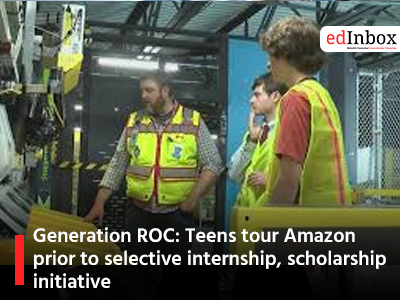
Luka Paraskevov and Aidan Benoit both graduate in days. Before that victory lap celebration, they brought the Amazon fulfillment center in Gates to an invite-only internship and scholarship that they received under the Amazon Future Engineers program.

"I have never actually seen people enjoy this sort of in these kinds of situations where there are high-level positions, you know? I'm a little curious about what is going on behind the scenes," Luka tells News 8's Mikhaela Singleton.

News 8 had interviewed the two as part of Generation ROC coverage when their acceptance was first made public. From thousands of state-wide applicants who applied for Amazon Future Engineers, only 400 succeeded and only three from upstate New York.

These two Rochesterians had plenty of questions to ask the local Amazon team and say they were deeply fascinated to see how AI, programming, and design have melded together to create a seamless flow from warehouse to your door.

“It’s not as mechanical as actual engineering, but it’s still very — you’re able to be very creative with it,” Aidan explains when asked about his passion for computer science.

The boys admit that when they reach the stand of the graduation stage, they thank the head start provided on their behalf and are ready to meet the challenge of college with valor.

"I'm really a little afraid, actually. A little anxious, but I think that I'll be okay," Luka reflects on his college experience. "I've made it through the majority of my worst yet, so I guess whatever is next, I can cope."

More Articles ...