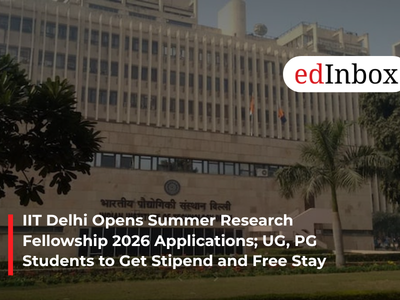
The Indian Institute of Technology Delhi has opened applications for its Summer Research Fellowship Programme (SRFP) 2026, inviting undergraduate and postgraduate students from across India to apply for hands-on research training under faculty mentorship.
Introduced in March 2026, the investment was tailored to pave the way for students to get a taste of the highest level of research settings and locate the technical problems that exist in the real world. The fellowship would start about May and last till July for a total of 810 weeks.
The fellowship is available only for those students who are still studying in a recognised engineering institution and mainly 2nd or 3rd year students. Applicants should have an excellent study record usually 8.0 CGPA or 75% marks at least. No students from Indian Institute of Technology Delhi will be eligible as the program is meant to lure the best talents from other institutes.
Awardees would be given a weekly allowance of 2,000 along with free stay at the campus. They will also enjoy the privilege of being in touch with modern laboratories and research facilities and working hand in hand with the faculty on selected projects. Certificates will be handed over to the participants at the end which will be a great add-on in their academic and professional profiles.
Application Process and Deadline
Those who want to apply should do so by visiting the official website of the Indian Institute of Technology Delhi then register online, complete the academic details, upload the necessary documents such as mark sheets and CV, and lastly submit a research proposal or statement of purpose by April 3, 2026.
Selection Procedure
The selection will be entirely on the basis of academic credentials and the research proposal quality. Departmental Committees will be performing the application reviews. Due to limited seats, the competition is expected to be very high.
This fellowship is designed to encourage research capability development among students and equip them with practical skills beyond what is taught in the classroom. It therefore presents a very good opportunity for those intending to build a career in research and innovation.