
If the first Green Revolution was powered by irrigation and fertilisers, India’s next agricultural leap is being shaped by genomics, gene editing, and indigenous innovation. At the centre of this transformation is a quiet but powerful development from the ICAR-National Rice Research Institute—a homegrown gene-editing tool that could redefine crop science.
Developed by Dr. Kutubuddin Ali Molla, TnpB is being described as India’s answer to CRISPR-Cas9. Unlike the widely used CRISPR system--patented worldwide and often costly to implement--TnpB is not only smaller and more accurate but also, most importantly, without patent restrictions. Being about one-third the size of Cas9, it not only facilitates the entry of the protein into the plant cells but also makes it possible to perform multiplex gene editing, which means modifying several traits simultaneously.
This can be a game-changer for Indian agriculture. It is well-known that complex traits like drought tolerance, pest resistance, and high yield are controlled by multiple genes, rather than a single one. Therefore, the potential to edit several genes at the same time could pave the way for a quicker development of climate-resilient crops, a pressing need for a country like India that is facing various forms of climate change.
India, for one, has shown its commitment by approving the commercial release of genome-edited rice varieties in 2025. In contrast to genetically modified organisms (GMOs), these crops are not transgenic as they do not contain foreign DNA. This is why they are able to circumvent the regulatory barriers and public apprehensions typically associated with GM technology.
The broader vision extends beyond rice.Scientists are adapting similar approaches to legumes and oilseeds, two areas where India still depends largely on imports from abroad. Increasing production within the country of these two categories can greatly lessen import dependence.
The reason why 2026 could be a turning point is that policy, science, and the ability to scale all come together at the same time. India's regulatory environments are getting friendlier, it has native technologies like TnpB, and at the same time public-private partnerships are on the increase. So, India is planting seeds for an agricultural innovation environment that can be maintained even after the initial burst of creativity.
It is indeed a new way of looking at things - agriculture will cease to be merely increasing the quantity of produce but will also focus on increasing the quality smartly. The food system in India from a tiny touch of genome editing right up to the moment of the preparation of cooked rice is undergoing a transition.
And for the first time, the distance between the laboratory and the kitchen is rapidly disappearing.
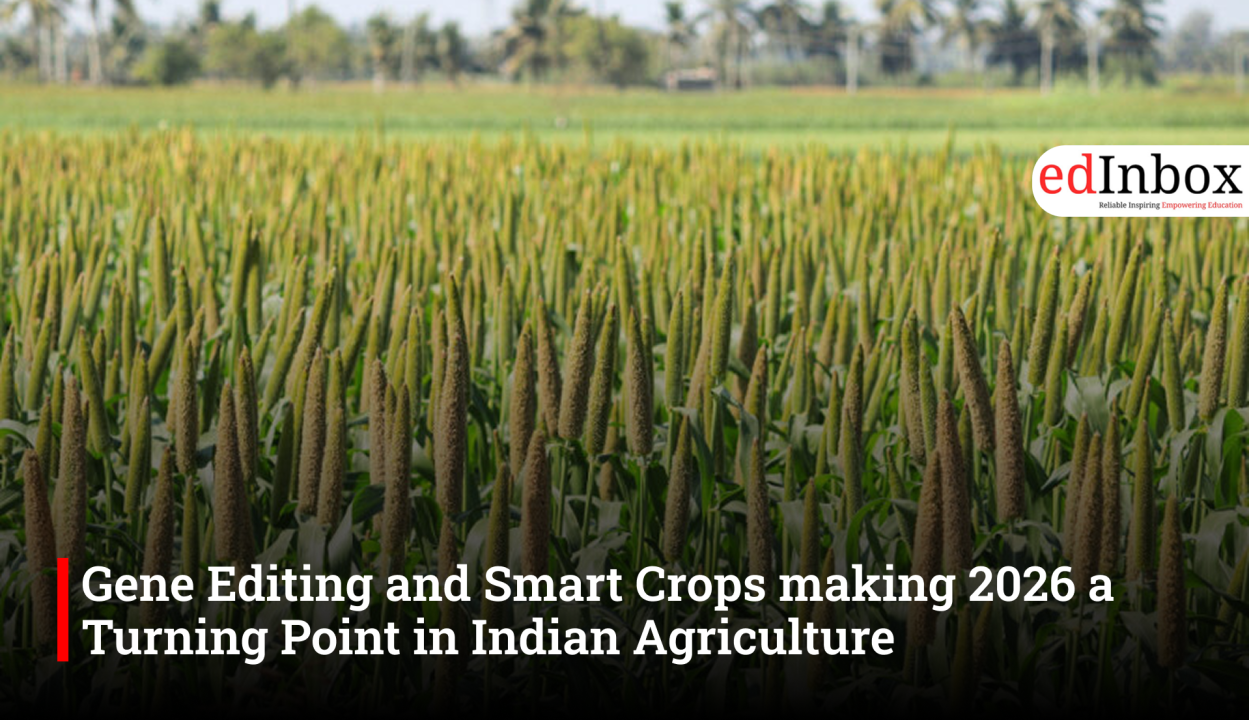
Gene Editing and Smart Crops making 2026 a Turning Point in Indian Agriculture
Typography
- Smaller Small Medium Big Bigger
- Default Helvetica Segoe Georgia Times
- Reading Mode