
The preferences of students at Dharmashastra National Law University (DNLU), Jabalpur have undergone a significant change. As of now, nearly 10, 15% of its BA LLB (Hons) graduates opt to continue their legal education on the same campus by availing the university's LLM programmes. Such an uptrend in retention rate signals the mounting confidence of the stakeholders in the institution, especially when the university is relocating to its new permanent campus.
In the past, it was common for graduates of the newer National Law Universities (NLUs) to go to the older and more reputed ones for their postgraduate studies. But the Vice Chancellor of DNLU, Manoj Kumar Sinha, considers the focused academic strategy of the university, especially business law and criminal law specialisations, as the reason behind this changing pattern of students. He points out that students have started to appreciate the benefits of continuity, guidance, and the developing research environment on the campus.
One more crucial reason why students are staying is the availability of faculty members with PhDs from top NLUs who are actively engaged in classroom, and research, oriented discussions. The university has been bestowing PhDs on a regular basis since 2018, with around eight to nine degrees being given each year, thus solidifying the image of the university as a research, focused institution.
DNLU is also making steady progress on infrastructure development. Hostel construction is underway on state-allotted land as part of the university’s shift to a permanent campus. Academically, the BA LLB (Hons) programme now runs in two sections, reflecting increased demand.
The research centres of the university enjoy academic autonomy, thus the researchers are free to carry out interdisciplinary and applied research. On the other hand, the legal aid clinics actively cooperate with the Madhya Pradesh government to organize community legal awareness programmes, training workshops, and access to, justice initiatives.
Inclusivity is a strong focus of DNLU's policy framework. State funded scholarships not only pay for tuition but also living expenses for a large number of students coming from economically and socially disadvantaged families. The university provides language support, bridge courses, and remedial classes to assist first generation learners in adjusting to the demanding legal education.
VC Sinha has warned against the risk of greater dependence on self, financing models that may result in higher fees and thus, has proposed 2030% state funding to keep the university affordable. He is also in favor of AI usage in legal education but considers that AI should be implemented as a supporting tool, following UGC guidelines, and not as a core learning process replacement.
While DNLU Jabalpur keeps allocating resources to academic depth, infrastructure, and inclusion, its increasing retention rate is a proof of students growing trust in the universitys long, term vision.
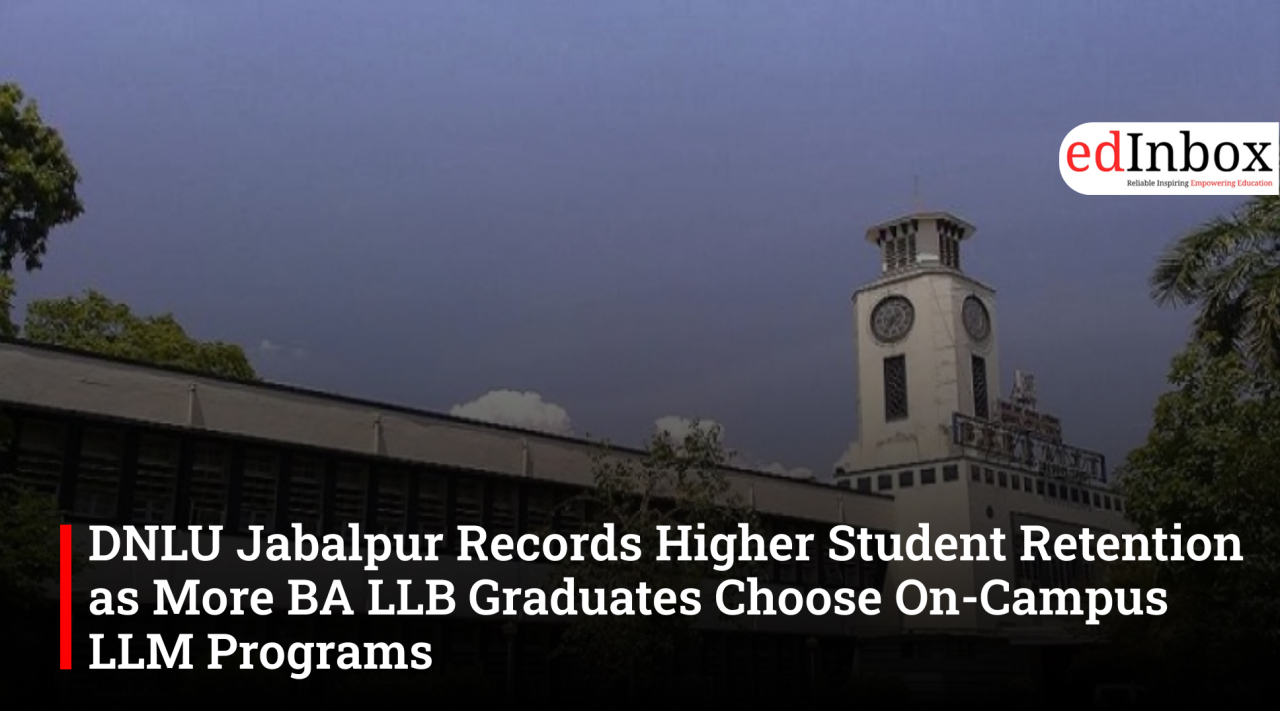
DNLU Jabalpur Records Higher Student Retention as More BA LLB Graduates Choose On-Campus LLM Programs
Typography
- Smaller Small Medium Big Bigger
- Default Helvetica Segoe Georgia Times
- Reading Mode