
A student or staff member who experiences or witnesses discrimination in a higher education institution may lodge a complaint immediately. According to the UGC Equity Regulations, 2026, the complainant can directly approach the grievance redressal mechanism without waiting for repeated incidents or having formal proof of the complaint.
A complaint can be lodged when:
- A campus or institution, related activity witness discrimination, exclusion, or harassment. Academic evaluation, admission, promotion, hostel allocation, or access to facilities are done in a biased or unfair manner.
- Derogatory remarks, unequal treatment, or systemic exclusion on the grounds covered by the regulations are experienced.
- Equity related issue disclosure is followed by retaliation or intimidation. Such a situation is evident which, when seen collectively, represents a pattern of unfair treatment even though the individual incidents taken separately may be of a lesser degree, the UGC has directed institutions to constitute special committees, helplines and monitoring teams.
What will this centre do?
-Receive and handle complaints from students facing discrimination
-Work towards making the institution more inclusive and supportive for students from disadvantaged groups
-Ensure fairness and equal opportunity for all students
What are the provisions of the UGC equity regulations?
-Establish an Equal Opportunity Cell (EOC) to address concerns and safeguard the interests of SC, ST and OBC communities.
-Set up equity committees or monitoring mechanisms, including helplines (with provisions for 24/7 support in some cases) and ensure regular reporting to the UGC.
-Fix legal accountability on heads of institutions to ensure strict compliance with the guidelines.
-Mandate every Higher Education Institution (HEI) to constitute ‘equity squads’, smaller bodies tasked with maintaining vigilance and preventing discrimination on campus.
In case of non-compliance, HEIs may face regulatory action, including suspension of recognition, exclusion from UGC schemes, and other punitive measures.
SC stays implementation of UGC rules
The Supreme Court on Thursday stayed the implementation of UGC regulation pertaining to the definition of caste discrimination and also issued a notice to the Centre, reports news agency PTI. "We want a free, equitable and inclusive atmosphere in educational institutions. Unity of India must be reflected in our educational institutions. We are simply examining it on the threshold of constitutionality and legality," the apex court said while hearing the pleas.
Who are protesting against the new UGC rules?
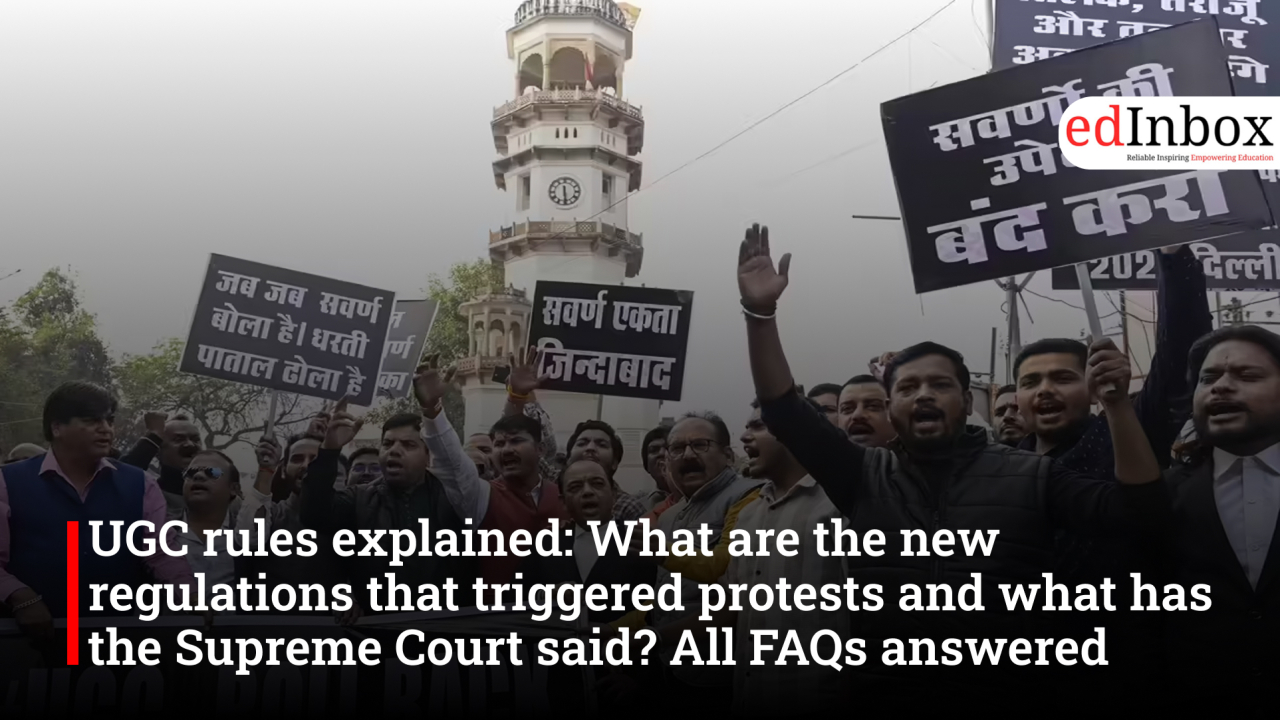
The new rules notified by the UGC have sparked widespread criticism from general category students who argue that the framework could lead to discrimination against them. The protests are mainly led by a group called the "Savarna Sena" outside the UGC office in Delhi. Their main concern is that there is no clear, separate provision for students from the General or upper-caste categories to report issues they might face. They also fear the new UGC rules might lead to a sudden increase in complaints, which could create division and unrest on campus instead of fostering unity.
Amid protests over the recently notified “equity regulations” for higher education institutes by the University Grants Commission (UGC), Union Education Minister Dharmendra Pradhan said Tuesday that no one would be allowed to misuse the provisions and that “discrimination will not be allowed against anybody”.
“… Oppression will not be allowed against anybody… there won’t be discrimination… Nobody will have the right to misuse (the regulations)… The UGC, Union government or state governments… there will be responsibility,” Pradhan told mediapersons.
Any one of them can lodge a complaint, be it a student, employee or applicant. The rules have broadly defined a victim person. You don't have to produce a caste certificate or have political support to register a grievance. Every college should set up an Equal Opportunity Centre (EOC), which is going to be the first point of contact for all grievances and complaints.
Give an institutional formal order announcing the setting up of the EOC.Put EOC Coordinator in charge of the operations and grievance handling.Equity Committee should be constituted to examine and inquire into the complaints.Complaint submission provisions should be made both online and offline.Specify the inquiry time duration and SOPs to ensure that the action taken will be just and within the deadline.Equity Squads can be set up to watch and stop discrimination from happening on the campus.Ombudsperson can be appointed or notified for appeals or cases which are not resolved.There should be regular reporting and compliance with prescribed regulatory authorities.
What happens after the complaint is filed?
- Once a complaint is filed:
- The Equity Committee must convene within 24 hours of receiving the complaint.
- The inquiry must be completed within 15 working days.
- The head of the institution must act on the committee’s report within seven days.
- Confidentiality must be ensured, and institutions are required to protect the identity of complainants throughout the inquiry process.
A student or staff member who experiences or witnesses discrimination in a higher education institution may lodge a complaint immediately. According to the UGC Equity Regulations, 2026, the complainant can directly approach the grievance redressal mechanism without waiting for repeated incidents or having formal proof of the complaint.
A complaint can be lodged when:
A campus or institution, related activity witness discrimination, exclusion, or harassmentAcademic evaluation, admission, promotion, hostel allocation, or access to facilities are done in a biased or unfair mannerDerogatory remarks, unequal treatment, or systemic exclusion on the grounds covered by the regulations are experiencedEquity, related issue disclosure is followed by retaliation or intimidationSuch a situation is evident which, when seen collectively, represents a pattern of unfair treatment even though the individual incidents taken separately may be of a lesser degree.
UGC rules explained: What are the new regulations that triggered protests and what has the Supreme Court said? All FAQs answered
Typography
- Smaller Small Medium Big Bigger
- Default Helvetica Segoe Georgia Times
- Reading Mode