
The Supreme Court of India has turned down a request for mandatory menstrual or period leave for women in jobs and schools, warning that strict rules might actually reduce women's involvement in the workforce. A rigid paid leave requirement could push employers to avoid hiring women, deepening gender discrimination instead of solving it. The petition called on the court to order states to create standard rules giving paid time off during menstruation for both students and workers.
The court still says menstrual hygiene is part of dignity, health, and educational access. It has already supported better restroom facilities, free or low-cost sanitary supplies, and public education efforts to reduce stigma around periods. And the decision doesn't require any new laws, but it upholds past support for improving hygiene conditions and fighting misconceptions about menstruation.
The decision has kicked off a wider discussion about whether India should introduce official menstrual leave or instead develop more flexible workplace rules.
Gynaecologists have spoken out, pushing for realistic, health-based solutions instead of one-size-fits-all leave plans. They point out that as a few women suffer intense cramps, the majority can manage symptoms with medical help and simple office changes.
These experts say workplaces should talk openly about periods and offer choices like brief breaks, adjusted tasks, or remote work during tough times. Providing clean restrooms and free sanitary supplies is also considered needed for female employees.
Doctors warn against using over-the-counter remedies without a doctor's advice. They emphasize that pain relief or hormonal therapies should only come after medical evaluation. Any ongoing or serious pain needs prompt check-ups to find possible root causes.
Gynaecologists quoted in the discussion highlight that severe menstrual pain can be managed effectively without blanket leave. They suggest normalising conversations about periods at work, allowing short breaks, flexible duties or work‑from‑home options on difficult days, and ensuring access to clean toilets and sanitary‑napkin dispensers. They also advise using painkillers or hormonal therapy only under medical supervision and seeking prompt care if symptoms are unusually severe or debilitating.
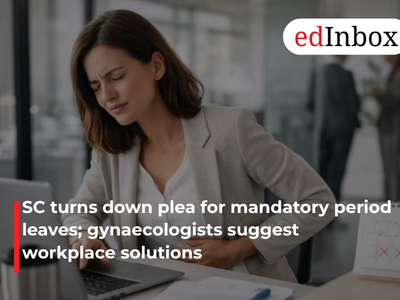
SC turns down plea for mandatory period leaves; gynaecologists suggest workplace solutions
Typography
- Smaller Small Medium Big Bigger
- Default Helvetica Segoe Georgia Times
- Reading Mode